 Pin it
 There's something almost meditative about watching salmon turn golden under the oven's heat while vegetables soften into tender sweetness all on one pan. My roommate Sarah knocked on my kitchen door one Tuesday evening, drawn by the aroma of lemon and roasted peppers wafting through our shared hallway, and suddenly we were splitting dinner without any of the usual cleanup chaos. That single moment reminded me why this dish has become my go-to when I want something that feels restaurant-quality but doesn't demand hours at the stove.
I made this for my dad's birthday dinner last spring when he'd been craving something lighter, something that tasted like summer was already here. He took one bite and immediately asked for the recipe, then admitted he'd been doubting his ability to cook anything fancy again after his diet changed. Watching his face when he realized how simple it was to make, how foolproof—that's when I understood this recipe wasn't just about food, it was about getting back to confidence in the kitchen.
Ingredients
- Salmon fillets (4, about 6 oz each): Look for fillets that smell like ocean spray, not fishy—freshness changes everything, and the lemon in this recipe will only shine if your salmon is vibrant.
- Olive oil: Use something you'd actually taste on bread; it's the foundation of your flavor here.
- Lemon (zested and juiced): Fresh lemon is non-negotiable; bottled juice will taste thin and hollow by comparison.
- Dill: If you find fresh dill, grab it—the dried version works, but fresh dill has this gentle herbaceous whisper that dried can't quite capture.
- Garlic powder: A measured hand here; too much and it turns bitter during roasting.
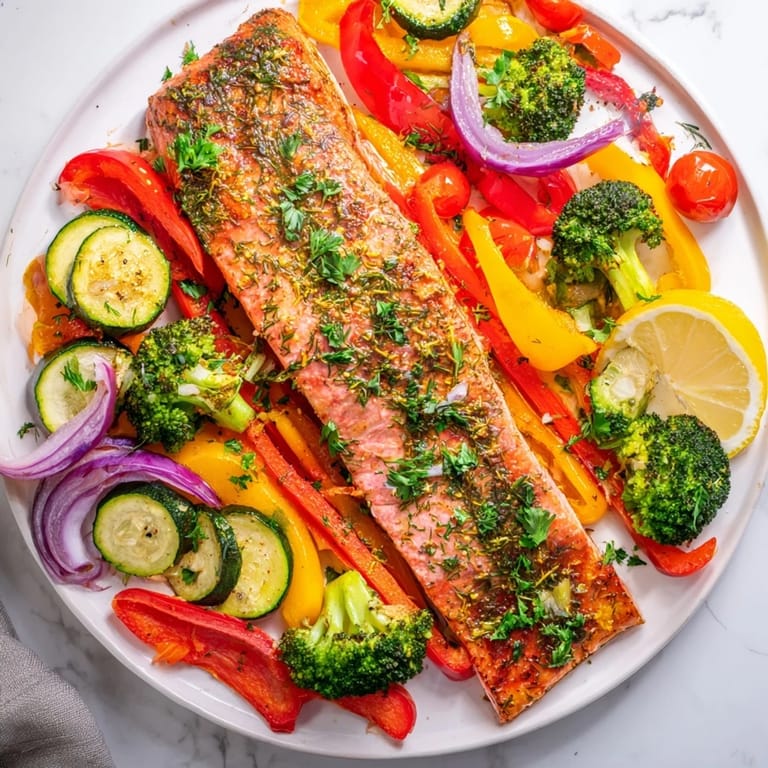
- Red and yellow bell peppers, sliced: The colors matter as much as they taste, creating those gorgeous caramelized patches as they roast.
- Red onion, cut into wedges: This sweet onion variety mellows beautifully under heat instead of turning acrid.
- Zucchini rounds: Cut them thick enough that they don't collapse into mush—aim for quarter-inch slices.
- Cherry tomatoes, halved: These little bursts of sweetness balance the richness of the salmon perfectly.
- Broccoli florets: Small to medium florets roast evenly and develop tiny crispy edges that are almost addictive.
Tired of Takeout? 🥡
Get 10 meals you can make faster than delivery arrives. Seriously.
One email. No spam. Unsubscribe anytime.
Instructions
- Heat your oven and prep your pan:
- Set your oven to 425°F and line your sheet pan with parchment or foil—this small step saves you from scrubbing salmon residue later. A hot oven is your secret to crispy vegetable edges while keeping salmon tender inside.
- Build your flavor base:
- Whisk olive oil with fresh lemon zest, juice, dill, garlic powder, salt, and pepper in a small bowl. Taste it if you're unsure—it should make your mouth water a little, bright and herbaceous.
- Coat the vegetables first:
- Spread all your chopped vegetables across the sheet pan and drizzle with half the oil mixture, tossing gently so every piece gets kissed with flavor. This gives vegetables a head start so they're tender when salmon is done.
- Nestle the salmon among the vegetables:
- Arrange your fillets skin-side down, tucking them into the colorful vegetables like they belong there. Brush each fillet with the remaining oil mixture—don't be shy, let that herbed oil coat the top.
- Roast until salmon flakes:
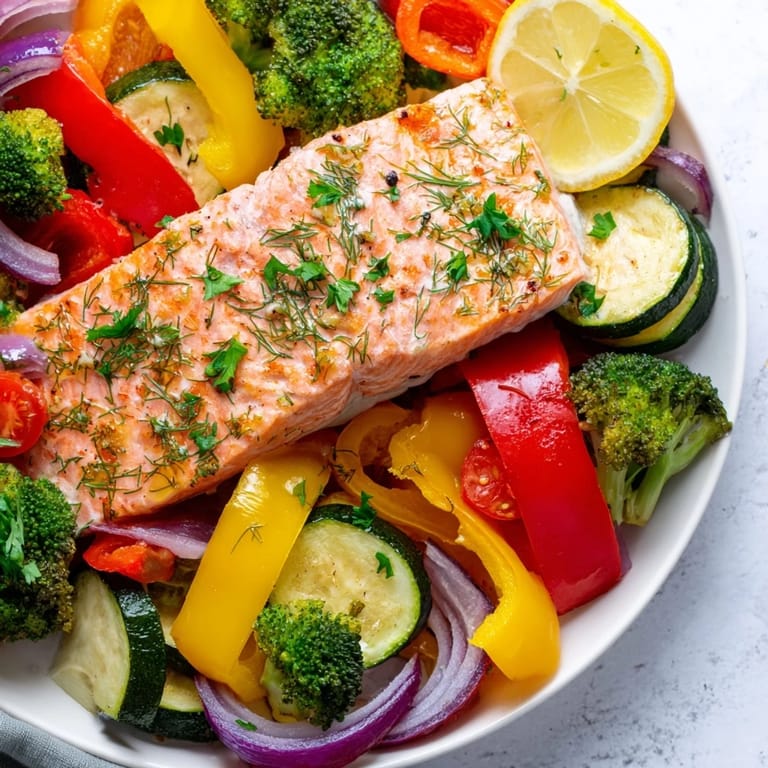
- Slide everything into the oven for 18 to 20 minutes; you'll know it's done when the thickest part of the salmon flakes gently with a fork and vegetables are fork-tender. The kitchen will smell incredible by minute 15.
- Finish with brightness:
- Pull the pan from the oven and scatter fresh parsley and lemon wedges over everything if you like. Serve immediately while everything's still warm and the colors pop.
 Pin it
 My neighbor once told me she'd stopped cooking salmon because she was terrified of making it dry, so I sent her home with this recipe typed on a card. Two weeks later she brought me a container of this exact dish as thanks, admitting she'd made it four times already and had finally stopped being afraid. That's when I realized this recipe does more than feed people—it quietly restores their belief that they can cook real food.
Why Vegetables Matter as Much as the Fish
This isn't a dish where vegetables play a supporting role—they're equal partners with the salmon. The peppers, tomatoes, and onions break down slightly as they roast, releasing their natural sugars and creating a light sauce that pools at the bottom of the pan. When you scoop everything onto a plate, those caramelized vegetables cradle the salmon and make each bite taste intentional, layered, and complete.
The Power of One Pan
Sheet pan cooking changed the way I think about weeknight dinners—suddenly having company didn't mean hours of prep and cleanup. The magic is in how everything cooks together, with the salmon's oils gently mingling with vegetable juices, creating a flavor exchange that wouldn't happen if you cooked them separately. It's the kind of simple efficiency that makes you feel smarter than you actually are in the kitchen.
Making It Your Own
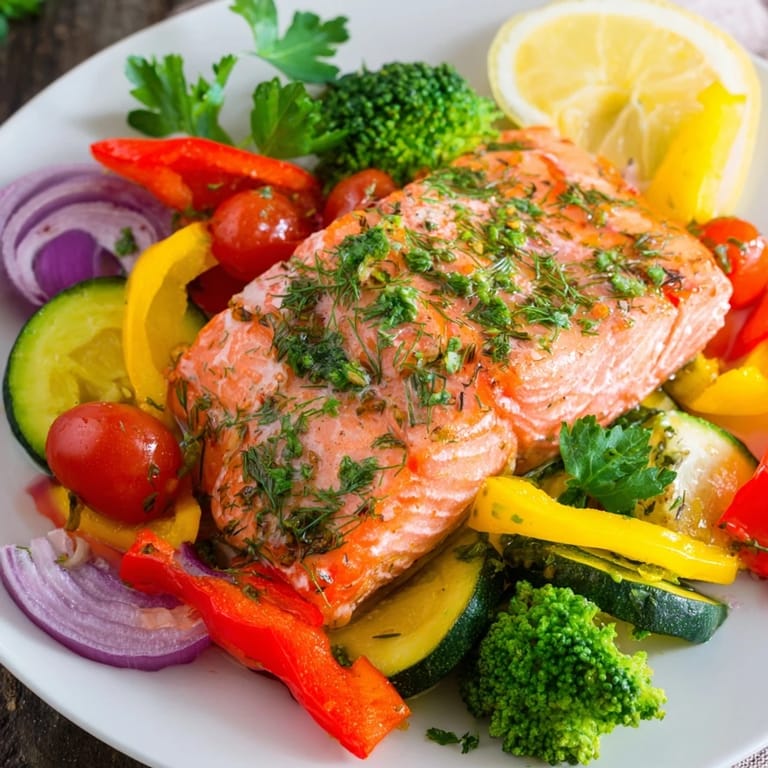
The beauty of this recipe is its flexibility without ever feeling compromised. Swap whatever vegetables you have on hand—asparagus spears, green beans, thin carrot sticks, or even cauliflower florets all work beautifully. A shower of feta cheese or briny capers before serving adds a salty punch, and if you're feeling adventurous, a pinch of smoked paprika in the oil mixture brings subtle depth.
- Keep the lemon and dill core because they're what make this sing, but everything else can bend to what's in your fridge.
- If you find fresh dill wilting in the back of your crisper drawer, this is the perfect excuse to use it up.
- Leftover salmon tastes just as good cold over a salad the next day, if there is any left.
 Pin it
 This recipe has quietly become my answer to almost every dinner question—whether I'm cooking for myself, surprising friends, or figuring out something healthy that doesn't feel like a sacrifice. It's the kind of dish that makes you feel capable and nourished all at once.
Recipe FAQ
- → What temperature is best for roasting salmon and vegetables?
425°F (220°C) provides a perfect high heat to roast salmon and vegetables evenly and quickly.
- → Can I use different vegetables in this dish?
Yes, seasonal options like asparagus, green beans, or carrots work well and add fresh variation.
- → How can I tell when the salmon is done?
The salmon flakes easily with a fork and becomes opaque, signaling it is cooked through.
- → Is it necessary to use parchment paper or foil?
Using parchment or foil simplifies cleanup and helps prevent sticking during roasting.
- → What herbs complement the salmon flavor best?
Dill is a classic pairing, offering a fresh, slightly tangy note that enhances the fish.