 Pin it
 I discovered the magic of Buddha bowls on a Tuesday afternoon when my farmer's market haul threatened to overflow my crisper drawer. Rather than letting those jewel-toned vegetables wilt, I tossed them onto a bed of fluffy quinoa, drizzled everything with tahini, and suddenly lunch became something that made me pause mid-bite to actually taste it. That first bowl taught me that simple ingredients arranged with intention can feel like celebration on a plate.
My partner brought home a CSA box overflowing with spring vegetables, and I remember standing at the counter feeling momentarily overwhelmed by the abundance. I started slicing and arranging colors almost medically, then something shifted when I stepped back and saw how the bright reds, oranges, and yellows caught the kitchen light. That visual moment convinced me that food doesn't have to taste amazing to feel nourishing, but when it does both, people notice.
Ingredients
- Quinoa, rinsed: This complete protein needs a rinse to remove its bitter coating, a step I learned matters more than anyone admits until you skip it.
- Chickpeas: Canned works perfectly here, saving time while still delivering the hearty bite that makes bowls feel filling.
- Red cabbage, thinly sliced: It won't wilt as quickly as other vegetables and adds a slight peppery crunch that brightens everything around it.
- Carrots, julienned: Thin cuts absorb the dressing better and feel more elegant than chunky pieces.
- Cherry tomatoes, halved: They burst with sweetness and release their juices into the bowl over time, creating a natural sauce.
- Yellow bell pepper, sliced: The sweetness balances earthier greens and adds visual warmth without any bitterness.
- Cucumber, sliced: This provides cooling contrast and reminds your palate that freshness matters as much as flavor.
- Fresh baby spinach: Wilts slightly under warm quinoa without becoming mushy, adding nutrients without heaviness.
- Ripe avocado, sliced: Wait to slice until assembly time so it stays creamy and doesn't brown at the edges.
- Toasted pumpkin seeds: These add texture and a subtle earthiness that sesame seeds alone can't achieve.
- Sesame seeds: Toasting them before use makes their flavor pop, though buying pre-toasted saves a step.
- Tahini: This base of the dressing should be smooth and pourable, not separated or overly thick.
- Lemon juice: Freshly squeezed makes a real difference in brightness and prevents the dressing from tasting flat.
- Maple syrup or honey: Just enough sweetness to balance the tahini's earthiness without tipping into dessert territory.
- Garlic, minced: Raw garlic adds bite, so use a light hand unless you love that sharp kick in every spoonful.
Tired of Takeout? 🥡
Get 10 meals you can make faster than delivery arrives. Seriously.
One email. No spam. Unsubscribe anytime.
Instructions
- Cook the quinoa foundation:
- Rinse your quinoa under cold water until the water runs clear, then bring 2 cups of salted water to a rolling boil. Stir in the quinoa, cover tightly, and drop the heat to low for exactly 15 minutes, resisting the urge to peek. When the time is up, let it sit covered for 5 more minutes, then fluff gently with a fork so each grain separates without crumbling.
- Prep your vegetable canvas:
- While quinoa simmers, arrange your cutting board like you're about to paint and work through each vegetable methodically, creating piles of color. The rhythm of slicing becomes almost meditative, and having everything prepped before assembly means you can actually enjoy arranging rather than rushing.
- Blend the creamy dressing:
- Whisk tahini, lemon juice, maple syrup, minced garlic, and a pinch of salt together in a small bowl, adding water a tablespoon at a time until it reaches pourable consistency. Taste as you go, adjusting lemon for brightness or maple for balance depending on your mood.
- Assemble with intention:
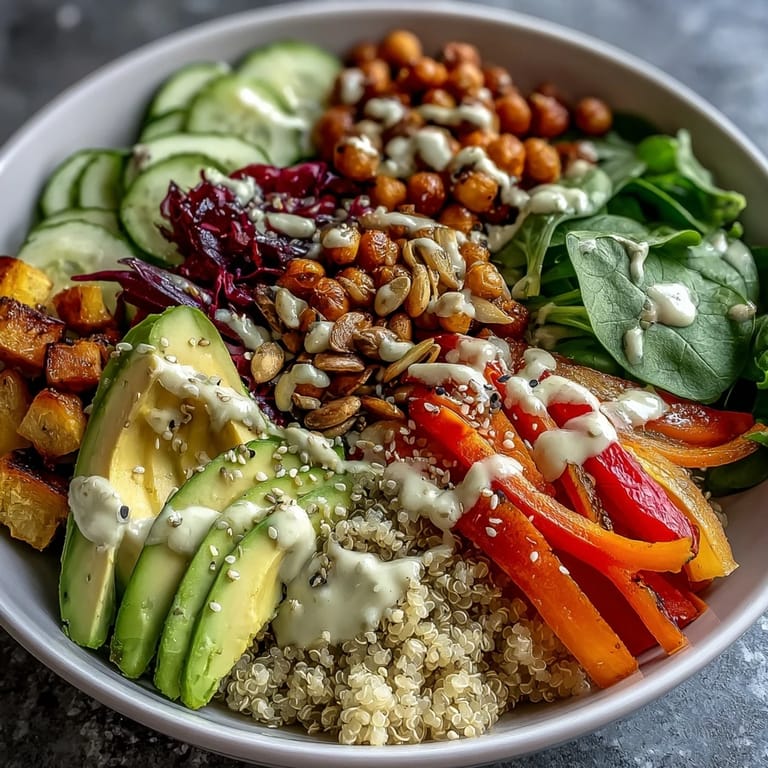
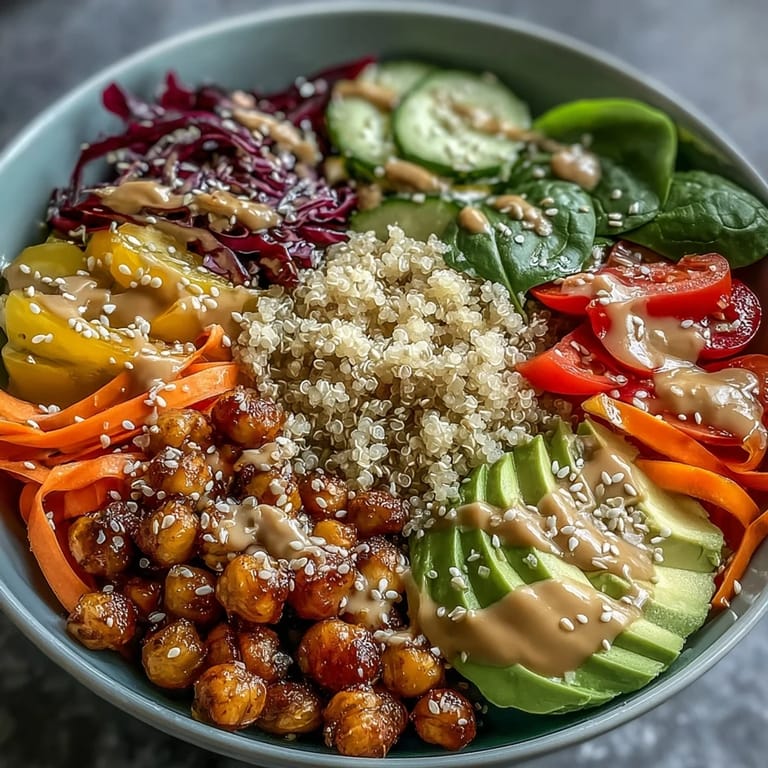
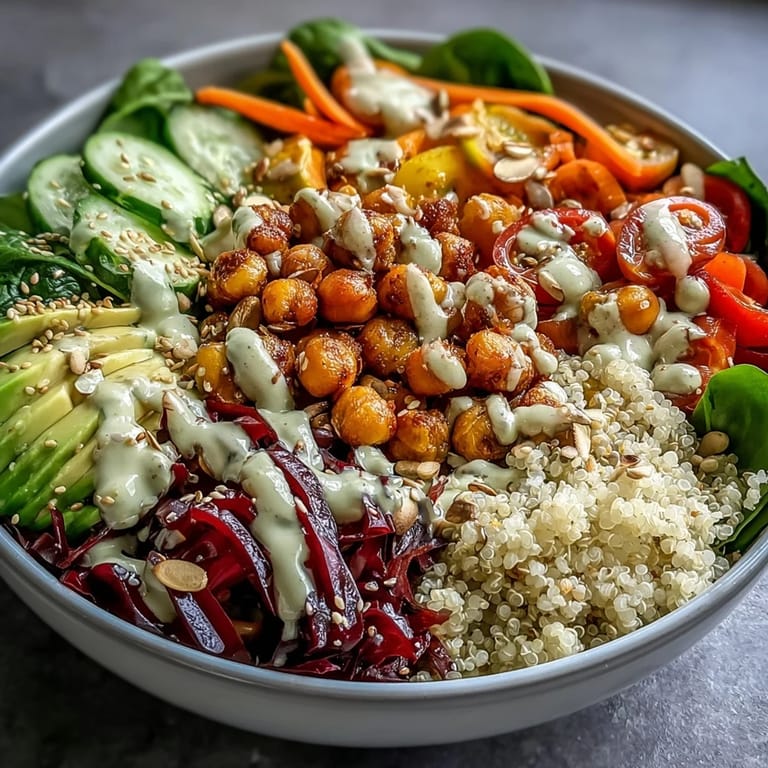
- Divide the warm quinoa among four bowls, then arrange chickpeas and vegetables in sections radiating outward like a color wheel. This isn't just prettier; it ensures you get balanced bites of each component rather than all spinach in one spoonful.
- Dress and garnish:
- Drizzle each bowl generously with tahini dressing, letting it pool slightly in the center and seep into the warm quinoa. Finish with a scatter of toasted seeds, adding final visual texture and a satisfying crunch.
 Pin it
 I made these bowls for a potluck where everyone brought something beige, and watching people's faces light up at the color and freshness felt like a small kitchen victory. It became the dish people asked me to bring again, which taught me that nourishing food shared generously often matters more than complicated cooking ever could.
Building Your Own Variations
The beauty of this bowl is its flexibility, which I discovered by accident when I ran out of chickpeas mid-week and grabbed marinated tofu instead. The structure stays steady while the protein swaps freely, whether you're using tempeh, roasted cauliflower, or even grilled chicken on days when you want something more substantial. Think of the quinoa and dressing as your anchors, then play with whatever vegetables excite you that particular day.
The Tahini Dressing Secret
I've made this dressing thick enough for dipping and thin enough to almost disappear into the grains, and neither felt quite right until I realized it should coat a spoon but still drip slightly. The real magic happens when you add water slowly and taste constantly, because every tahini brand behaves differently. One afternoon I added roasted red peppers to the dressing by accident and created something that became my default, proving that mistakes in this direction tend to improve things.
Making It Work Throughout Your Week
These bowls revolutionized my meal prep the moment I realized that everything except avocado, dressing, and seeds survives refrigeration beautifully for two or three days. I started cooking a double batch of quinoa on Sunday, chopping vegetables in advance, and keeping the components in separate containers so fresh assembly takes minutes rather than the full 40. On tired evenings when cooking feels impossible, having a gorgeous, nutritious dinner ready in 90 seconds changes everything.
- Store quinoa and vegetables in glass containers with paper towels to absorb excess moisture.
- Keep the tahini dressing separate until serving, as it gradually softens vegetables over time.
- Add avocado and seeds only when you're ready to eat, preserving their texture and preventing premature browning.
 Pin it
 These bowls taught me that eating well doesn't require complexity, just intention and bright vegetables arranged with care. Every time I make one, it reminds me why I fell in love with cooking in the first place.
Recipe FAQ
- → What makes a Buddha Bowl different from regular grain bowls?
Buddha bowls feature arranged ingredients in sections rather than mixed together, showcasing each component's colors and textures. They traditionally include grains, protein, vegetables, and healthy fats in harmonious proportions.
- → Can I prepare the components ahead of time?
Absolutely. Cook quinoa and chop vegetables up to 2 days in advance. Store components separately in airtight containers. Add avocado and dressing just before serving to maintain freshness.
- → What other proteins work well in this bowl?
Grilled tofu, tempeh, black beans, or edamame make excellent protein alternatives. Roasted vegetables like sweet potatoes or broccoli also add substantial heartiness to the bowl.
- → How do I keep the avocado from turning brown?
Slice avocado immediately before serving. If preparing ahead, toss slices in lemon juice to prevent oxidation. Alternatively, pack avocado separately and add just before eating.
- → Can I make this bowl oil-free?
Yes. Replace tahini with pureed white beans or avocado in the dressing. Use vegetable broth or additional lemon juice to thin consistency. The natural fats from avocado still provide richness.