 Pin it
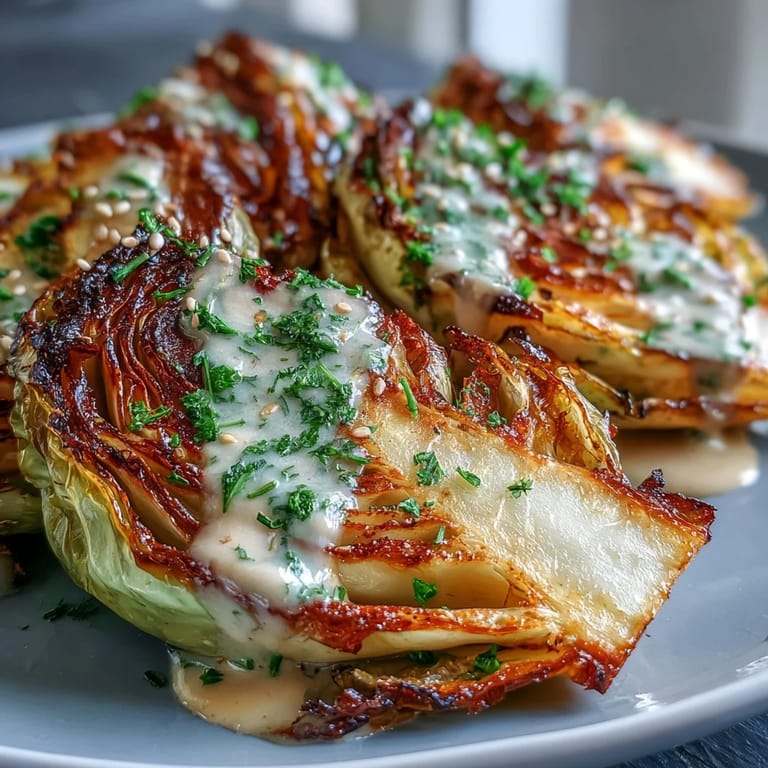
 My neighbor brought over a wooden board stacked with charred cabbage wedges one autumn evening, and I remember being genuinely surprised by how something so simple could taste so good. She drizzled them with this golden tahini sauce that caught the light, and I realized I'd been sleeping on roasted cabbage my entire life. That night, I went home and started experimenting, and now this dish shows up on my table whenever I want something that feels both nourishing and exciting without any fuss.
I made this for a dinner party where someone mentioned they'd given up heavy side dishes, and watching them go back for seconds was one of those quiet kitchen victories. The cabbage had browned just enough to caramelize, and the tahini pooled around each wedge like it belonged there. That's when I knew this recipe was a keeper, not because it's complicated, but because it somehow makes everyone at the table feel seen.
Ingredients
- 1 medium green cabbage (about 2 lbs), cut into 8 wedges with core intact: Keeping the core in place holds everything together so the wedges don't fall apart in the oven—it's the small detail that changes everything.
- 2 tbsp olive oil: Use something you actually like tasting, because roasting concentrates flavors and a good oil makes a real difference.
- 1/2 tsp kosher salt and 1/4 tsp freshly ground black pepper: Don't skip the freshly ground pepper; the difference between pre-ground and fresh is noticeable here.
- 1/3 cup tahini: This is sesame seed paste, and it needs to be stirred well before measuring because the oil separates.
- 1 small garlic clove, finely grated: Grating it instead of mincing releases more juice and distributes the garlic evenly throughout the sauce.
- 2 tbsp fresh lemon juice: Fresh lemon is non-negotiable; bottled just doesn't have the same brightness.
- 2–4 tbsp cold water: Add gradually because you're looking for a pourable consistency, not peanut butter.
- 1/4 tsp ground cumin: This brings warmth without being obvious about it.
- Toasted sesame seeds, fresh herbs, and smoked paprika for garnish: These aren't just toppings—they add texture and color that make the dish feel complete.
Tired of Takeout? 🥡
Get 10 meals you can make faster than delivery arrives. Seriously.
One email. No spam. Unsubscribe anytime.
Instructions
- Heat your oven and prep:
- Get the oven to 425°F and line a baking sheet with parchment paper so nothing sticks and cleanup is easier. The parchment also helps the bottoms brown evenly.
- Arrange and season the cabbage:
- Lay cabbage wedges flat on the sheet, drizzle with olive oil, and season generously with salt and pepper on both sides. Don't be shy with seasoning—the cabbage is mild and needs the support.
- Roast until caramelized:
- Put the sheet in the oven for 25–30 minutes, flipping halfway through. You'll know it's done when the edges are deeply browned and the cabbage is fork-tender but still holding its shape.
- Make the tahini sauce while cabbage roasts:
- Whisk tahini with grated garlic, lemon juice, cumin, and salt in a bowl, then gradually add cold water one tablespoon at a time until you reach a smooth, pourable sauce. Taste and adjust seasoning as you go.
- Plate and dress:
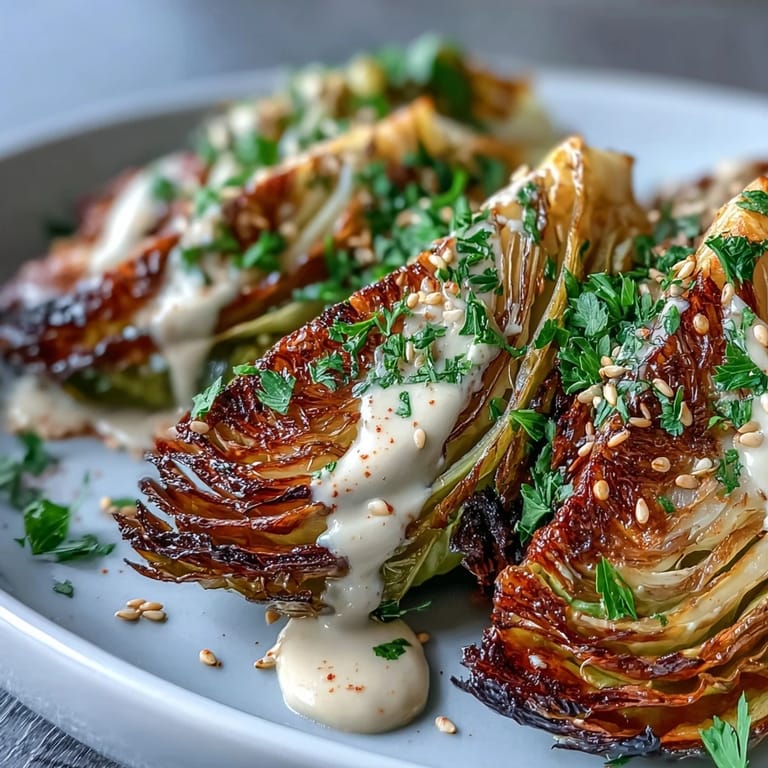
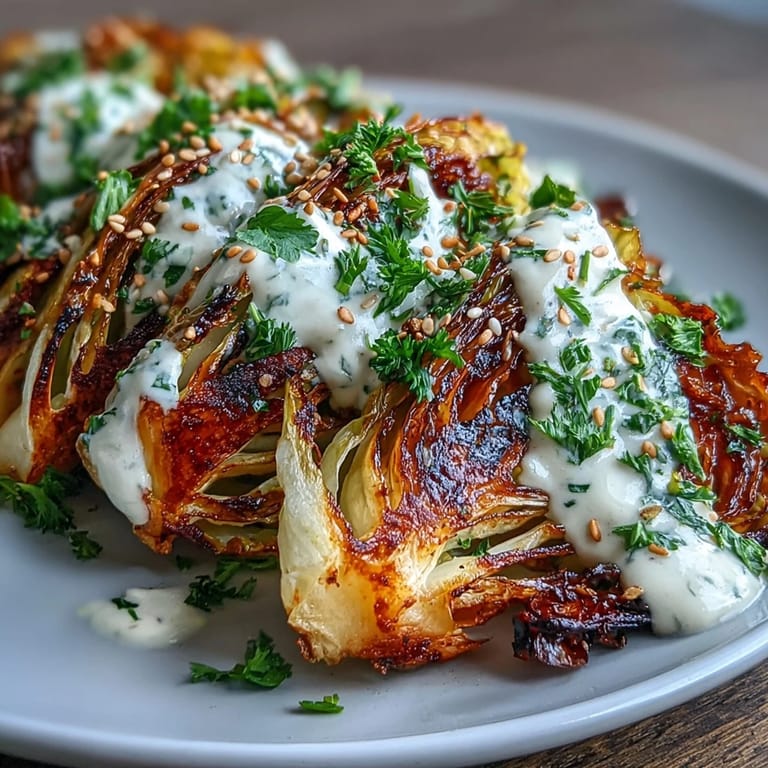
- Transfer roasted cabbage to a serving platter and generously drizzle with tahini sauce. Finish with toasted sesame seeds, fresh herbs, and a pinch of smoked paprika if you like.
 Pin it
 There's something almost meditative about watching cabbage transform from raw and pale to caramelized and golden in the oven. My kids, who normally push vegetables around their plates, asked for this again the next night, and I realized it wasn't the recipe that won them over—it was the moment we were all eating the same thing without negotiation.
The Magic of Caramelization
Roasting at high heat brings out the natural sugars in cabbage, turning it slightly sweet and nutty instead of sulfurous or bitter. The browned edges are where the real flavor lives, so don't be afraid of a little char—that's actually what you're aiming for.
Tahini Sauce Troubleshooting
The first time I made tahini sauce, I dumped all the water in at once and ended up with something closer to cabbage cement than sauce. The key is patience and the gradual whisking method—each addition of water gets fully incorporated before you add more. If you do accidentally make it too thick, a splash of lemon juice will often save it.
Making It Your Own
This dish is actually a blank canvas if you want it to be, and that's part of why it lives on my table so often. Some nights I add pomegranate seeds for brightness, other times I toss in chili flakes for heat or crumbled feta for richness. The base is so solid that you can play with it without anything going wrong.
- Red cabbage works too, though it might need an extra five minutes in the oven to get as tender.
- Try drizzling with hummus or labneh instead of tahini for a different flavor direction.
- Serve alongside rice, quinoa, or warm pita to make it more of a meal than a side.
 Pin it
 This recipe proved to me that sometimes the best dishes aren't the ones with long ingredient lists or complicated techniques—they're the ones that make you wonder why you didn't discover them sooner. Roasted cabbage with tahini is now my go-to when I want to feed people something real.
Recipe FAQ
- → How do I get the cabbage properly tender?
Roast at 425°F for 25-30 minutes, flipping halfway through. The high heat caramelizes the edges while ensuring the wedges cook through completely. You'll know it's done when the outer leaves are golden-brown and crispy while the inner layers are tender.
- → Can I make the tahini sauce ahead?
Absolutely. The sauce keeps well in the refrigerator for up to a week. It may thicken when cold—simply whisk in a splash of water to return it to a pourable consistency. The flavors actually develop and improve after a day or two.
- → What can I serve with this dish?
Pair with grilled meats, roasted chicken, or fish as a side. For a vegetarian meal, serve over rice or quinoa, or with warm pita bread and hummus. It also works beautifully as part of a Middle Eastern-inspired mezze spread.
- → Can I use red cabbage instead?
Yes, red cabbage works wonderfully and adds vibrant color. Keep in mind that red cabbage is often denser than green, so it may need an extra 5-10 minutes of roasting time to reach the same level of tenderness.
- → Why does my tahini sauce sometimes seize up?
This happens when the tahini and lemon juice are combined before adding water. The solution is to keep whisking—eventually it will smooth out. Adding the water gradually helps achieve a creamy, emulsified consistency. If it's too thick, add more water one tablespoon at a time.
- → How do I store leftovers?
Store roasted cabbage and sauce separately in airtight containers. The cabbage keeps for 3-4 days in the refrigerator. Reheat in a 350°F oven or enjoy cold—the flavors hold up beautifully. Avoid microwaving if possible, as it can make the cabbage soggy.