 Pin it
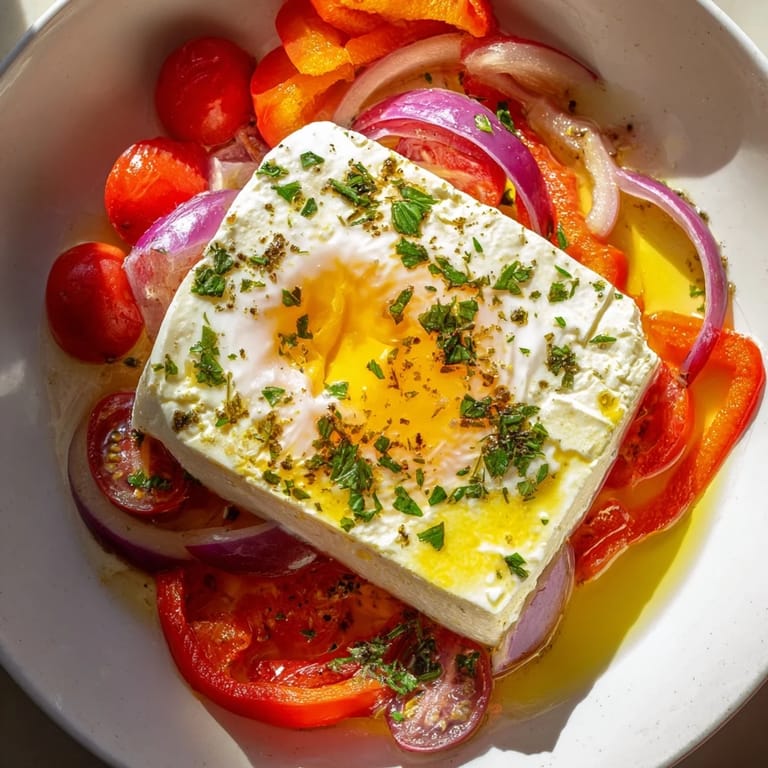
 One Sunday morning, I watched my neighbor slide a cast-iron skillet into her oven with the confidence of someone who'd done it a hundred times. She emerged minutes later with something so simple yet so luminous—a tangle of roasted tomatoes, a creamy block of feta beginning to weep into the pan, and eggs that broke into sunshine yellow. I had to know what it was. She laughed and said it was just eggs and feta, but the way she made it feel like an event changed everything about how I cook when I'm not trying too hard.
I made this for a friend who was going through something difficult, and she sat at my kitchen counter watching the feta brown through the oven window. She didn't say much, but when that first forkful of runny egg yolk hit the warm tomatoes and melted feta, something in her face softened. Food doesn't fix heartbreak, but sometimes it can remind you that comfort is still possible.
Ingredients
- Cherry tomatoes (2 cups, halved): Their sweetness intensifies in heat, creating a gentle sauce. Don't skip halving them—it lets them release their juice and caramelize at the edges.
- Red onion (1 small, thinly sliced): The thin slices soften almost to translucence, adding a subtle sweetness that balances the salty feta.
- Garlic (2 cloves, minced): Raw garlic mellows during baking and perfumes the whole dish without shouting.
- Red bell pepper (1 small, sliced): It adds color and a gentle crunch that doesn't fully disappear, giving texture beneath the eggs.
- Feta cheese block (7 oz / 200 g): Use a block, not crumbles—it holds together and creates those beautiful melted pools. Quality matters here because you can taste everything.
- Large eggs (4): Look for eggs with rich golden yolks. The runnier the yolk, the better it becomes a sauce.
- Extra virgin olive oil (3 tbsp): This is not a place to use the cheap bottle. Good oil becomes part of the flavor profile, not just a cooking medium.
- Dried oregano (1 tsp) and dried thyme (1/2 tsp): Mediterranean herbs are non-negotiable here—they're what transforms vegetables into something unmistakably Greek or Turkish.
- Crushed red pepper flakes (1/4 tsp, optional): If you use them, taste everything first, then decide—you can always add heat, but you can't take it back.
- Salt and freshly ground black pepper: Season in layers—once at the start, once before the eggs go in. Fresh pepper tastes completely different from pre-ground.
- Fresh parsley (2 tbsp, chopped): The fresh green at the end is not decoration. It cuts through the richness and makes every bite feel bright.
Tired of Takeout? 🥡
Get 10 meals you can make faster than delivery arrives. Seriously.
One email. No spam. Unsubscribe anytime.
Instructions
- Heat your oven and prepare the dish:
- Set the oven to 400°F (200°C). While it preheats, grab your medium baking dish—ceramic or cast iron both work beautifully—and picture it holding warm, glistening vegetables in about fifteen minutes.
- Build the base:
- Combine the halved tomatoes, sliced onion, bell pepper, and minced garlic in your baking dish. They should pile loosely, not be packed down. Drizzle generously with olive oil, then scatter the oregano, thyme, and red pepper flakes across the top like you're seasoning as you go, not all at once. Add salt and pepper, then toss everything together with your hands or a wooden spoon until every piece glistens with oil and spice.
- Introduce the feta:
- Nestle the feta block right into the center of the vegetables, like it's claiming its throne. Don't break it up. This is where the magic starts—as it heats, the edges will brown and the inside will soften into something between cheese and butter.
- First bake—let the vegetables soften:
- Slide the dish into the oven for 15 minutes. You'll know it's ready when the tomatoes begin to collapse, their skins wrinkling slightly, and the feta is turning golden at the edges. The smell at this point should stop you mid-thought.
- Make wells for the eggs:
- Remove the baking dish carefully—it's hot and the pan itself might be too—and let it cool for just 30 seconds. Using the back of a spoon, gently push the vegetables to the sides, creating four small wells around the feta where eggs will nestle in. The wells don't need to be perfect; they just need to be there. Crack one egg into each well, being careful not to break the yolks.
- Final bake—set the eggs:
- Return the dish to the oven for 8 to 10 minutes. The egg whites will turn opaque and set, while the yolks stay soft enough to run. Toward the end, crack the oven door slightly and peek. If you see the yolks starting to firm up, they're done.
- Finish and serve:
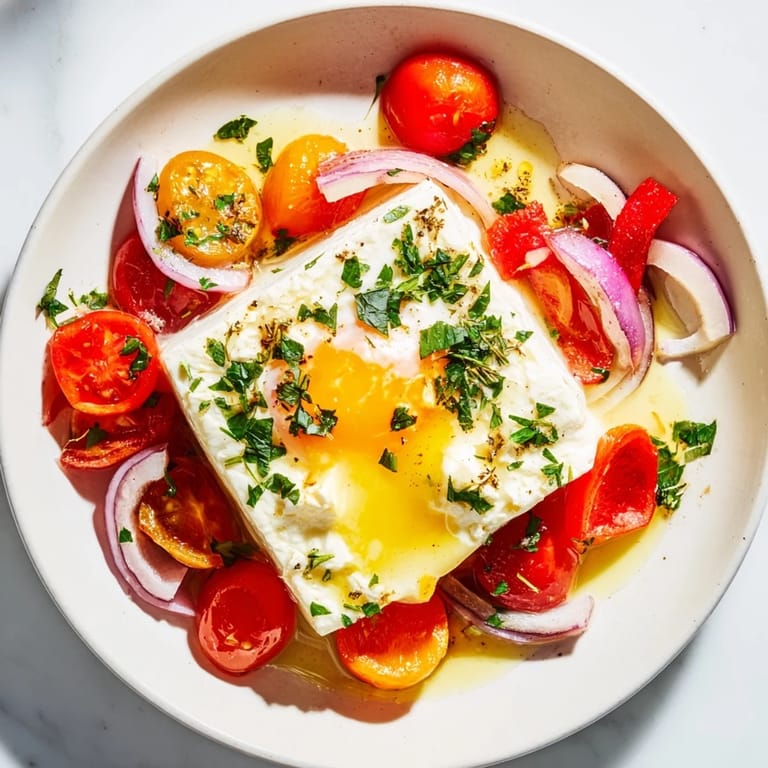
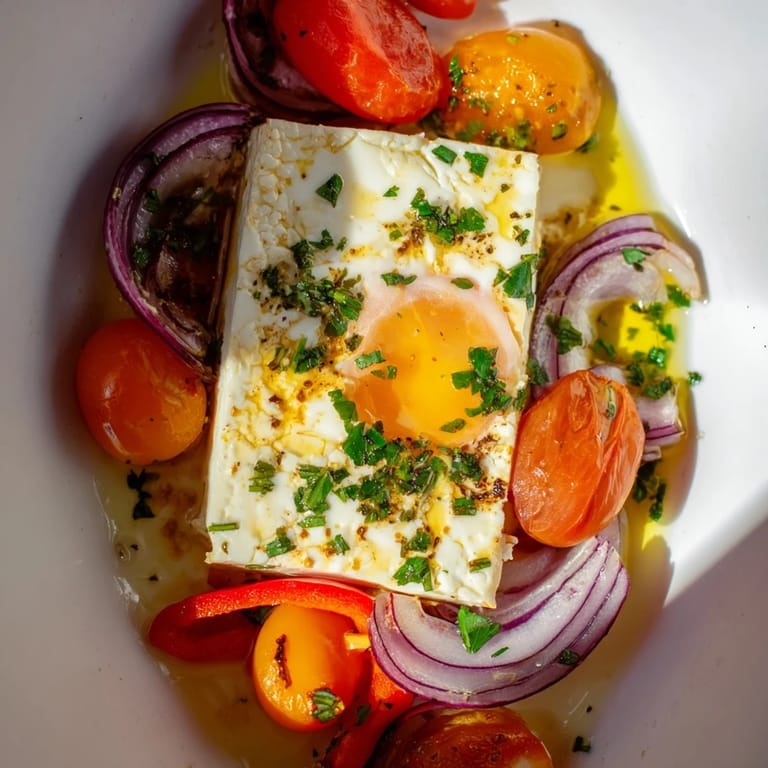
- Pull the dish out, scatter the fresh parsley over the top, and take a breath. Serve immediately with crusty bread to soak up everything—the rendered olive oil, the broken egg yolk, the feta cream. Hesitation will only make it cold.
 Pin it
 There's a moment right after everything comes out of the oven, when the eggs are still trembling slightly and the whole dish is glowing and steaming, that feels like a small victory. It's been 35 minutes, and somehow you've created something that tastes like it came from a Mediterranean kitchen, not from hurried ambition on a weeknight.
When to Make This
This dish shines on weekend mornings when you want something more than cereal but have plans that mean brunch can't stretch into afternoon. It's equally at home on a quiet weeknight dinner table. The beauty is that it doesn't feel rushed or light-handed, even though it comes together without fanfare. I've made it for two people with wine and for four people with bread and olives scattered around. It adapts without losing itself.
How to Make It Your Own
The framework here is solid, but it's also forgiving. I've stirred in baby spinach just before the eggs go in and watched it wilt into tender green threads. I've added Kalamata olives for a briny edge and learned that half the amount of capers gives a different kind of salt. Once, I added a handful of fresh basil instead of parsley at the end, and it tasted like a different memory—still Mediterranean, but shifted slightly toward summer.
Pairing and Serving Thoughts
Serve this with bread that has real crust, the kind that shatters under your teeth and can hold the weight of melted feta and warm egg. A crisp white wine—Sauvignon Blanc is classic—feels right alongside it, the acidity cutting through the richness. Some mornings I pair it with nothing but coffee and a window that faces east, letting the light do the work of making everything taste better.
- Pour the wine cold, or even slightly chilled, to make the contrast with the warm food feel intentional.
- If you have olive tapenade or good salsa, set it on the table and let people add it if they want another flavor note.
- Make sure your bread is toasted on both sides if you want it to stay crispy; soft bread becomes a vehicle, which is lovely, but sometimes you want the bread to have opinions too.
 Pin it
 There's something about a dish this straightforward that feels almost secret—like you've stumbled onto something everyone should know about but somehow doesn't. Make it once, and it becomes part of your rotation, the thing you reach for when you want to cook something that feels a little bit Mediterranean, entirely doable, and completely worth remembering.
Recipe FAQ
- → What type of feta cheese works best?
A firm, block-style feta is ideal for baking, as it softens without melting completely, preserving its creamy texture.
- → Can I add other vegetables?
Yes, incorporating Kalamata olives or baby spinach adds variety and complements the Mediterranean flavors well.
- → How do I achieve runny egg yolks?
Bake the eggs for about 8–10 minutes at 400°F, checking frequently to ensure yolks stay slightly runny while whites set.
- → Is this suitable for gluten-free diets?
Yes, the dish itself is gluten-free; just ensure bread served alongside is also gluten-free if desired.
- → What herbs enhance the flavor most?
Dried oregano and thyme bring authentic Mediterranean aroma and depth, balancing the richness of feta and eggs.