 Pin it
 There's a moment when two worlds collide in the kitchen that feels almost serendipitous. I discovered hojicha tiramisu by accident, really—standing in a Japanese market holding a package of roasted tea leaves, then finding myself in an Italian cooking class the very next week. The toasty, almost nutty warmth of hojicha kept calling to me, and I wondered what would happen if I let it replace the espresso in a traditional tiramisu. The result was something that tasted like a conversation between two cultures, each one better for meeting the other.
I made this for my friend Maya's dinner party on a rainy autumn evening, and watching her take that first bite—the way she paused, thinking—made me understand why this dessert mattered to me. She said it tasted like autumn in a spoon, and I knew exactly what she meant. That night, tiramisu wasn't just about technique or ingredients; it became the reason people lingered at the table, asking for seconds and wanting the recipe.
Ingredients
- Hojicha loose leaf tea (3 tablespoons or 4 tea bags): This roasted green tea is the soul of the dish—it's warmer and earthier than regular green tea, almost like a cozy whisper instead of a shout, and you'll want to find it at a Japanese market or online where the quality is guaranteed.
- Water (2 cups): Use filtered water if you can; it lets the hojicha flavor shine without any competing notes.
- Sugar (2 tablespoons for syrup, 1/2 cup for cream): The syrup sugar dissolves while the tea is still hot, creating a subtle sweetness that doesn't overpower the hojicha's natural depth.
- Egg yolks (3 large): Room temperature eggs whip better, so take them out of the fridge 20 minutes before starting; they're the base that becomes silky and pale over the double boiler.
- Heavy cream (1 cup, cold): Cold cream whips faster and holds peaks better, which is why you should chill your bowl and beaters beforehand—I learned this the hard way after five minutes of frustrated whisking.
- Mascarpone cheese (8 oz, softened): Let this sit at room temperature for 10 minutes before folding; cold mascarpone resists blending and creates lumps that no amount of stirring will fix.
- Vanilla extract (1 teaspoon): This brightens the earthy tea notes without competing with them, adding a layer of warmth that feels familiar and comforting.
- Ladyfinger biscuits (24–30 savoiardi): These Italian cookies have just enough structure to hold up to the syrup without falling apart; store-bought versions work beautifully, and you don't need to hunt for artisanal ones.
- Cocoa powder or hojicha powder for dusting: This final layer is your finishing touch—hojicha powder ties the flavors together if you can find it, but quality cocoa powder works wonderfully too.
Tired of Takeout? 🥡
Get 10 meals you can make faster than delivery arrives. Seriously.
One email. No spam. Unsubscribe anytime.
Instructions
- Brew the Hojicha Syrup:
- Bring water to a rolling boil, add your hojicha tea, and let it steep for exactly 5 minutes—any longer and it becomes bitter, any shorter and the flavor stays too subtle. Strain the leaves out (they're done with their job now), then stir in the sugar while everything is still hot so it dissolves completely.
- Create the Silky Egg Base:
- Whisk your egg yolks and sugar in a heatproof bowl, then nestle that bowl over a pot of simmering water, making sure the bowl doesn't touch the water itself. Whisk constantly for 5 to 7 minutes—your arm will feel it, but you're building a pale, thickened mixture that's the foundation of everything creamy to come.
- Whip the Cream to Clouds:
- In a separate bowl (cold bowl, remember), whip your heavy cream until it reaches stiff peaks—you want it to hold its shape proudly when you lift the whisk. This takes about 2 to 3 minutes with an electric mixer, and the transformation from liquid to cloud never stops feeling magical.
- Blend the Mascarpone Gently:
- Beat your softened mascarpone with vanilla until it's smooth and creamy, but stop before it becomes grainy—overworking it releases oils and ruins the texture. This usually takes about a minute, so resist the urge to keep going.
- Fold Everything Together:
- Gently fold the cooled egg mixture into the mascarpone first, watching the colors blend, then fold in the whipped cream in two additions using a rubber spatula and careful, deliberate strokes. You're not stirring; you're tucking air into the mixture and letting gravity do the work, resulting in something airy and light.
- Assemble the Layers:
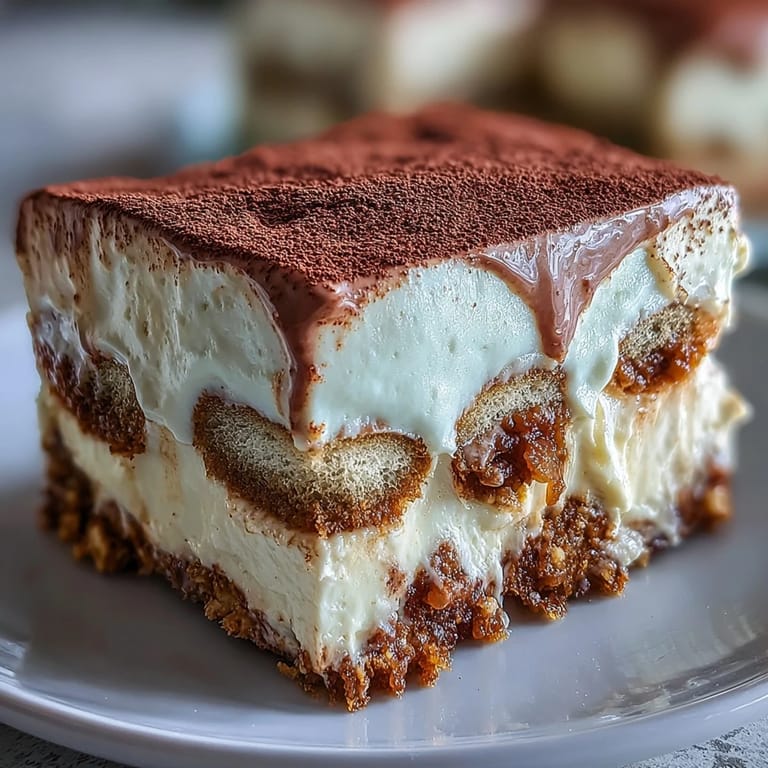
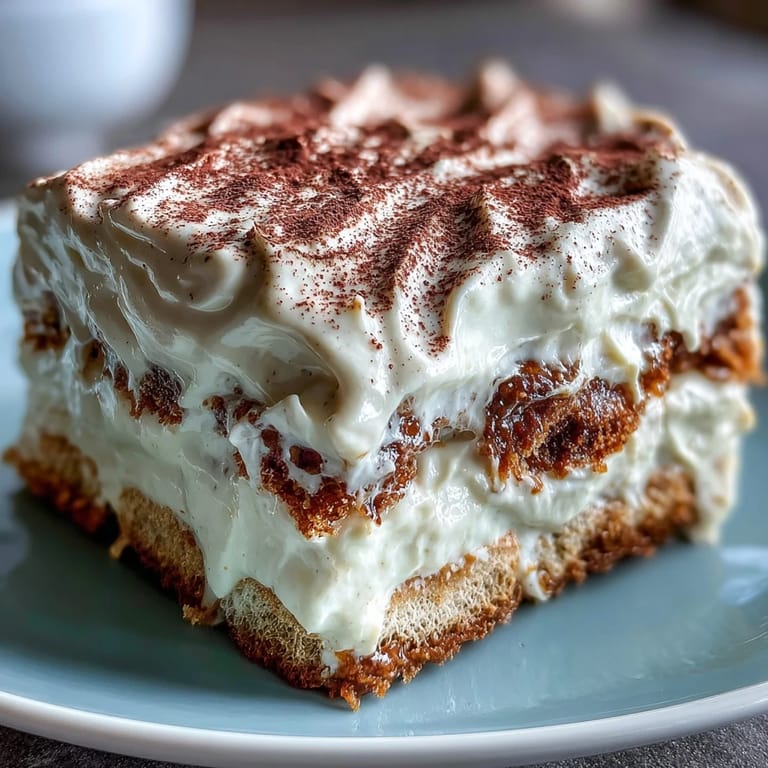
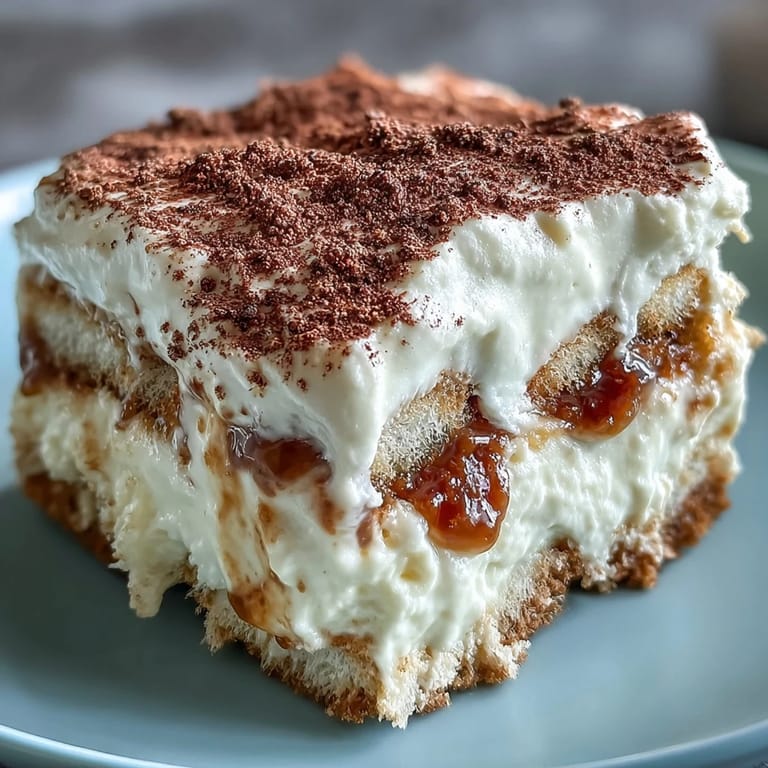
- Quickly dip each ladyfinger into your cooled hojicha syrup for just a breath—one second on each side is enough—then arrange them in a single layer in your baking dish. Spread half the mascarpone cream over this first layer, then repeat with another layer of dipped ladyfingers and the remaining cream on top.
- Chill and Set:
- Cover your dish and refrigerate for at least 4 hours, but overnight is genuinely better; the flavors marry and the texture becomes impossibly smooth. I usually make mine in the morning and serve it the next evening, letting time do the heavy lifting.
- Finish with a Whisper:
- Just before serving, dust the top generously with cocoa powder or hojicha powder using a sifter or fine mesh strainer, letting it fall like snow across the surface. This final step looks beautiful and reminds everyone of what they're about to taste.
 Pin it
 There's something deeply satisfying about pulling this dessert from the refrigerator the next morning, lifting the cover to reveal those perfect layers set and waiting. Watching someone discover the hojicha flavor hiding beneath the creamy surface, that moment of recognition on their face—it reminds me why I cook.
The Magic of Hojicha
Hojicha is roasted green tea, which means it's been heated until it transforms from grassy and sharp to warm and almost caramel-like. This roasting process creates something almost cereal-like in its earthiness, something that feels cozy and sophisticated at the same time. When you brew it, the water turns a pale amber-brown, and the aroma that rises from the pot is the smell of autumn kitchens and quiet afternoons. It's milder than regular green tea and less aggressive than coffee, which is exactly why it works so beautifully in a cream-based dessert—it supports the mascarpone instead of fighting it.
Making It Your Own
The beauty of this recipe is how forgiving it is when you want to experiment. If you love matcha, you can swap it in for the hojicha and get a brighter, grassier version that tastes like spring instead of autumn. For a boozy version, add 2 tablespoons of coffee liqueur or Marsala wine to the cooled syrup, which deepens the flavors and adds sophistication. You could also toast some sesame seeds or chop roasted pistachios to scatter between layers or on top, adding texture and a nutty note that plays beautifully with the hojicha.
Notes for Success
Pay attention to the temperature of each component as you build this dessert—warm syrup on cold ladyfingers, room temperature mascarpone folded into cooled egg mixture, cold cream folded in last. Think of tiramisu as a temperature dance where each step matters.
- The egg yolks are technically uncooked when you use them raw, so use the freshest, highest-quality eggs you can find or seek out pasteurized eggs if food safety is a concern.
- Your baking dish can be any size roughly equivalent to 7 by 11 inches; the layers will just be thicker or thinner depending on what you use.
- Make this a day or two ahead and store it covered in the refrigerator—it genuinely tastes better after the flavors have settled and deepened overnight.
 Pin it
 This dessert tastes like a love letter between two culinary traditions, and every time I make it, I'm reminded that the best dishes come from curiosity and a willingness to let flavors surprise you. Serve it cold, share it generously, and let the tiramisu do what it does best—bring people together around something beautiful and delicious.
Recipe FAQ
- → What does hojicha taste like?
Hojicha is roasted green tea with distinctive toasty, nutty, and caramel-like notes. Unlike other green teas, it has lower caffeine and a milder, earthier flavor that pairs beautifully with rich cream and sugar.
- → Can I make this ahead of time?
Absolutely. This dessert actually improves with time and should chill at least 4 hours, though overnight is ideal. The flavors meld and the texture sets perfectly, making it an excellent make-ahead option for dinner parties.
- → What can I substitute for ladyfingers?
While traditional ladyfingers (savoiardi) provide the best texture and absorbency, you can use sponge cake cut into strips, pound cake slices, or even gluten-free ladyfingers if needed. Just adjust dipping time to prevent oversaturation.
- → Is there alcohol in this tiramisu?
The base version is completely alcohol-free. However, you can add 2 tablespoons of coffee liqueur or Marsala wine to the hojicha syrup if you prefer a traditional boozy kick.
- → How do I store leftovers?
Cover tightly and refrigerate for up to 4 days. The texture remains excellent, though the cocoa powder dusting may absorb into the cream over time. Simply refresh with another light dusting before serving.
- → Can I use different tea varieties?
Matcha works wonderfully for a brighter, grassier flavor. You could also try genmaicha for extra nuttiness or chai spice for warm aromatic notes. Adjust steeping time based on tea strength.