 Pin it
 The first time I made this, I was standing in my kitchen on a rainy Tuesday, craving sushi but too lazy to roll anything. I had leftover salmon, cream cheese, and the sudden thought: what if I just layered everything like a casserole? Twenty minutes later, golden cheese bubbling in the oven, and I realized I'd stumbled onto something that feels both comforting and exciting. It's become the dish I make when I want sushi magic without the precision, when I want something that tastes impressive but lets me stay relaxed in the kitchen.
I served this to my partner's coworkers during a casual dinner party, and watching them realize it was 'sushi' after their first bite was pure joy. Someone asked for the recipe before they'd even finished eating, which tells you everything. The whole table suddenly felt like friends gathered around something homemade and genuinely cared-for, not just another dinner.
Ingredients
- Salmon fillet: Use cooked salmon, either leftover from another meal or freshly cooked. Flaking it by hand gives you better texture than chopping.
- Sushi rice: This matters more than people think—regular rice won't give you that slight tackiness that makes sushi rice feel special.
- Rice vinegar, sugar, and salt: These three together transform plain cooked rice into something with personality; don't skip seasoning the rice.
- Cream cheese and mayonnaise: The creamy base that turns this into a casserole rather than a rice bowl. Japanese Kewpie mayo is worth seeking out for its slightly sweet, rich flavor.
- Sriracha: Adjust this to your heat preference; it's the backbone of the flavor, not just a garnish.
- Mozzarella cheese: It melts beautifully and gets those golden, bubbly edges that make this dish irresistible straight from the oven.
- Sesame seeds, scallions, and nori: These finish the dish and remind your palate that you're eating something sushi-inspired, not just creamy rice.
Tired of Takeout? 🥡
Get 10 meals you can make faster than delivery arrives. Seriously.
One email. No spam. Unsubscribe anytime.
Instructions
- Start with rice:
- Rinse your sushi rice under cold water, stirring gently until the water runs clear—this removes excess starch and prevents gumminess. Cook it in a covered saucepan with 2½ cups of water, bringing to a boil then reducing to low heat for 15 minutes, then let it steam off the heat for another 10 minutes without peeking.
- Season while warm:
- Mix your rice vinegar, sugar, and salt in a small bowl, then fold this mixture gently into the warm rice using a spatula or wooden spoon. The warmth helps the rice absorb the seasoning evenly—this is the moment that transforms plain rice into something special.
- Layer the foundation:
- Spread the seasoned rice in an even layer in your greased baking dish, pressing down gently so it's compact but not dense. This base will hold everything together and keep your casserole from falling apart when you serve it.
- Mix the creamy salmon:
- Combine your flaked salmon, cream cheese, mayonnaise, Sriracha, and soy sauce in a mixing bowl, stirring until everything is incorporated and creamy. The mixture should feel rich and hold together, not dry or chunky.
- Spread and top:
- Spread the salmon mixture evenly over your rice layer, then scatter the shredded mozzarella over the top in an even blanket. This cheese will bubble and brown beautifully, creating the golden crust that makes this dish feel special.
- Bake until golden:
- Pop the dish into a 200°C (400°F) oven for 20–25 minutes, watching for the cheese to turn golden and bubbly around the edges. You'll know it's ready when the cheese has darkened slightly and the edges of the casserole smell toasty.
- Finish with fresh elements:
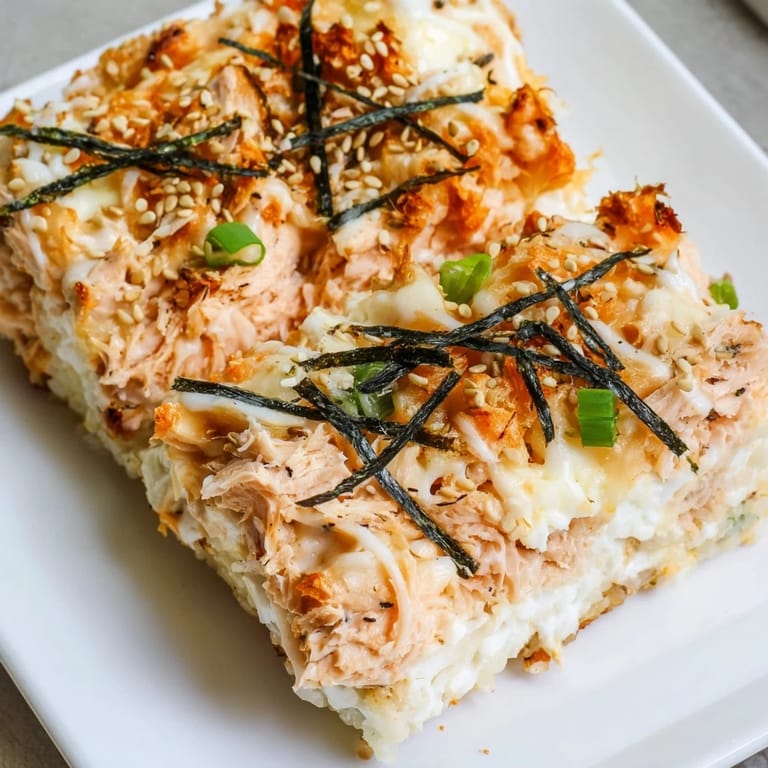
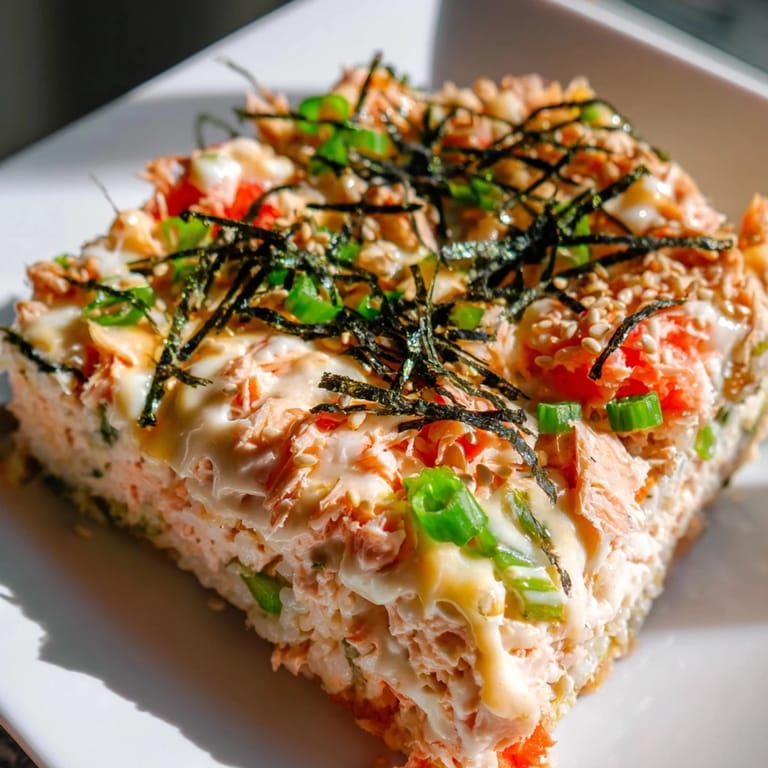
- Remove from the oven and scatter toasted sesame seeds, sliced scallions, and nori strips over the top while it's still warm. These fresh, crispy garnishes provide textural contrast and that final sushi-moment flavor.
 Pin it
 There's a moment when you pull this out of the oven and the kitchen fills with that aroma of melted cheese and toasted sesame that makes everyone suddenly appear in the kitchen asking when dinner's ready. That's when this stops being just a recipe and becomes the reason people gathered around your table.
The Magic of a Deconstructed Dish
What makes this recipe work is that it takes the flavors and textures you love from sushi—the creamy richness of a California roll, the umami depth of soy and nori, the brightness of scallions—and gives them room to breathe in a casserole format. You lose the precision of rolling, but you gain something warmer and more communal. It's the kind of dish that feels like someone who loves sushi and someone who loves comfort food had a conversation and agreed on this.
Making It Your Own
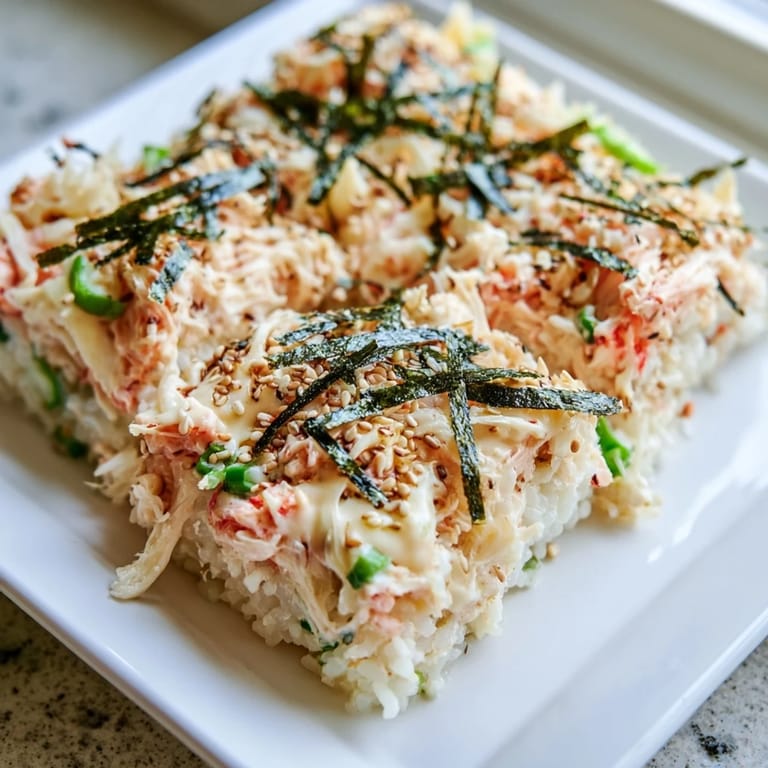
This recipe handles substitutions gracefully, which is part of why I keep making it. Out of salmon? Shrimp or canned tuna work beautifully. Want to skip the imitation crab? The dish doesn't suffer. Don't love Sriracha? Try unagi sauce or teriyaki drizzled on before baking, which adds a slightly sweet, savory depth. The foundation is flexible enough to become a different favorite depending on what you have on hand and what you're craving that day.
Serving and Storing
This dish is best served warm, straight from the oven when the cheese is still bubbling. If you're serving it family-style, place a sheet of nori nearby so people can tear off pieces and scoop up the sushi bake, which feels more interactive and fun than plating individual portions. Leftover portions keep well covered in the refrigerator for up to three days, and reheating gently in a 175°C (350°F) oven for about 10 minutes brings back the warmth without drying things out.
- Nori sheets are essential for the sushi experience—let people scoop with their hands rather than forks.
- Add avocado or cucumber slices on top after baking if you want freshness to contrast the warmth.
- Pickled ginger on the side helps cut through the richness and feels like a proper sushi meal.
 Pin it
 This recipe proves that the best meals don't always come from strict tradition or complicated techniques—sometimes they come from standing in your kitchen, wondering what happens if you try something different. That's where the best food memories are made.
Recipe FAQ
- → Can imitation crab be omitted?
Yes, it’s optional and can be left out or replaced with cooked shrimp or tuna depending on preference.
- → What kind of rice is best to use?
Sushi rice works best for its stickiness and texture, ensuring the layers hold together nicely.
- → How spicy is the dish?
The level of heat depends on the amount of chili or Sriracha added; you can adjust it to suit your taste.
- → Can this be prepared ahead of time?
Yes, you can prepare the seafood mixture and rice separately in advance and assemble just before baking.
- → What are good garnishes for serving?
Toasted sesame seeds, scallions, nori strips, and optional slices of avocado or pickled ginger enhance both flavor and presentation.