 Pin it
 My neighbor Milica invited me over one autumn afternoon, and the moment I stepped into her kitchen, the aroma of golden phyllo and melting cheese wrapped around me like a warm embrace. She was pulling a gibanica from the oven, its edges crackling with that unmistakable sound of perfectly crisped pastry, and I watched her slice through it with practiced ease. That first bite—the contrast of delicate, paper-thin layers giving way to a creamy, tangy cheese filling—changed how I thought about pastry entirely. She laughed at my expression and said every Serbian household has their own version, but the magic is always the same: patience with the phyllo and a light hand with the oil.
I remember making this for my partner on a quiet Sunday, nervous because I'd never worked with phyllo before and the sheets seemed so impossibly fragile. I kept expecting them to tear, but Milica's whispered advice echoed in my mind: brush gently, don't panic, the phyllo is tougher than it looks. By the time it came out of the oven, golden and puffed at the edges, I felt like I'd accomplished something real. Sharing that warm slice with him, watching his face light up—that's when I understood why this dish matters so much in Serbian kitchens.
Ingredients
- Cottage cheese (300 g): The backbone of the filling—mild, slightly tangy, and creamy without being heavy. Make sure it's at room temperature before mixing so it blends smoothly with the eggs and yogurt.
- Feta cheese (200 g, crumbled): This is where the personality comes in; it adds a sharp, salty bite that balances the sweetness of the phyllo and the richness of the cottage cheese.
- Eggs (4 large): They bind everything together and help the filling set into a custard-like texture as it bakes, creating pockets of creaminess throughout.
- Plain yogurt (100 ml): The secret ingredient that keeps the filling from drying out and adds a subtle tang that makes people ask what you did differently.
- Sunflower oil (50 ml for filling, plus 2 tbsp for brushing): Use a light, neutral oil—it won't compete with the cheese and allows the phyllo to crisp without becoming greasy.
- Sparkling water (50 ml): This might seem odd, but it aerates the filling slightly, making it a touch lighter and fluffier than you'd expect.
- Salt and black pepper: Start with half a teaspoon of salt and a quarter teaspoon of pepper, then taste and adjust—feta is already salty, so you're looking for balance, not boldness.
- Phyllo dough (500 g, about 12 sheets): Keep it thawed at room temperature and covered with a damp towel while you work; this prevents the sheets from drying out and becoming brittle.
- Egg yolk (optional, for glazing): If you want that burnished, showstopping finish, this is your secret weapon.
Tired of Takeout? 🥡
Get 10 meals you can make faster than delivery arrives. Seriously.
One email. No spam. Unsubscribe anytime.
Instructions
- Prepare your stage:
- Preheat your oven to 180°C (350°F) and lightly grease a 23x33 cm baking dish with oil. Have everything—cheese mixture, phyllo stack, oil brush, everything—within arm's reach because once you start layering, you want to move with confidence, not hunt for supplies.
- Mix the filling:
- In a large bowl, whisk together the cottage cheese, crumbled feta, eggs, yogurt, sunflower oil, sparkling water, salt, and pepper until completely smooth and creamy. The mixture should flow gently when you stir it, not clump. Taste a tiny bit and adjust salt if needed—remember, feta brings its own saltiness to the party.
- Lay the foundation:
- Place one sheet of phyllo in your greased dish and brush it very lightly with oil, just enough to seal it without making it soggy. Repeat with two more sheets, brushing each one, so you have a crispy base of three layers.
- First cheese layer:
- Spread 3 to 4 tablespoons of the cheese filling evenly over the three phyllo sheets, leaving a tiny border. You're not trying to cover every inch yet—this is layer one of many.
- Build with rhythm:
- Now continue the dance: two or three more phyllo sheets, brushed with oil, then another helping of cheese filling spread across. Keep your brush light, keep your layers intentional, and watch the pie grow taller and more promising with each round.
- Finish strong:
- When you've used all your filling and phyllo, top the pie with two final sheets of phyllo, brushed with oil. If you're using the egg yolk for a golden glaze, beat it lightly and brush it generously over the very top layer.
- Score before baking:
- Using a sharp knife, cut the assembled pie into squares or diamonds in one clean motion—don't saw back and forth, just let the knife glide through. This prevents the layers from shifting and makes serving easier later.
- Bake until golden:
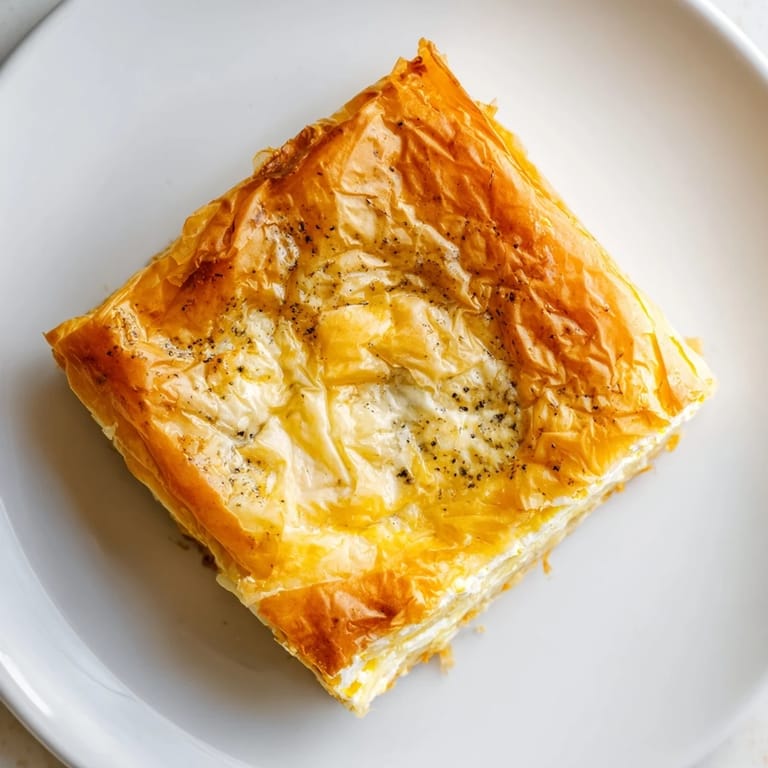
- Slide it into the oven for 35 to 40 minutes, until the top is deep golden brown and you can hear it crackling slightly when you lean close. The sides will puff slightly, and the smell will fill your entire kitchen with an aroma you'll crave for days.
- Rest and serve:
- Let it cool for at least 10 minutes—this gives the filling time to set slightly so the layers hold together when you cut. Serve it warm or at room temperature; both are revelatory.
 Pin it
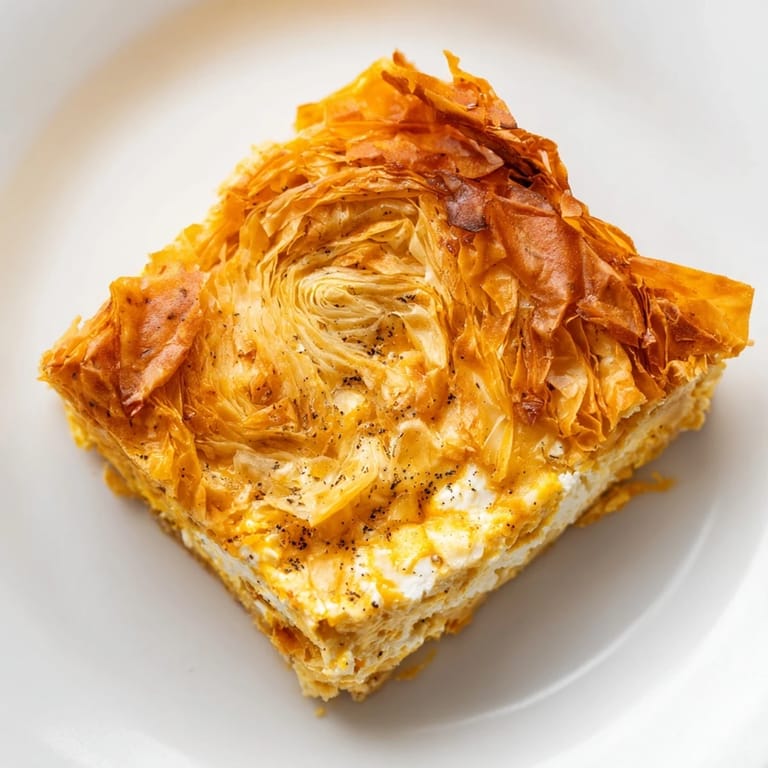
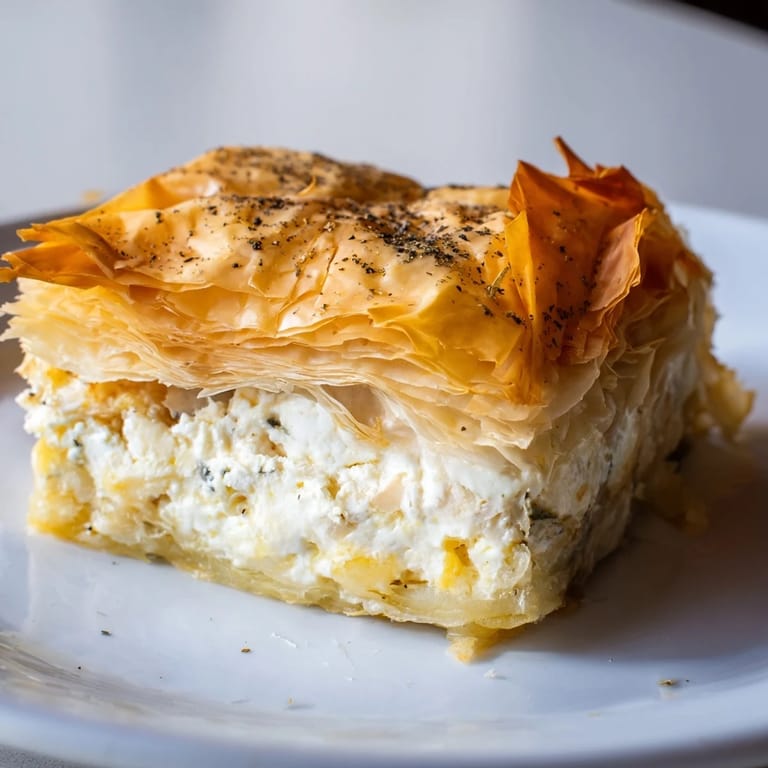
 There's something almost spiritual about sitting down to eat gibanica fresh from the oven, the steam still rising, the phyllo shattering gently under your fork. It's the kind of dish that makes ordinary moments feel special, that turns a simple lunch into something people remember and ask you to make again.
The Phyllo Philosophy
Phyllo intimidates a lot of home cooks, but the truth is simpler than you'd think: it's not delicate in the way you fear. It's thin, yes, but it's also forgiving. The oil is your friend here—each brush stroke creates a barrier that prevents the sheets from sticking together and from absorbing too much moisture from the filling. Work quickly but not frantically, keep your stack covered with a damp towel, and you'll discover that phyllo is one of the easiest ways to create something that looks restaurant-worthy. I've made gibanica with sheets so thin I could see my hand through them, and I've made it with thicker, more forgiving phyllo, and both versions turned out beautifully because the technique stays the same.
Cheese Choices and Substitutions
Cottage cheese and feta are the traditional pairing for a reason: cottage cheese provides creaminess and mild flavor, while feta adds character and tang. But I've experimented with other combinations when I'm missing an ingredient or feeling adventurous. Ricotta works beautifully in place of cottage cheese if that's what you have, though you might want to drain it slightly so the filling isn't too wet. For the feta, there's honestly no perfect substitute—it's a distinctly sharp, salty cheese—but white cheddar or even goat cheese brings its own interesting dimension. One rule I've learned the hard way: whatever cheese you choose, taste the filling before it goes in the oven. A little pinch on your tongue tells you exactly if you need more salt, more tang, or if you're perfectly balanced.
Make-Ahead Magic and Storage
One of my favorite things about gibanica is that it genuinely improves when made a day or two ahead. The flavors meld, the texture firms up slightly, and reheating it in a 160°C oven for about 15 minutes brings back the crispiness without drying anything out. You can also assemble the entire pie, cover it tightly with plastic wrap, and refrigerate it for up to 24 hours before baking—just add a few minutes to the baking time if you're starting from cold. Leftovers keep beautifully in the fridge for about four days, and I often find myself sneaking cold slices straight from the container, standing in front of the open fridge at midnight, because even room temperature gibanica is irresistible.
- Store covered with foil to prevent the phyllo from absorbing fridge odors and drying out.
- Freeze unbaked gibanica for up to three months; bake directly from frozen, adding 10 to 15 minutes to the baking time.
- Never microwave leftovers—it makes the phyllo soggy; use the oven or even a toaster oven instead.
 Pin it
 This recipe has become my go-to when I want to feel like I've cooked something real, something with roots and history, without spending hours in the kitchen. It's a gift I bring to friends, a dinner I make for myself on quiet nights, and somehow it always tastes like care.
Recipe FAQ
- → What type of cheese is used in this pie?
The filling combines creamy cottage cheese with crumbled feta for a rich, tangy flavor.
- → Can I use a different dough instead of phyllo?
Phyllo dough provides the signature crispiness, but a gluten-free phyllo substitute can be used for dietary needs.
- → How do I achieve a golden crust on top?
Brushing sunflower oil on the top layers and optionally adding an egg yolk glaze before baking ensures a golden, crisp finish.
- → Can this dish be served cold?
While best enjoyed warm or at room temperature, it can also be served cold, retaining its flavors and texture.
- → How should leftovers be stored and reheated?
Store leftovers in the fridge and reheat gently to maintain the crisp layers without drying out the filling.