 Pin it
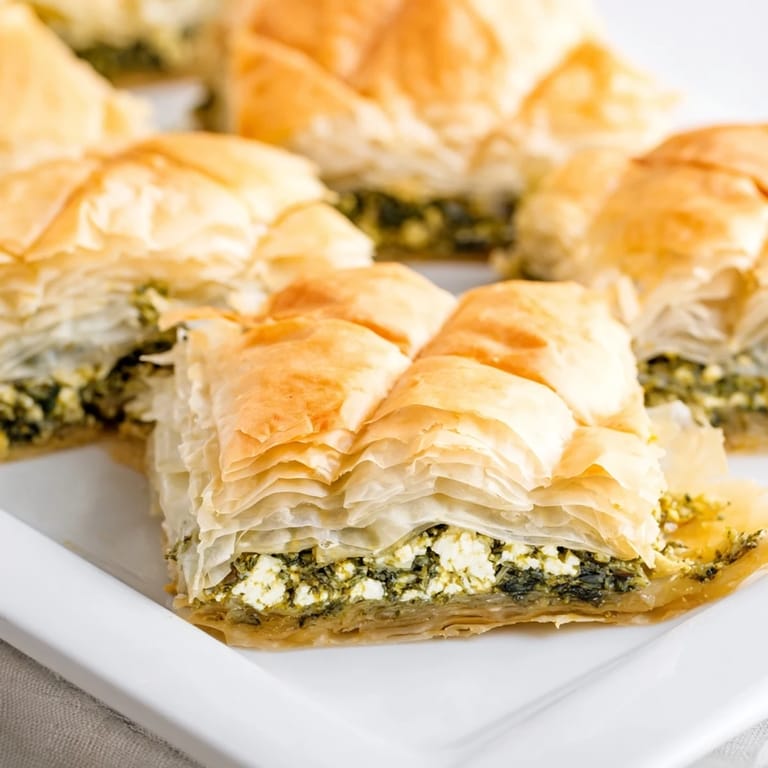
 My first spanakopita arrived on a chipped ceramic plate at a tiny taverna in Athens, steam still rising from its golden edges. I'd wandered in during a lazy afternoon, drawn by the smell of butter and herbs drifting onto the cobblestone street. One bite and I understood why this humble pie had survived centuries—the crisp phyllo shattering against my teeth, the creamy feta and bright dill singing together inside. Years later, I finally decided to recreate that moment in my own kitchen, and what started as nostalgia became my most requested dish.
I made this for my partner on a rainy Sunday when we couldn't leave the house, and watching their face when they bit through that phyllo crust—the way their eyes closed for just a second—reminded me that the best meals aren't always about fancy ingredients or restaurant presentations. It's about the moment when someone tastes something you made and it shifts something in them, even if just for that bite.
Ingredients
- Fresh spinach (2 lbs): Use the freshest you can find and don't skip the washing—grit in spanakopita is the enemy, and you'll thank yourself when your teeth don't crunch on sand instead of phyllo.
- Onion and scallions: The softer aromatics that build the foundation; they disappear into the filling but their sweetness is what makes you want another slice.
- Fresh dill and parsley: These are non-negotiable—dried herbs turn this into something forgettable, but fresh herbs keep it alive and bright.
- Feta cheese (8 oz): The salty heart of everything; crumble it by hand if you have time, which somehow makes it taste better than pre-crumbled.
- Ricotta or cottage cheese (optional): This is your secret for a filling that's creamy rather than crumbly, and a little goes a long way.
- Eggs: The binder that holds everything together without making it dense or eggy-tasting.
- Nutmeg and black pepper: A whisper of nutmeg changes everything here; don't skip it even though you can't quite taste it.
- Phyllo dough (1 lb): Buy it frozen and thaw it properly—work with it cold and calm, and it will reward you with those thousand shattering layers.
- Olive oil or butter for brushing: This is what creates the crisp; brush generously and don't hold back.
Tired of Takeout? 🥡
Get 10 meals you can make faster than delivery arrives. Seriously.
One email. No spam. Unsubscribe anytime.
Instructions
- Prepare the oven and dish:
- Heat your oven to 350°F and lightly grease a 9x13-inch baking dish. Room temperature is important—you want the phyllo to start crisp, not soft, so don't use a pan that's been sitting out.
- Sauté your aromatics:
- Heat olive oil over medium heat and add your chopped onion and scallions, stirring occasionally until they turn soft and translucent, around 5 minutes. You'll know it's right when the kitchen smells sweet and golden.
- Wilt the spinach:
- If using fresh spinach, add it in batches because it looks like you've grabbed three grocery bags but collapses down to almost nothing. Cook until all the liquid has evaporated—this step matters more than you'd think because wet spinach is the enemy of crispy spanakopita.
- Cool and squeeze:
- Let the spinach mixture cool completely, then grab handfuls and squeeze out any remaining moisture over the sink. You might feel like you're wringing out a dish towel, and that's exactly right.
- Build the filling:
- In a bowl, combine your cooled spinach with dill, parsley, crumbled feta, ricotta if using, beaten eggs, pepper, nutmeg, and salt to taste. Mix gently until everything is just combined—you want to keep the feta in visible crumbles, not turn it into paste.
- Layer the phyllo base:
- Take one sheet of phyllo, lay it in your baking dish (let it hang over the edges), and brush it lightly with oil or melted butter. Repeat with 6-7 more sheets, brushing each one as you go—this will be your bottom crust, and the layers are what create that shattering texture.
- Spread the filling:
- Pour your spinach mixture onto the phyllo base and spread it evenly from corner to corner. Don't overstuff or mound it up—an even layer bakes more evenly.
- Top with phyllo:
- Layer the remaining phyllo sheets over the filling, brushing each with oil just like you did for the bottom. When you reach the end, tuck the overhanging edges from the bottom layers up and over the top to create a sealed package.
- Score for serving:
- Using a sharp knife, cut through the top layers only (don't cut all the way through to the filling) into squares or diamonds. This makes it easier to serve later and looks intentional.
- Bake until golden:
- Slide it into the oven for 35-40 minutes, until the top is deep golden and you can hear it crackling. The smell at minute 30 will test your patience, but wait until it's truly crisp.
- Cool before serving:
- Let it rest for 10 minutes—this sounds short, but it lets the filling set just enough so you don't get a molten spinach situation when you cut into it.
 Pin it
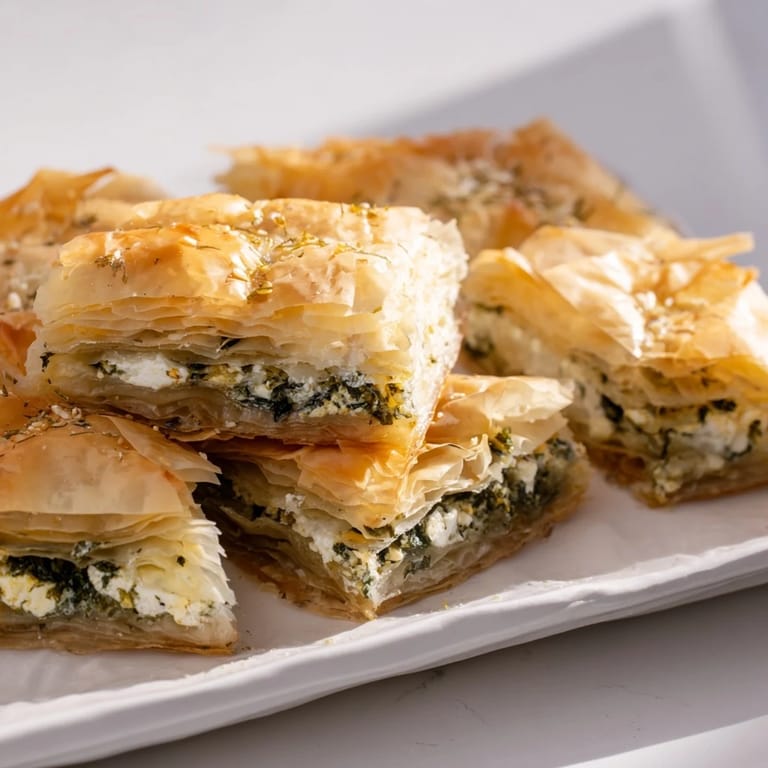
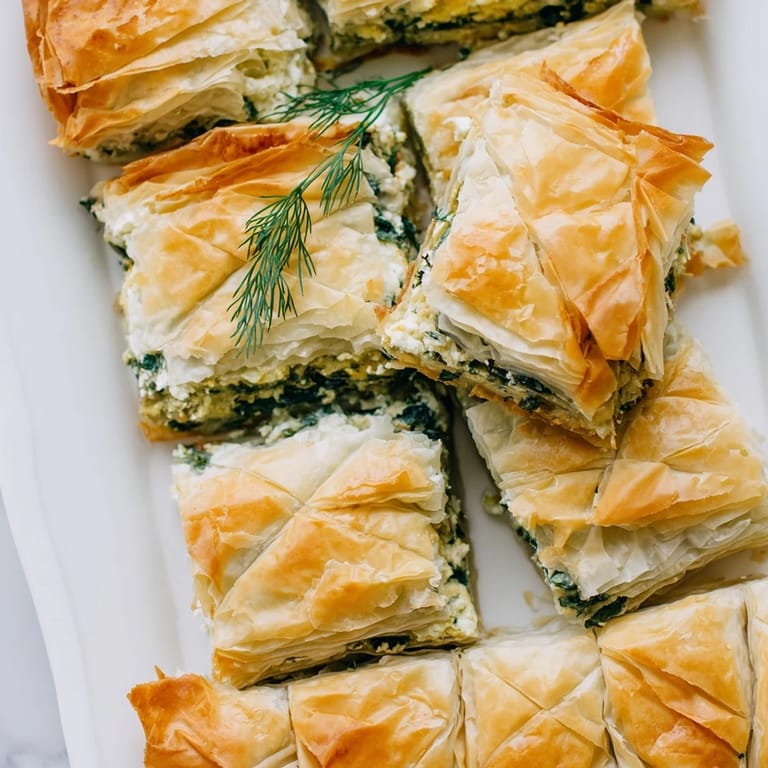
 There's a moment when spanakopita comes out of the oven where it's still too hot to touch but your hands are already hovering over it, drawn by that crackle and the aroma of butter and herbs. That's when you know you've made something right—when patience becomes almost impossible.
Why This Dish Endures
Spanakopita has been made the same way for generations not because people lack creativity, but because this combination of ingredients and technique is simply perfect. The contrast between crisp exterior and creamy filling, the brightness of fresh herbs against salty feta, the way it works as an appetizer or a light dinner—these aren't accidents. When something this old is this good, you don't mess with it.
Phyllo Pastry Secrets
Working with phyllo intimidates people, but it's really just about respect and patience. Keep it covered with a damp towel so it doesn't dry out, work quickly but not frantically, and brush every single layer with oil—not every other layer, every one. The layers are what make spanakopita sing, and each one needs fat to separate it from the next, to create those crispy, shattering leaves that define the dish. I once tried to economize on the oil to make it lighter, and the result was a dense, tough pastry that nobody wanted. Now I brush generously and don't apologize.
Serving and Pairing
Spanakopita is humble enough to eat by itself with just your hands and ambitious enough to anchor a whole meal. It's equally at home as a party appetizer, a light lunch with a salad, or the centerpiece of a Mediterranean spread. Serve it warm or at room temperature—both are correct, and both will disappear.
- A crisp white wine like Assyrtiko or Sauvignon Blanc cuts through the richness of the feta and butter beautifully.
- Pair it with a simple Greek salad for a complete meal that feels lighter than it actually is.
- Make extra and freeze unbaked portions—they bake beautifully straight from frozen with just a few extra minutes in the oven.
 Pin it
 Make this once and you'll understand why it's survived centuries of Greek kitchens. Make it twice and it becomes part of your own story.
Recipe FAQ
- → What type of spinach is best for this pie?
Fresh spinach works best for a vibrant flavor, but well-drained frozen spinach is a convenient alternative.
- → Can I substitute the phyllo dough?
Phyllo dough is key for the flaky texture, though puff pastry can be used for a different but tasty result.
- → How do I prevent phyllo from drying out during preparation?
Keep phyllo sheets covered with a damp towel while assembling to maintain moisture and prevent tearing.
- → What herbs enhance the pie's flavor?
Fresh dill and parsley add bright, herbal notes that complement the spinach and feta beautifully.
- → Is it possible to make a creamier filling?
Adding ricotta or cottage cheese to the spinach and feta mixture creates a softer, creamier texture.