 Pin it
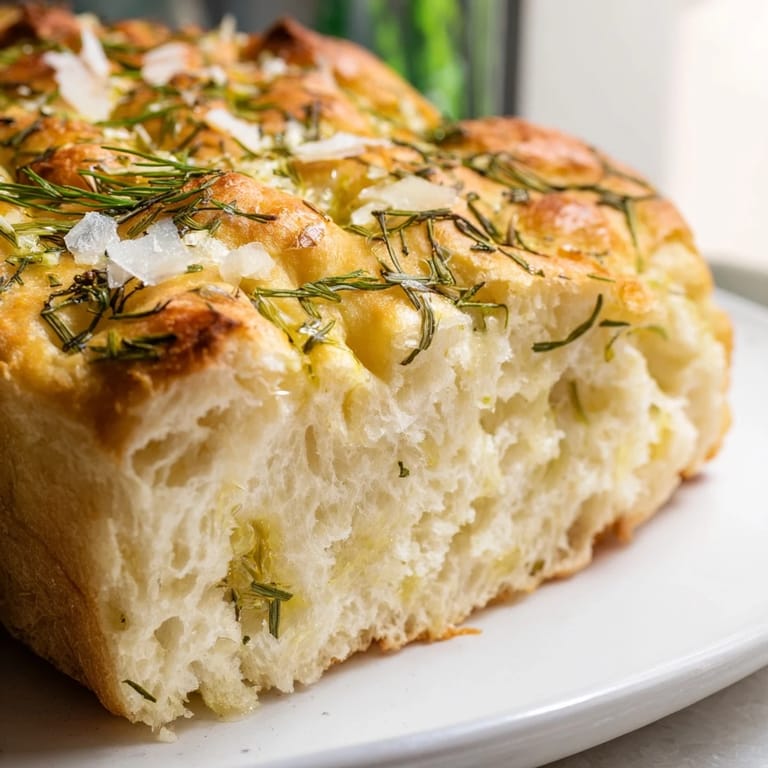
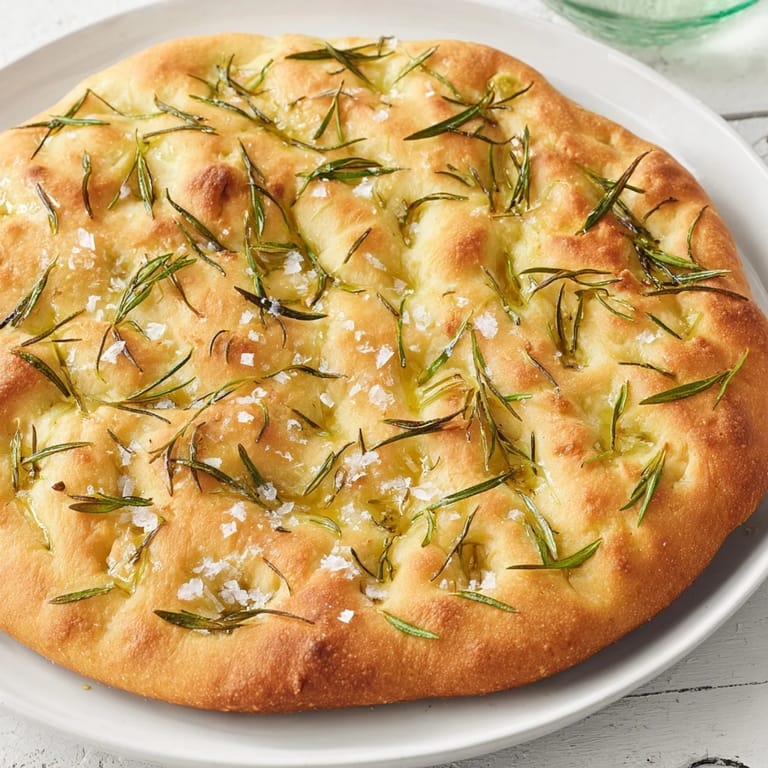
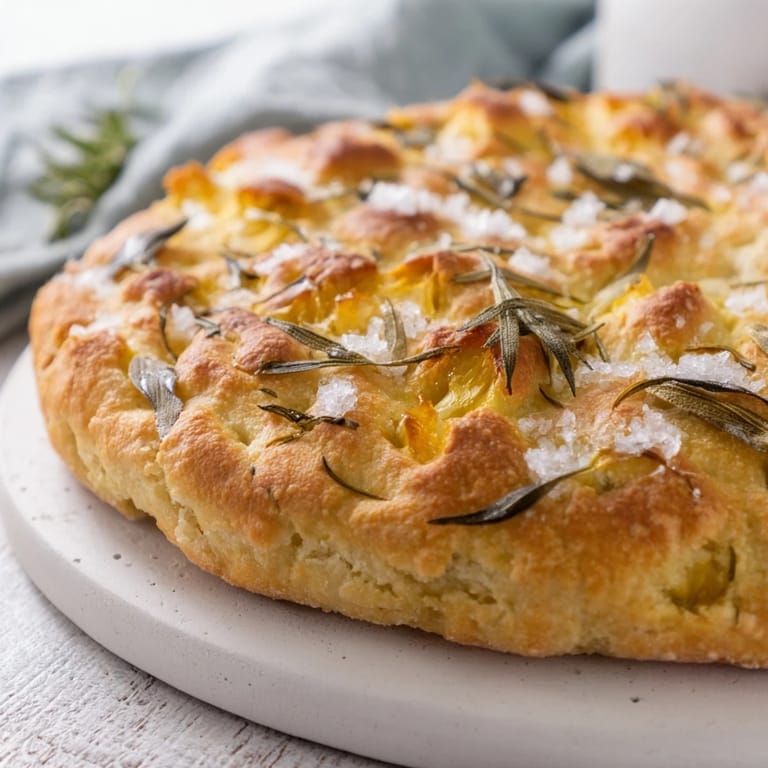
 One Sunday morning, I woke up craving bread but had no bakery nearby. I found a focaccia recipe scribbled on a coffee-stained napkin from a cooking class I took years ago. The dough felt sticky and alive under my hands, and the smell of rosemary filled the kitchen before I even turned on the oven. When it came out golden and dimpled, I tore off a corner and couldn't stop eating it warm.
I made this for a dinner party once, and people kept wandering into the kitchen asking what smelled so good. By the time we sat down, half the focaccia was already gone. No one believed I'd made it myself until I showed them the flour still dusting my counter.
Ingredients
- Bread flour: This gives the focaccia that chewy, airy texture you want. All-purpose works too, but bread flour makes it feel more authentic.
- Instant dry yeast: No need to bloom it first. Just mix it straight into the flour and let it do its thing quietly.
- Fine sea salt: Goes into the dough for flavor. Don't skip it or the bread will taste flat.
- Extra virgin olive oil: Use the good stuff. You'll taste it in every bite, and it makes the crust golden and crisp.
- Lukewarm water: Not hot, not cold. If it feels comfortable on your wrist, it's perfect for the yeast.
- Fresh rosemary: The fragrance while it bakes is worth it alone. Dried rosemary works, but fresh makes it feel special.
- Flaky sea salt: Those little crunchy crystals on top are the final touch. They catch the light and make every bite a little exciting.
Tired of Takeout? 🥡
Get 10 meals you can make faster than delivery arrives. Seriously.
One email. No spam. Unsubscribe anytime.
Instructions
- Mix the dry ingredients:
- Whisk together the bread flour, yeast, and fine salt in a big bowl. Make sure the salt and yeast don't sit directly on top of each other before you mix.
- Form the dough:
- Pour in the olive oil and lukewarm water, then stir with a wooden spoon until it comes together in a shaggy, sticky mass. It won't look pretty yet, and that's okay.
- Knead until smooth:
- Turn the dough out onto a lightly oiled counter and knead it for 8 to 10 minutes. It should go from sticky and rough to smooth and elastic, bouncing back when you poke it.
- Let it rise:
- Put the dough in an oiled bowl, cover it with a damp towel, and leave it somewhere warm. After about an hour, it should be puffy and doubled in size.
- Prepare the pan:
- Line your baking sheet with parchment and drizzle it with a tablespoon of olive oil. This keeps the bottom from sticking and adds flavor.
- Stretch the dough:
- Press the risen dough onto the sheet with your fingertips, stretching it gently to fill the pan. Cover it again and let it rest for 30 minutes.
- Preheat the oven:
- Set your oven to 220°C (430°F) while the dough takes its second rise. You want it hot and ready.
- Dimple and top:
- Press your fingers all over the dough to make deep dimples. Drizzle with olive oil, then scatter rosemary and flaky salt across the top.
- Bake until golden:
- Slide the pan into the oven and bake for 20 to 25 minutes. The edges should be crisp and golden, and the top should smell like an Italian hillside.
- Cool and serve:
- Let it cool for a few minutes on the pan, then slice it into squares. Serve it warm or at room temperature.
 Pin it
 The first time I served this, my friend said it reminded her of a trip to Genoa. She closed her eyes and chewed slowly, and I realized bread can carry memories even when you've never been to the place it came from.
What to Serve With Focaccia
I love tearing off pieces and dipping them in good olive oil mixed with balsamic vinegar. It also pairs beautifully with soup, especially tomato or minestrone. Sometimes I just eat it on its own, still warm, standing over the counter.
How to Store and Reheat
Focaccia is best the day you bake it, but leftovers can be wrapped in foil and kept at room temperature for a day. To bring it back to life, warm it in a low oven for a few minutes. The crust crisps up again, and the center stays soft.
Simple Ways to Change It Up
Once you've made the basic version, you can play around. I've pressed halved cherry tomatoes into the dough before baking, and the juices made it even more flavorful. Sliced olives, caramelized onions, or thinly sliced garlic all work beautifully.
- Try sprinkling grated Parmesan over the top in the last five minutes of baking.
- Swap rosemary for thyme or oregano if that's what you have on hand.
- Brush the hot focaccia with garlic-infused olive oil right when it comes out of the oven.
 Pin it
 There's something grounding about making bread from scratch. This focaccia taught me that good food doesn't have to be complicated, it just has to be made with attention and a little bit of love.
Recipe FAQ
- → What type of flour is best for focaccia?
Bread flour works best for focaccia due to its higher protein content, which helps create a chewy, elastic texture.
- → How long should the dough rise before baking?
The dough should rise twice: first until doubled, about 1 hour, then again for 30 minutes after shaping to develop flavor and lightness.
- → Can I add toppings before baking?
Yes, fresh herbs like rosemary and flaky sea salt are classic toppings; you can also add cherry tomatoes or olives for variety.
- → What is the ideal oven temperature for baking focaccia?
Preheat the oven to 220°C (430°F) to achieve a golden, crisp crust while keeping the inside soft and fluffy.
- → How should focaccia be stored after baking?
Store at room temperature wrapped lightly to maintain moisture; reheat gently in a warm oven to refresh texture.