 Pin it
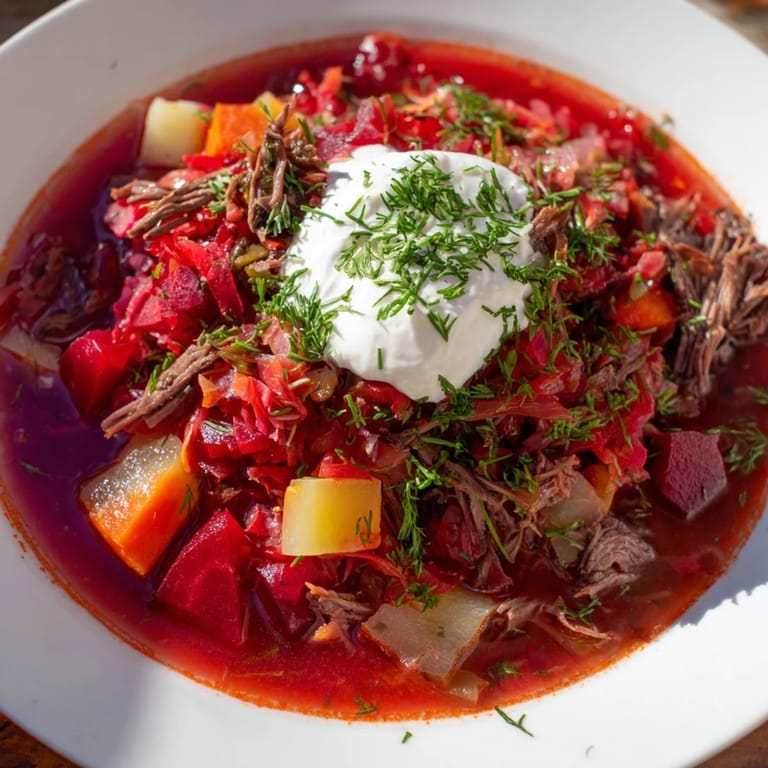
 There's a particular kind of cold that demands borscht—not the polite chill of autumn, but the deep freeze when your bones ache and the kitchen becomes the warmest room in the house. My grandmother used to say the color alone could warm you, and watching that deep crimson bloom through the broth while beef simmers nearby, I understood what she meant. This isn't just soup; it's the taste of surviving winter, of layered flavors that somehow feel both simple and complex at once. Every spoonful carries beets, beef, and the kind of comfort that only takes shape after time and patience.
I made this for a friend on a February evening when the electricity flickered and we decided to stay in the kitchen instead of worrying about it. The pot bubbled gently on the stove, casting the whole room in this amber glow while we chopped and stirred, and by the time the lights came back on, we'd already decided we didn't need them. That's when I learned borscht isn't really about feeding people—it's about creating an excuse to stand in a warm place together.
Ingredients
- Beef chuck or brisket (400 g): These tougher cuts transform into silk through long simmering, absorbing the broth while releasing their essence into it.
- Water (1.5 liters): The canvas for everything else; good water makes an invisible but crucial difference.
- Bay leaves and peppercorns: Whisper complexity without announcing themselves; don't skip these quiet contributors.
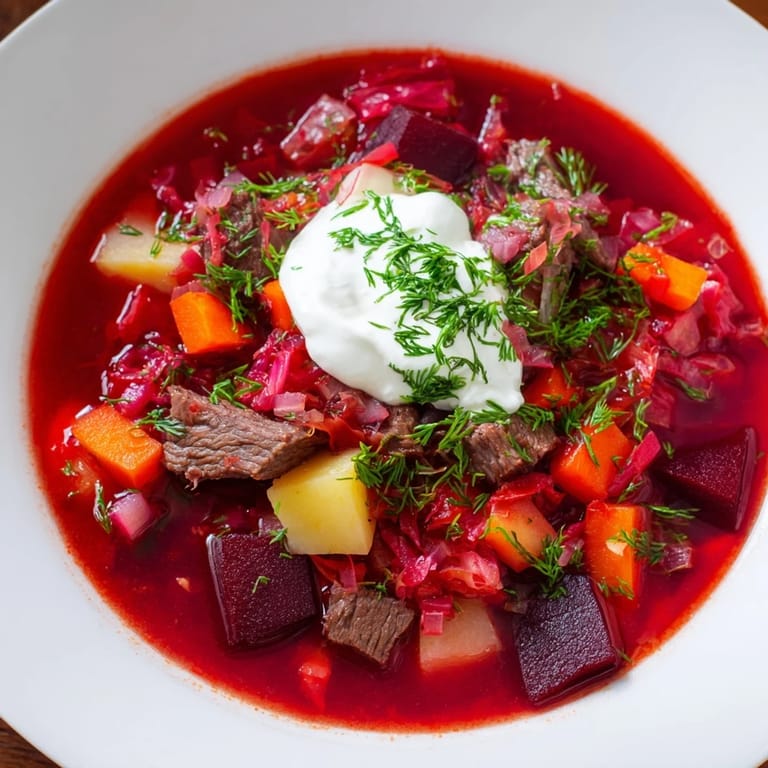
- Beets (3 medium): The soul of the soup, offering earthiness, sweetness, and that signature jewel tone.
- Carrots and onion: Build the flavor base while the beets do their visual magic.
- Potatoes and cabbage: Add substance and texture, turning soup into a meal.
- Tomato paste: Deepens everything it touches; a small spoonful carries surprising weight.
- Sunflower oil, sugar, and vinegar: The holy trio that balances earthiness with brightness and just enough sweetness to make you close your eyes.
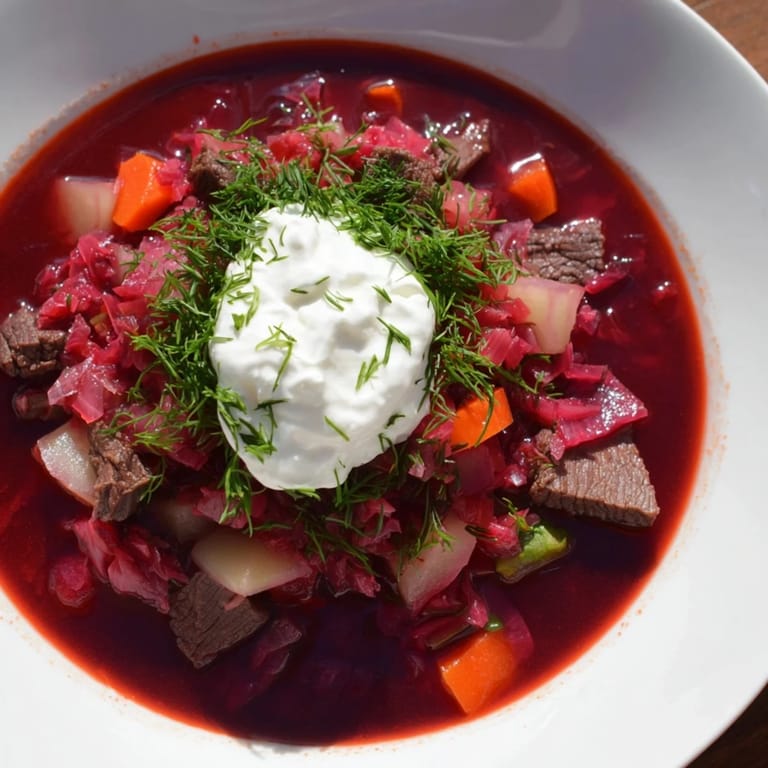
- Sour cream: Not a garnish but a transformation—every spoonful becomes richer once it meets the hot soup.
- Fresh dill or parsley: The final whisper of freshness, proving that even long-cooked food needs something alive on top.
Tired of Takeout? 🥡
Get 10 meals you can make faster than delivery arrives. Seriously.
One email. No spam. Unsubscribe anytime.
Instructions
- Start the broth right:
- Drop beef into cold water, add bay leaves and peppercorns, then bring everything to a boil together. When foam rises to the surface—and it will—skim it off without hesitation; this keeps your broth clear and refined. Reduce heat and let it simmer gently for 45 minutes while the beef becomes impossibly tender and the water transforms into something worth drinking on its own.
- Build flavor in the pan:
- While beef simmers, heat oil in your skillet and watch onions turn translucent and soft. Add shredded beets and carrots, and the kitchen fills with an earthy sweetness that announces something important is happening. After 5 minutes, stir in tomato paste, sugar, and vinegar—this combination is the secret handshake that makes everything taste like home.
- Combine and layer:
- Once beef is tender enough to pull apart with a fork, remove it and set aside, then pour the broth back into the pot. Add potatoes first, giving them a 10-minute head start because they take longest to soften. Then add your sautéed beet mixture and cabbage together, letting them simmer for another 10 minutes until the potatoes yield easily to a spoon.
- Finish and rest:
- Shred the beef back into pieces, return it to the pot with minced garlic, then taste and adjust for salt and pepper. Let the whole thing rest for 15 to 20 minutes off the heat—this pause allows flavors to settle and marry, making the difference between good soup and one you'll think about for days.
 Pin it
 The first time someone told me borscht tastes better the next day, I thought they were exaggerating. Then I reheated a pot the following evening and realized the flavors had deepened into something almost mysterious, each ingredient more pronounced but somehow more harmonious. That's when I understood that some foods aren't meant to rush.
The Beet Question Everyone Asks
You can peel beets raw or roast them first, and honestly, both work—but raw grated beets give you the fastest route and the brightest color. If you do roast them, cool them completely before grating or the soup becomes too thick and the beets lose their edge. Some people worry about beets bleeding everywhere, but that's the whole point; you want that color and earthiness running through every spoonful.
Vegetarian Transformation
If beef isn't in the picture, swap it for vegetable broth and add more substance with extra potatoes or beans—white beans specifically become creamy and absorb flavor beautifully. The soup loses beef's richness but gains a kind of clarity that lets the beets and vegetables shine without competition. You might increase the tomato paste slightly and add an extra pinch of sugar to compensate for what the meat would have contributed.
Serving and Storing
Serve borscht in deep bowls so the sour cream has room to swirl and create those marbled patterns. A crusty rye bread or pampushky on the side turns this from soup into a complete meal where everyone eats slowly and deliberately. Borscht keeps beautifully in the refrigerator for up to five days, and it actually deepens in flavor, making it one of those rare dishes that improves with time.
- Add a splash of lemon juice or white vinegar to each serving if you want extra brightness and tang.
- Fresh dill makes a genuine difference; parsley works too, but dill feels more intentional.
- Always serve with something cold and creamy to contrast the warm, earthy depth of the soup itself.
 Pin it
 Borscht is the kind of soup that makes you feel like you've accomplished something, even though you mostly just waited and stirred. There's real magic in that simplicity.
Recipe FAQ
- → What cuts of beef work best?
Beef chuck or brisket are ideal for slow simmering, offering tender and flavorful meat in the broth.
- → Can I prepare this dish vegetarian?
Yes, omit the beef and use vegetable broth to maintain rich vegetable flavors without meat.
- → How do the beets affect the soup?
Grated beets add a vibrant color and natural sweetness that balance the savory ingredients.
- → What’s the role of tomato paste here?
Tomato paste enriches the broth with a subtle acidity and depth, enhancing overall flavor complexity.
- → How long should the soup rest before serving?
Allowing the soup to rest for 15-20 minutes helps flavors meld and intensify for a richer taste.
- → What garnishes complement this dish?
A spoonful of sour cream and fresh chopped dill or parsley add creaminess and fresh herbal notes to finish.