 Pin it
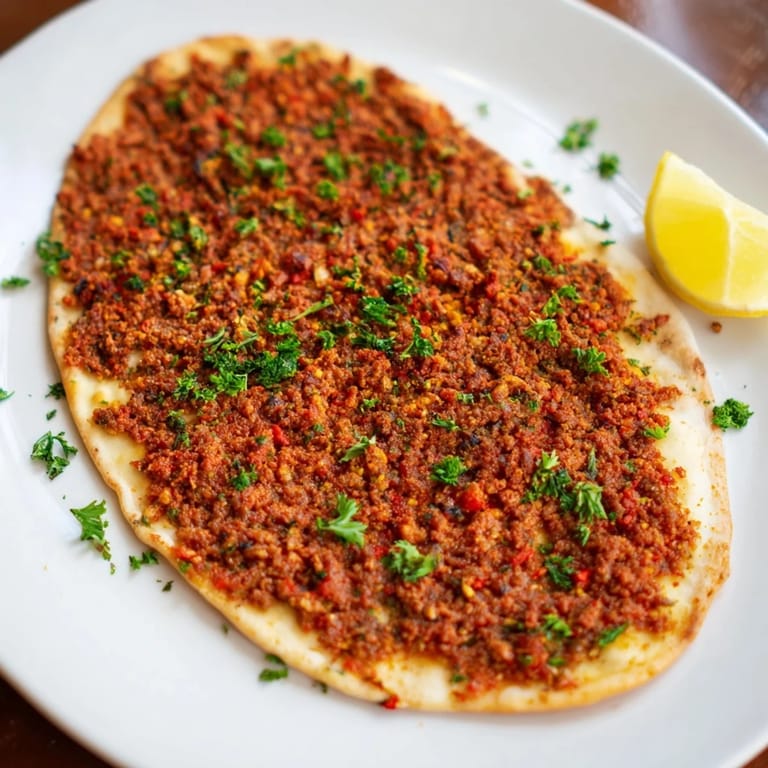
 The first time I tasted lahmacun was at a tiny street stall in Istanbul, where the baker slid these impossibly thin, bubbling flatbreads straight from a roaring oven into my hands. I burned my fingers trying to eat it immediately, laughing at my own impatience while the vendor smiled knowingly. That moment taught me that lahmacun isn't just food—it's meant to be eaten hot, messy, and with your hands. Years later, I finally figured out how to make them at home, and now I understand why people queue for these things. The crispy edges, the fragrant meat, the way it all comes together in those crucial minutes in a very hot oven—it's a small miracle of timing and technique.
I remember making a batch for my roommate on a random Tuesday night, and she walked into the kitchen mid-bake, eyes wide from the smell of cumin and paprika hitting the heat. We stood there together watching them puff and crisp, and she couldn't believe I'd made them from scratch. By the time they came out, we'd already set up plates with lemon and fresh herbs, and we devoured all eight in about twenty minutes, talking through mouthfuls like we hadn't eaten in weeks.
Ingredients
- All-purpose flour (300 g): The foundation of your dough; I learned the hard way that scooping directly into the bag compacts it, so spoon and level for better results.
- Warm water (180 ml): Too hot and you'll kill the yeast, too cool and nothing happens—aim for the temperature of a comfortable bath.
- Instant yeast (1 tsp): Check the expiration date; dead yeast explains more failed doughs than any technique mistake.
- Ground lamb or beef (300 g): Lamb gives the authentic edge, but beef works beautifully too—avoid anything pre-seasoned.
- Onion, garlic, tomato, and red bell pepper: Fine dice is crucial here; bigger chunks won't cook properly in those quick minutes in the oven.
- Tomato paste (2 tbsp): This adds depth and helps bind the topping—don't skip it or water down the paste with liquid.
- Cumin and paprika (1 tsp each): These are non-negotiable; they're what make lahmacun taste like itself, not just meat on bread.
- Chili flakes (1/2 tsp, optional): I always use them because the gentle heat complements the herbs and spices beautifully.
- Fresh parsley (2 tbsp): Add it to the topping raw, not cooked, so you keep that bright, fresh flavor.
- Olive oil (2 tbsp in topping, 2 tbsp in dough): Good quality makes a noticeable difference in both taste and texture.
- Lemon wedges and fresh herbs for serving: These aren't garnishes—they're essential to how lahmacun is meant to taste.
Tired of Takeout? 🥡
Get 10 meals you can make faster than delivery arrives. Seriously.
One email. No spam. Unsubscribe anytime.
Instructions
- Mix your dough base:
- Combine flour, sugar, and salt in a large bowl. Dissolve the yeast in warm water (about 40°C), wait a minute for it to wake up, then pour it into the dry ingredients along with olive oil. Stir until you have a shaggy mass that holds together.
- Knead until smooth:
- Work the dough on a lightly floured surface for 5–7 minutes until it stops being sticky and develops a soft, elastic feel. You'll know it's ready when it springs back gently when you poke it.
- Let it rise:
- Place the dough in a lightly oiled bowl, cover it with a damp cloth, and set it somewhere warm for 30 minutes or until it's roughly doubled. This isn't a long rise, so don't worry about it taking forever.
- Build your meat topping:
- In another bowl, combine all the topping ingredients—ground meat, finely diced vegetables, tomato paste, spices, and herbs. Mix thoroughly with a fork or your hands until everything is evenly distributed and the mixture feels cohesive.
- Heat your oven aggressively:
- Set it to 250°C (480°F) or whatever the highest setting is, and place a pizza stone or baking tray inside to get seriously hot. This step is everything; a cold surface means your lahmacun will be chewy instead of crisp.
- Divide and roll:
- Turn out the risen dough and divide it into 8 equal pieces. Working with one piece at a time, roll it on a floured surface into a very thin oval or round about 20 cm across—thin enough that you can almost see through it without tearing it.
- Top with restraint:
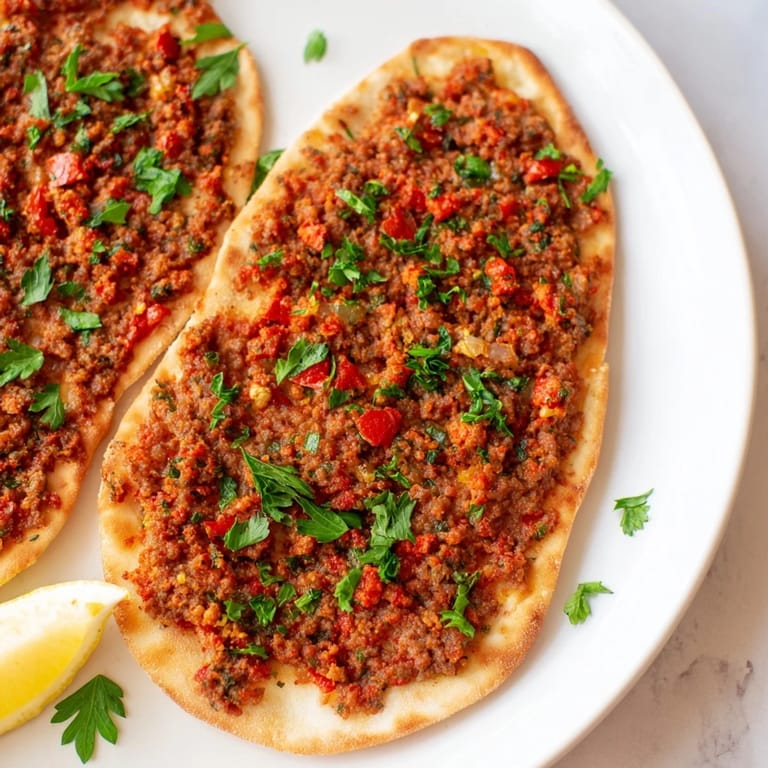
- Spread a thin, even layer of meat mixture across each dough round, leaving a small border. Too much topping and it won't cook through; too little and you lose the whole point.
- Bake with speed:
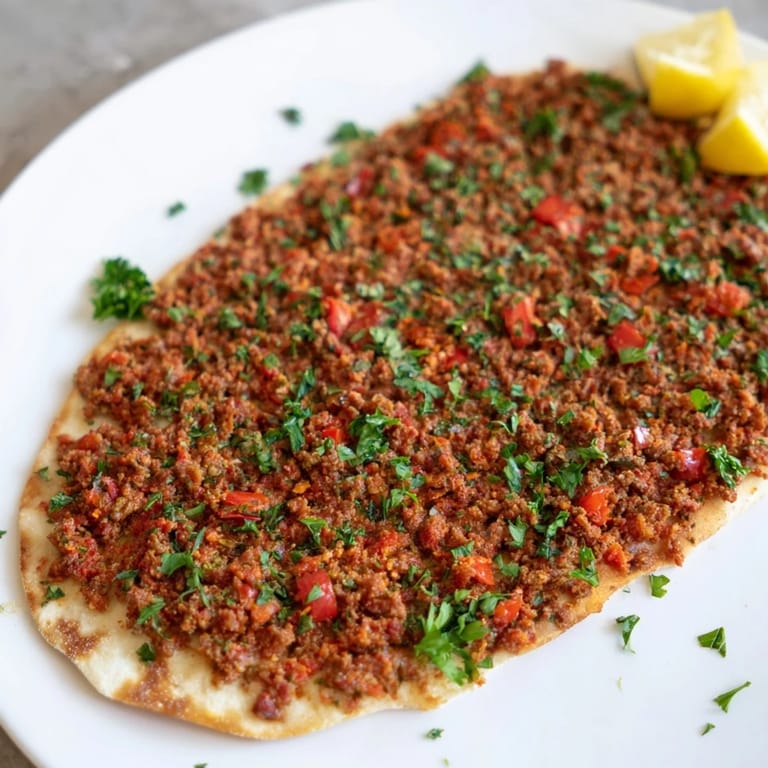
- Carefully transfer each lahmacun to the screaming hot tray (work in batches if your space is tight), and bake for 6–8 minutes until the edges are deeply crisp and the meat is cooked through. You'll see the topping slightly char at the edges—this is what you want.
- Finish and serve immediately:
- Pull them out, scatter fresh parsley over the top, add a generous squeeze of lemon, and eat them while they're still warm enough to burn your mouth. Sliced onions and sumac are optional but they add a bright, tangy note that's absolutely worth it.
 Pin it
 There's something almost ceremonial about eating lahmacun fresh from the oven, the way the crispy bread shatters under your teeth and the warm meat spices hit you all at once. It transforms from ingredients into an experience the moment it comes out hot, and that's when you understand why it's been a street food and a celebration favorite for centuries.
The Art of Rolling Thin
I used to be terrified of rolling the dough too thin, convinced it would tear and ruin everything. Then I realized that lahmacun dough is forgiving—it has enough gluten development from kneading that it can stretch without breaking, and any small tears will seal back up in the oven heat. The thinner you go, the crispier the result, and that crispness is what separates homemade lahmacun from the chewy flatbread backup plan. Start with gentle, confident strokes of your rolling pin, rotate the dough frequently so it stretches evenly, and don't be afraid to use your hands gently to stretch it even thinner if the rolling pin isn't getting you there.
Why the Meat Mixture Matters
The filling is where personality happens in lahmacun, and I learned this by watching a Turkish cook in a small kitchen work with the same base ingredients but taste and adjust as he went. The ratio of meat to vegetables, the balance of spices, the amount of tomato paste—all of these shift the flavor profile subtly. Some versions are heavier on herbs and lighter on heat, others lean into the paprika and cumin, and a few bold cooks add extra chili flakes because they like boldness. I've found that the meat mixture benefits from being made ahead by an hour or two, allowing the spices to marry and the flavors to deepen, though you can absolutely use it fresh if you're in a hurry.
Serving and Enjoying Lahmacun
The moment lahmacun hits the plate is when the real eating begins, and serving it properly is half the pleasure. Lemon and fresh herbs aren't decorations—they're essential parts of the experience, cutting through the richness of the meat and brightening every bite. Some people eat it flat like a pizza, others roll it up with extra parsley, onions, and tomatoes tucked inside, and honestly both ways are correct. The key is to eat it while it's still warm enough that the crispy bits haven't softened too much, and to have your condiments and accompaniments ready to go before you pull them from the oven.
- Squeeze lemon generously over each piece just before eating—it's not optional, it's transformative.
- If you want to add sumac, do it right before serving so the tangy spice stays bright instead of absorbing into the warm bread.
- Serve alongside ayran (Turkish yogurt drink) for the authentic experience, or a light red wine if that's more your style.
 Pin it
 Making lahmacun at home connects you to something old and real, a dish that's been feeding people quickly and deliciously for generations. Once you've made them once, you'll understand why they disappear so fast and why you'll keep making them.
Recipe FAQ
- → What type of meat is used in Lahmacun?
Traditionally, ground lamb or beef is used, combined with spices and fresh vegetables for a rich, savory topping.
- → How thin should the dough be rolled?
The dough should be rolled very thin, about 20 cm in diameter, to achieve a crisp texture once baked.
- → Can Lahmacun be made vegetarian?
Yes, substitute the meat with a mixture of minced mushrooms and walnuts for a flavorful vegetarian alternative.
- → What is the best baking temperature for Lahmacun?
Bake at a high temperature around 250°C (480°F) to ensure a crispy crust and well-cooked topping.
- → What garnishes complement Lahmacun?
Fresh parsley, lemon wedges, sliced onions, and sumac are commonly used to enhance flavor and presentation.
- → How long does the dough need to rise?
Cover the dough and let it rise for about 30 minutes until it has doubled in size for a soft texture.