 Pin it
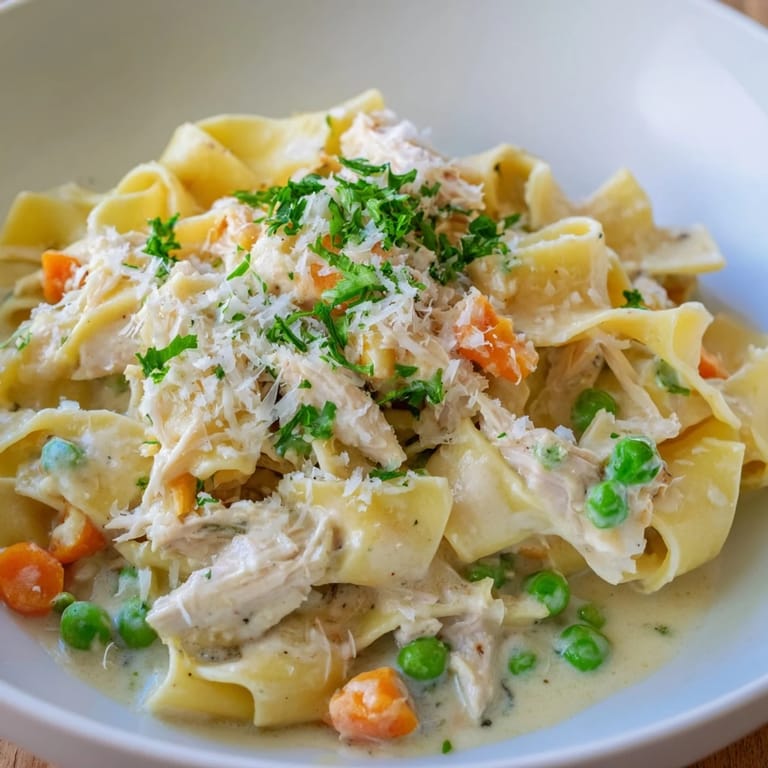
 The first warm afternoon of spring always makes me crave something lighter than heavy winter stews but still cozy enough to satisfy. I stumbled on this skillet creation when a CSA box delivered an abundance of fresh peas and carrots. My daughter actually helped chop the vegetables that day. The whole thing came together in one pan while we chatted about school and upcoming weekend plans.
Last month my neighbor stopped by while this was simmering. She stayed for dinner and then immediately texted me the next day saying her family had already requested it again. Something about the combination of tender noodles and that velvety sauce just makes people feel at home.
Ingredients
- 2 cups cooked shredded chicken: Rotisserie chicken works beautifully here and saves so much time on busy weeknights
- 8 oz wide egg noodles: These hold onto the sauce better than regular pasta and have a lovely tender texture
- 1 cup frozen peas: Frozen peas are actually sweeter and more consistent than fresh ones for this dish
- 1 cup diced carrots: Try to cut them into uniform pieces so they cook evenly alongside the onions
- 1 small yellow onion: Finely chopped so they melt into the sauce rather than having chunks of onion
- 2 cloves garlic: Minced fresh garlic makes such a difference compared to the jarred stuff
- 2 tablespoons unsalted butter: This creates the base for our roux and adds that rich finish
- 2 tablespoons all-purpose flour: The thickening agent that transforms broth into that creamy sauce
- 2 cups low-sodium chicken broth: Starting with low-sodium lets you control the seasoning perfectly
- 1/2 cup whole milk or half-and-half: This is what gives the sauce its silky luxurious texture
- 1/4 cup grated Parmesan cheese: Adds a salty depth that rounds out all the flavors
- 1/2 teaspoon dried thyme: Thyme pairs beautifully with both chicken and spring vegetables
- 1/4 teaspoon black pepper: Freshly cracked pepper makes all the difference here
- 1/2 teaspoon salt: Adjust this at the end since both the cheese and chicken broth bring saltiness
- 2 tablespoons fresh parsley: A bright finish that makes the dish look as good as it tastes
Tired of Takeout? 🥡
Get 10 meals you can make faster than delivery arrives. Seriously.
One email. No spam. Unsubscribe anytime.
Instructions
- Get the noodles going first:
- Cook those egg noodles according to the package directions then drain them well. Do not overcook them since they will spend a little more time in the sauce later.
- Build the flavor foundation:
- Melt the butter in your large skillet over medium heat then toss in the onions and carrots. Let them soften and become fragrant for about 4 to 5 minutes.
- Add the garlic:
- Stir in the minced garlic and cook for just 30 seconds until you can smell it. Watch closely so it does not burn.
- Make the roux:
- Sprinkle the flour over the vegetables and stir constantly for 1 minute. This cooks out the raw flour taste and starts the thickening process.
- Create the sauce:
- Slowly pour in the chicken broth and milk while whisking to prevent any lumps. Add the thyme salt and pepper then let everything simmer gently for 3 to 4 minutes until it thickens nicely.
- Add the protein and vegetables:
- Fold in the peas shredded chicken and Parmesan cheese. Let everything heat through for about 2 minutes so the chicken warms up and the cheese melts.
- Bring it all together:
- Gently add those cooked noodles into the skillet and fold until everything is coated in that beautiful sauce. Give it a minute or two if you want it thicker then take it off the heat.
- Finish and serve:
- Sprinkle the fresh parsley on top and serve while it is still steaming hot.
 Pin it
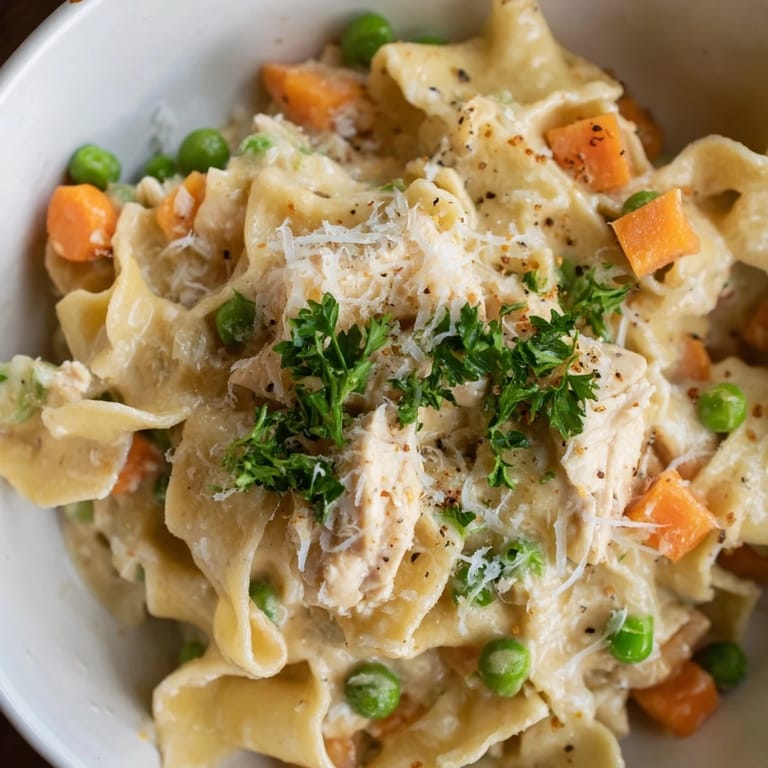
 This recipe became our go-to when my daughter was sick and would not eat anything else. The gentle flavors and soft texture were exactly what she needed. Now it is just a regular favorite that shows up on our table at least twice a month.
Make It Your Own
Swap in whatever vegetables look good at the market. Asparagus and baby spinach work beautifully when fresh peas are not available.
Serving Suggestions
A simple green salad with lemon vinaigrette balances the richness perfectly. Crusty bread is never a bad idea either.
Storage & Reheating
This keeps beautifully in the refrigerator for up to three days. The noodles will absorb more sauce as it sits so add a splash of milk when reheating.
- Reheat gently over medium-low heat stirring occasionally
- The microwave works but add a tablespoon of water first
- Freeze portions in airtight containers for up to two months
 Pin it
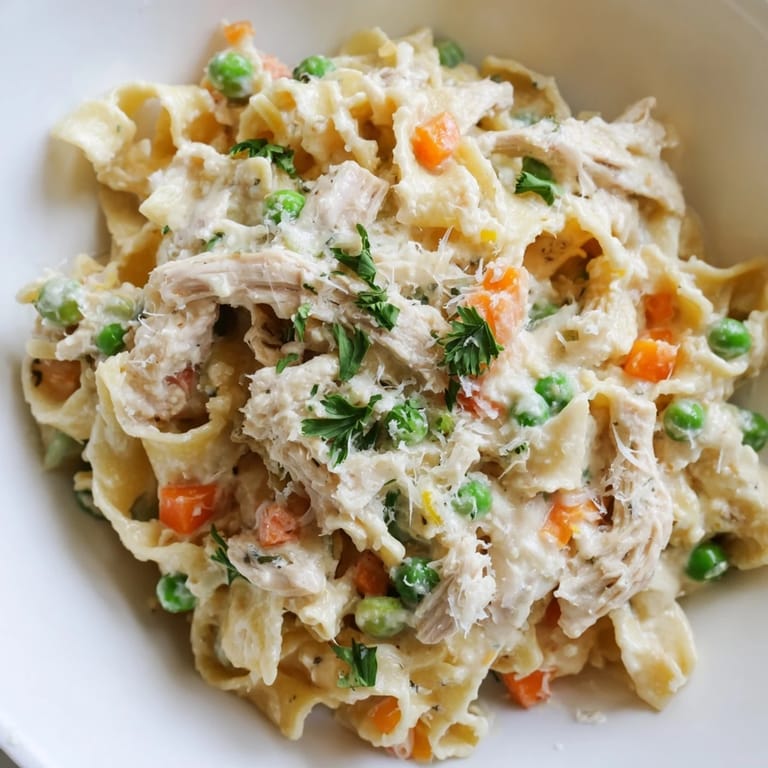
 Spring comfort food at its finest. Enjoy those cozy moments around the table.
Recipe FAQ
- → Can I use fresh noodles instead of dried egg noodles?
Yes, fresh egg noodles work well and cook faster. Reduce the cooking time by 2-3 minutes and check for doneness at the package instructions. The texture will be slightly softer, which complements the creamy sauce nicely.
- → What's the best way to prevent the sauce from lumping?
Whisk the broth and milk together slowly after adding the flour roux. Ensure your roux is smooth before introducing liquid, and stir continuously to create an even, lump-free base. This creates a silky, cohesive sauce.
- → Can this dish be made ahead and reheated?
Yes, store it in an airtight container for up to three days. Reheat gently on the stovetop over medium-low heat with a splash of milk or broth to restore the sauce consistency. Avoid high heat, which can cause the cream to break.
- → What vegetables pair well as springtime substitutes?
Fresh asparagus, baby spinach, sugar snap peas, and zucchini are excellent choices. Add tender greens in the final minute to preserve their texture. Harder vegetables like broccoli should be added earlier with the carrots to ensure proper softening.
- → How do I make this lighter without sacrificing creaminess?
Replace half-and-half with whole milk or use Greek yogurt swirled in at the end instead of some dairy. Reduce butter to one tablespoon and increase flour slightly for thickening. The Parmesan adds richness without extra fat.
- → What type of chicken works best for this dish?
Rotisserie chicken is quickest and most flavorful. Poached or roasted chicken breast also works well. Shred the meat evenly for consistent texture throughout the dish, and avoid overworking it to maintain tender pieces.