 Pin it
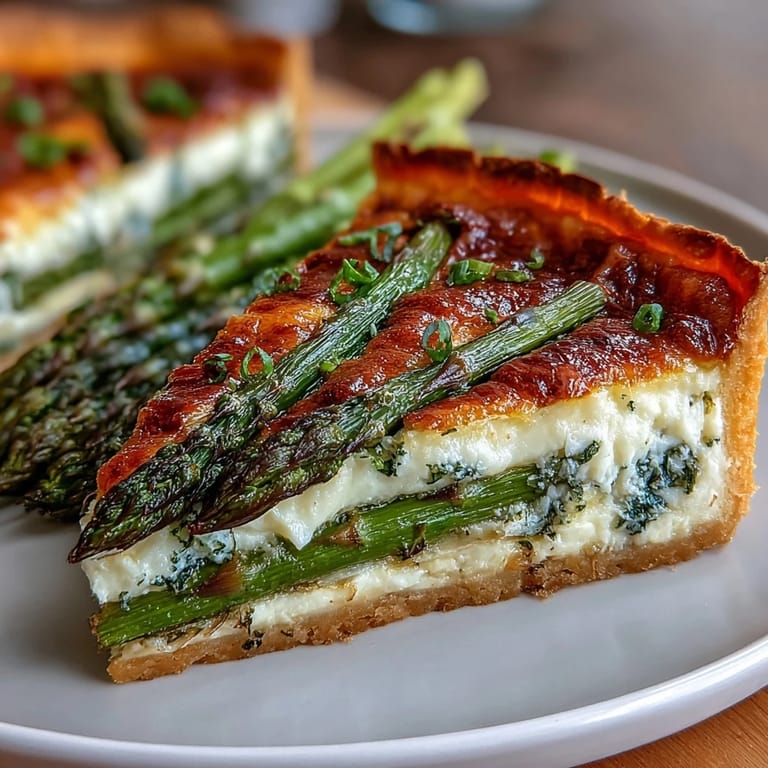
 My neighbor knocked on the kitchen window one April morning with a bundle of the most impossibly thin asparagus from her garden, still dewy and perfect. I had puff pastry thawing on the counter and suddenly the idea arrived fully formed—layer it all together with creamy cheese and fresh herbs, let the oven do its magic. That tart became the unofficial taste of spring for our little street, and now it's the first thing I make when the season shifts.
I'll never forget serving this to my mother-in-law, who showed up unannounced on a Sunday afternoon looking stressed about an upcoming dinner party. She watched me assemble the tart in fifteen minutes flat, and something about seeing how simple it was shifted her whole mood. She left with the recipe written on the back of an envelope and her confidence restored.
Ingredients
- Thin asparagus, about 400 g: Thin spears cook through perfectly without turning mushy, and they look elegant arranged on top—thick ones can stay woody in the center no matter how long you bake.
- Crème fraîche or ricotta, 200 g: Crème fraîche stays silky and rich, while ricotta lightens things up if you're feeling less indulgent; both work beautifully with the cheese and herbs.
- Gruyère or Parmesan, 100 g grated: Gruyère melts into a subtle nuttiness, whereas Parmesan brings sharp clarity—choose based on what kind of flavor you want leading the way.
- Egg, 1 lightly beaten: This brushed on the pastry border creates that burnished, professional-looking finish that makes people think you went to culinary school.
- All-butter puff pastry, 1 sheet: All-butter pastry tastes noticeably better than the margarine versions, and it's worth seeking out at a proper bakery or frozen section.
- Fresh chives or dill, 2 tbsp finely chopped: Chives bring gentle onion sweetness while dill leans herbaceous and almost grassy—taste a tiny piece of each if you're deciding, then follow your gut.
- Lemon zest, 1 tsp: The zest cuts through the richness and makes everything taste fresher without any actual sourness hitting your palate.
- Salt and freshly ground black pepper: Season as you go because the cheese brings saltiness too, and you want to taste what you're building.
- Toasted pine nuts and microgreens for garnish: These are optional but they add texture and visual brightness that turns a simple tart into something that looks like it belongs on a restaurant plate.
Tired of Takeout? 🥡
Get 10 meals you can make faster than delivery arrives. Seriously.
One email. No spam. Unsubscribe anytime.
Instructions
- Prepare your workspace:
- Preheat your oven to 200°C and line a baking tray with parchment paper so the pastry won't stick and you won't have to worry about cleanup later. Let that puff pastry sit out until it's soft enough to unfold without cracking—usually fifteen minutes or so at room temperature.
- Shape the pastry:
- If it's not pre-rolled, unfold it onto a lightly floured surface and gently stretch it into a rough rectangle about 25x35 cm. Transfer it carefully to your parchment-lined tray, and try not to stress if it's not perfectly even—rustic is better than rigid.
- Score the border:
- Using a sharp knife, lightly score a border about 2 cm from the edge all around, just enough that you can see the line but not cutting all the way through—this tells the pastry where to puff up. Prick the center area gently with a fork to keep it from puffing up too dramatically and creating an uneven surface.
- Make the filling:
- In a bowl, combine the crème fraîche with half the grated cheese, your chopped herbs, lemon zest, and a pinch of salt and pepper—taste it before you spread it because this is where the flavor lives. The mixture should taste a bit more seasoned than you'd normally eat it because the pastry and asparagus will mellow things slightly.
- Assemble the tart:
- Spread the cheese mixture evenly within that inner rectangle you scored, leaving the border bare so it can puff. Arrange the asparagus spears in whatever pattern appeals to you—straight lines, alternating directions, or even slightly chaotic feels fine because the pastry will frame it beautifully anyway.
- Final touches:
- Brush the pastry border with beaten egg, which will give it that golden sheen, then scatter the remaining cheese over the asparagus. Everything should look ready to celebrate—this is the moment right before magic happens.
- Bake:
- Slide it into the oven for 20-25 minutes until the pastry is deeply golden and puffed, and the asparagus tips are just starting to show a touch of color. Don't open the oven door constantly because you'll let the heat escape and the pastry won't puff as dramatically, but a peek at the fifteen-minute mark never hurt anyone.
- Finish and serve:
- Let it cool for just a minute or two before scattering with toasted pine nuts and microgreens if you're using them. Slice while it's still warm and the pastry's texture is at its absolute best, though it's equally delicious at room temperature for a casual spread.
 Pin it
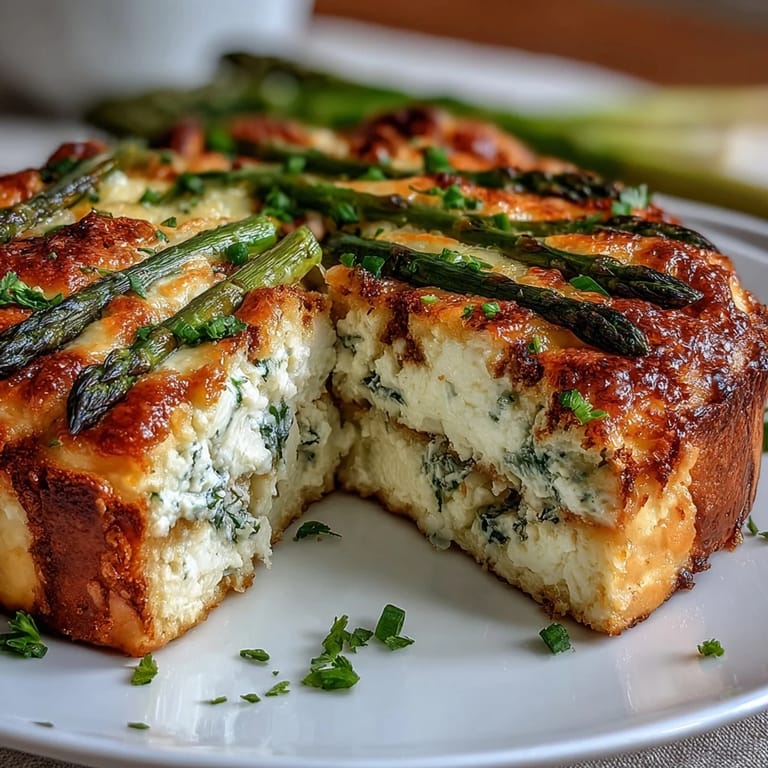
 There's something about serving this tart that transforms a Tuesday dinner or a casual gathering into an actual occasion. My daughter once asked why everything tasted better when it came out of a tart rather than a bowl, and I realized she was right—there's psychology in presentation.
Why Thin Asparagus Changes Everything
The first time someone pointed out the difference between thin and thick asparagus, I thought they were being pretentious. Now I understand—thin spears cook through in the exact time it takes the pastry to puff and crisp, while thicker ones demand more oven time and risk everything drying out or burning. When you bite into thin asparagus on this tart, it's tender all the way through with just a gentle snap of the tip, and that textural contrast against the flaky pastry is exactly what makes this dish work.
The Cheese Layer Secret
I used to make this with just cheese scattered on top, and it was fine but unremarkable. Mixing the crème fraîche with the cheese before spreading creates a smooth, cohesive base that holds everything together and lets the herbs and lemon zest distribute evenly. This was a small adjustment that made a surprising difference in how every bite tasted consistent and intentional rather than hit-or-miss.
Timing and Temperature Wisdom
The oven temperature of 200°C is specific because it's hot enough to puff the pastry dramatically but not so scorching that the edges burn before the center finishes cooking. I've learned to trust the visual cues—golden pastry and tender asparagus tips are your signals, not a clock. The whole process from prep to plate takes about forty minutes, which means you can decide to make this about thirty minutes before guests arrive and still feel completely in control.
- Check the pastry at twenty minutes so you know exactly when yours hits that golden moment.
- If your oven runs hot, rotate the tray halfway through to ensure even baking on all sides.
- Room temperature serving is genuinely better for entertaining because you can assemble and bake it an hour before people arrive.
 Pin it
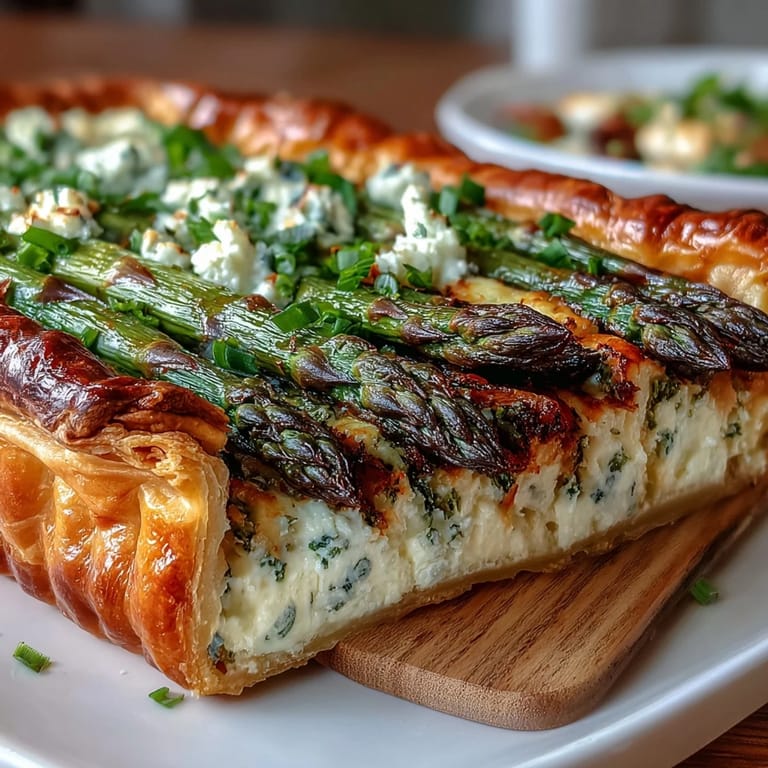
 This tart has become my answer to so many kitchen moments—when I want to impress without stress, when spring arrives and needs celebrating, when someone unexpected shows up hungry. It's proof that sometimes the best dishes are the ones that feel effortless to make but generous to share.
Recipe FAQ
- → What type of pastry is best for this tart?
All-butter puff pastry is recommended for its rich flavor and flaky texture that crisps nicely during baking.
- → Can I use frozen asparagus?
Fresh asparagus is preferred for its crisp texture and vibrant taste, but if using frozen, make sure to thaw and pat it dry before arranging on the tart.
- → How do I prevent the pastry edges from shrinking?
Scoring a border around the pastry and not cutting through helps maintain shape, while chilling the pastry before baking can also reduce shrinkage.
- → What cheese options work well with asparagus in this tart?
Gruyère, Parmesan, ricotta, or crème fraîche add creaminess and depth, balancing the fresh asparagus flavor nicely.
- → Can this be prepared ahead of time?
Yes, you can assemble the tart and refrigerate it before baking. Bake just before serving to maintain crispness.