 Pin it
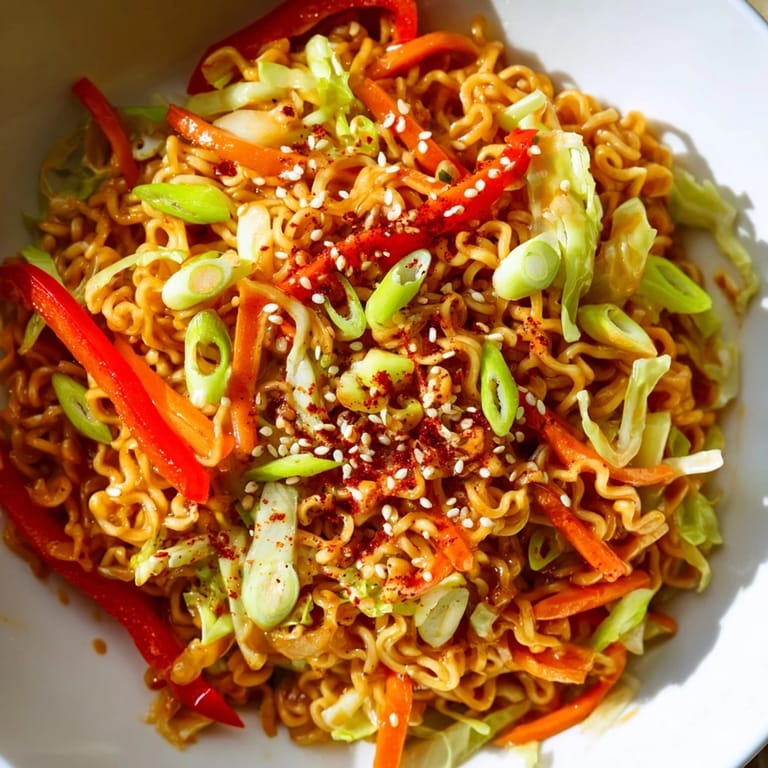
 I discovered this recipe at 11 PM on a random weeknight when my roommate came home with a bag of instant ramen and challenged me to make something that didn't taste like a dorm room staple. Two pans, a handful of vegetables, and one ambitious sauce later, we had something that tasted like it belonged in a proper kitchen. The sizzle of garlic hitting hot oil, the way the noodles caught the sauce in that one perfect toss—it felt like we'd unlocked a secret. Now I make this whenever I need proof that ten minutes can still feel impressive.
The first time I served this to guests, I was nervous because it sounded almost too simple, but watching people instinctively ask for seconds while still chewing their first bite told me something was working. My friend Marcus said it reminded him of a restaurant in his neighborhood, which felt like the highest compliment a ten-minute recipe could receive. That's when I realized simplicity isn't about laziness—it's about knowing exactly what matters.
Ingredients
- Instant ramen noodles: Always discard those salty seasoning packets—they'll fight with your homemade sauce and you'll regret it every time.
- Cabbage: It stays crisp even when you're not paying attention, which is why it's the vegetable MVP here.
- Carrot: Julienne it thin so it actually cooks instead of just sitting there being raw.
- Green onions: Add these at the very end or they'll turn into sad, limp ghosts.
- Red bell pepper: Thin slices mean they'll get tender without falling apart into mush.
- Soy sauce: This is your base note, so don't skip it or cheap out on quality.
- Sriracha or chili garlic sauce: The heat that makes this dish worth making instead of just eating plain noodles.
- Oyster sauce: Even a tablespoon adds a depth that makes people wonder what your secret is.
- Brown sugar: One tablespoon rounds out the spice and brings balance you didn't know you needed.
- Sesame oil: The two teaspoons give you that toasted, nutty flavor that makes mouths water.
- Rice vinegar: A teaspoon cuts through the richness and keeps everything from tasting heavy.
- Ground black pepper: Quarter teaspoon of this goes a long way in a sauce this concentrated.
- Garlic: Mince it fresh—jarred garlic will make you realize why you bothered cooking in the first place.
- Vegetable oil: High heat needs high smoke point, so skip the olive oil here.
- Toasted sesame seeds: These are your final flourish and proof that you cared enough to finish properly.
- Red pepper flakes: Optional but honestly, why would you skip extra heat in a spicy ramen stir fry?
Tired of Takeout? 🥡
Get 10 meals you can make faster than delivery arrives. Seriously.
One email. No spam. Unsubscribe anytime.
Instructions
- Boil your noodles short:
- Get water boiling and cook the ramen exactly one minute less than the package says—this is the move that separates bouncy noodles from mushy disappointment. Drain them in a colander and leave them alone while you prep everything else.
- Build your sauce:
- Whisk soy sauce, sriracha, oyster sauce, brown sugar, sesame oil, rice vinegar, and black pepper together in a small bowl until the sugar dissolves. Taste it straight from the spoon so you know what you're working with.
- Heat your pan hot:
- Pour vegetable oil into a large skillet or wok over medium-high heat and let it shimmer before you add anything—this is when you know it's ready. Add minced garlic and let it sizzle for about thirty seconds until your kitchen smells incredible.
- Fry your vegetables fast:
- Throw in cabbage, carrot, and red bell pepper all at once and toss constantly for two to three minutes until they're tender but still have a bit of snap to them. You want to hear them sizzle, not watch them soften into mush.
- Bring everything together:
- Add the cooked noodles and that sauce you made, then toss everything with tongs or chopsticks for a minute or two until the noodles are evenly coated and the whole pan is steaming. This is where the magic happens—where separate ingredients become one unified thing.
- Finish with personality:
- Scatter in the green onions, sesame seeds, and red pepper flakes if you're using them, give it one final toss, and serve immediately while everything is still hot. Don't let it sit in the pan or it'll start sticking to itself.
 Pin it
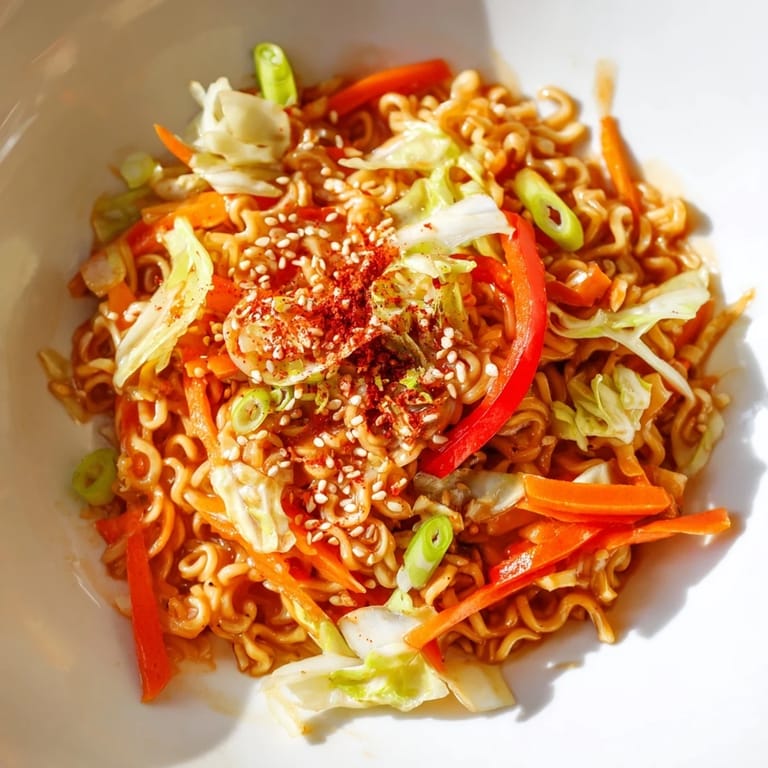
 Last month I made this while on a video call with a friend who was stuck at her office late, and she asked me to point my camera at the pan so she could watch. Watching her face when I showed her the final result—the gleam of sesame seeds, the perfect shine of the sauce on each noodle—reminded me that food is also about wanting someone else to experience what you're experiencing. She ordered takeout that night, but she said it made her homesick for something I'd just made in ten minutes.
The Sauce is Everything
I used to think instant ramen needed to stay humble because it was instant ramen, but this sauce proved that assumption wrong. The combination of soy sauce, sriracha, and oyster sauce creates a flavor profile that feels intentional and complex, even though none of those components are exotic or hard to find. The brown sugar and sesame oil soften the heat just enough that the spice doesn't overshadow everything else, and the rice vinegar keeps it from tasting heavy or one-dimensional. I've made this sauce separately and kept it in my fridge just to toss with leftover vegetables or noodles because once you taste it, you understand why this recipe works.
Vegetables and Texture Matter
The vegetables in this stir fry aren't just decoration—they're the reason you don't feel like you're eating glorified fast food. Cabbage gives you something crispy that survives the heat, carrot adds sweetness and color, and bell pepper brings both crunch and a subtle floral note. When I first made this, I added the vegetables too early and they turned to mush, which taught me that medium-high heat and constant movement matter more than ingredients that sound expensive. Thin slices cook faster, which means you're eating in ten minutes instead of thirty, and they hold their personality through the toss instead of disappearing into the background.
How to Make This Your Own
The beauty of this recipe is that it doesn't ask you to be someone you're not—if you want to add a fried egg on top, do it. If you'd rather throw in some cooked shrimp or tofu, the sauce won't judge you. I've made this vegetarian dozens of times, but I've also made it with leftover rotisserie chicken when I had it on hand, and both versions feel equally valid and equally satisfying.
- Swap the oyster sauce for hoisin if you want a slightly sweeter, less funky edge.
- Add an egg, tofu, or whatever protein you have in your fridge because everything tastes better when it's not lonely.
- If you like it spicier, don't just dump in extra sriracha—add more red pepper flakes instead so you get heat without making it one-dimensional.
 Pin it
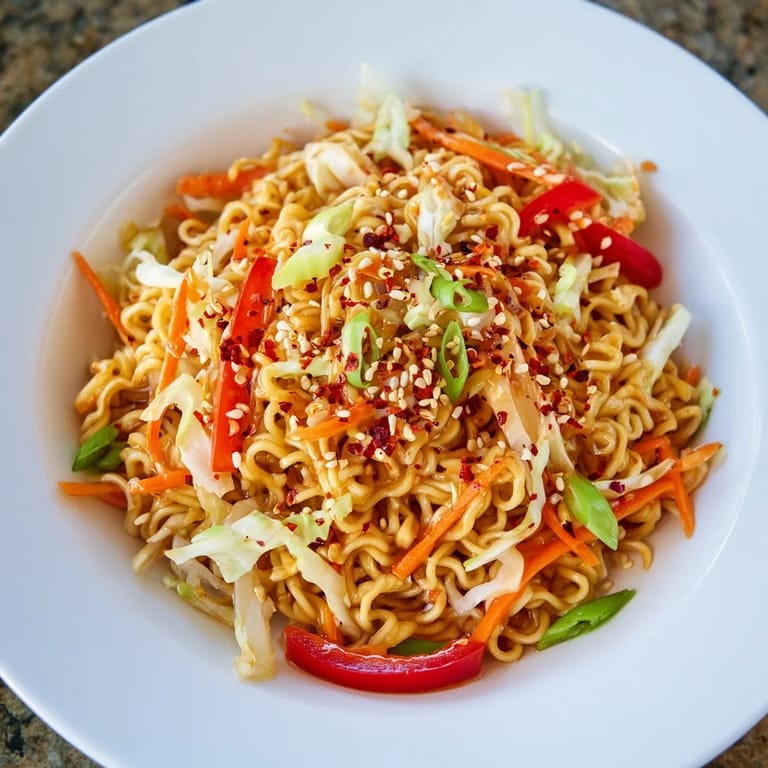
 This recipe lives in that perfect space where effort and reward feel balanced—you're not spending your whole evening cooking, but you're also not compromising on taste. Make it when you're hungry and when you're short on time, because it delivers either way.
Recipe FAQ
- → How do I achieve crispy vegetables without overcooking?
Stir fry the vegetables on medium-high heat for just 2-3 minutes to keep them tender yet crisp.
- → Can I substitute the noodles for a gluten-free option?
Yes, rice noodles or other gluten-free noodles work well; adjust cooking time accordingly.
- → What gives the stir fry its spicy flavor?
The heat comes from sriracha or chili garlic sauce, which can be adjusted to taste.
- → Can I prepare the sauce ahead of time?
Absolutely, mixing the sauce in advance helps flavors meld and speeds up cooking.
- → What protein options pair well with this dish?
Tofu, cooked chicken, or shrimp nicely complement the noodles and veggies for added protein.