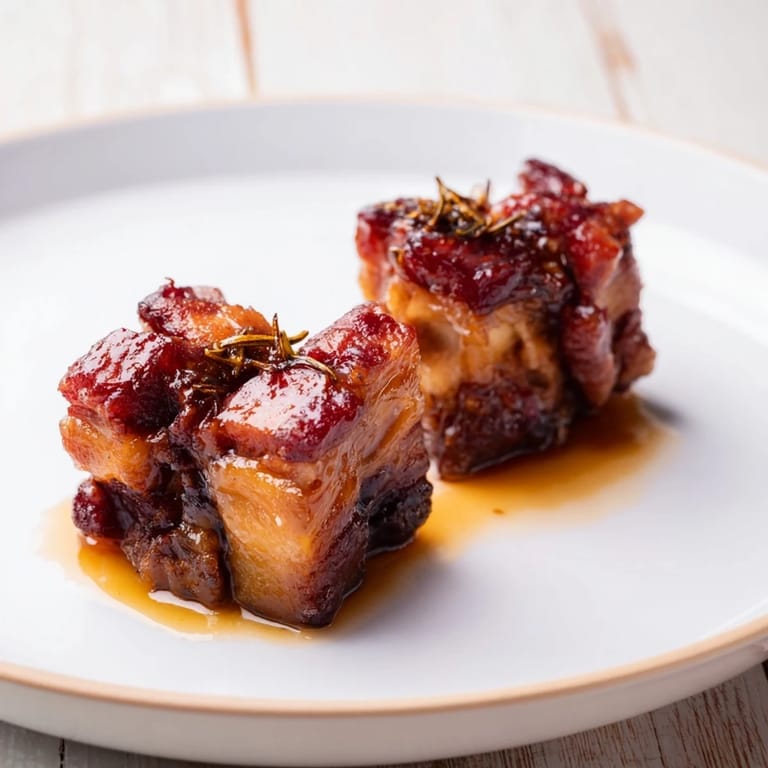
 Pin it
 The smell hit me before I even opened the oven door. It was a Saturday in late October, and I'd left a pork shoulder roasting low and slow while I raked leaves outside. When I came back in, the whole house smelled like a farmhouse kitchen I'd never been to but somehow remembered. I didn't plan it that way. I just wanted something that wouldn't punish me if I forgot about it for a few hours.
I made this for my neighbor's birthday once, a woman who'd lived through sixty winters and claimed she didn't like pork. She ate two servings and asked for the recipe on a scrap of paper. I watched her fold it into her coat pocket like a secret. That's when I knew this one was a keeper.
Ingredients
- Bone-in pork shoulder (4–5 lb): The bone keeps everything moist and adds a deeper flavor, don't skip scoring the skin if you want crackling that shatters.
- Olive oil: Helps the salt and pepper stick and starts the browning process early.
- Kosher salt & black pepper: Simple seasoning lets the pork and glaze shine without competing.
- Onion, garlic, rosemary, thyme: They perfume the pan juices and turn into a soft, sweet bed under the meat.
- Apple cider: Use the good stuff from the orchard if you can, it reduces into something almost caramel-like.
- Apple cider vinegar: Cuts through the richness and wakes up the whole glaze.
- Dijon mustard: Adds a quiet sharpness that balances the brown sugar beautifully.
- Light brown sugar: Just enough sweetness to help the glaze cling and caramelize.
- Unsalted butter: Whisked in at the end, it gives the glaze a silky finish that coats the pork like velvet.
Tired of Takeout? 🥡
Get 10 meals you can make faster than delivery arrives. Seriously.
One email. No spam. Unsubscribe anytime.
Instructions
- Prep the pork:
- Pat the shoulder completely dry with paper towels, then rub it all over with olive oil, salt, and pepper. The drier the skin, the better it will crisp later.
- Build the roasting bed:
- Scatter the onion, garlic, and herb sprigs across the bottom of your roasting pan. Nestle the pork on top, skin side up, so it sits above the aromatics.
- Slow roast:
- Slide it into a 300°F oven and let it go for 4 hours, basting with the pan juices every hour. The meat will start to pull away from the bone and smell like Sunday dinner.
- Make the glaze:
- While the pork roasts, combine cider, vinegar, mustard, brown sugar, and pepper in a saucepan. Boil it down until it's thick enough to coat the back of a spoon, then whisk in the butter.
- Finish with heat:
- Crank the oven to 425°F, brush the pork generously with glaze, and roast for another 20–30 minutes. Brush again halfway through until the skin turns deep amber and crackles.
- Rest and serve:
- Let the pork rest under a loose foil tent for 20 minutes before slicing or pulling it apart. Drizzle the remaining glaze over each serving.
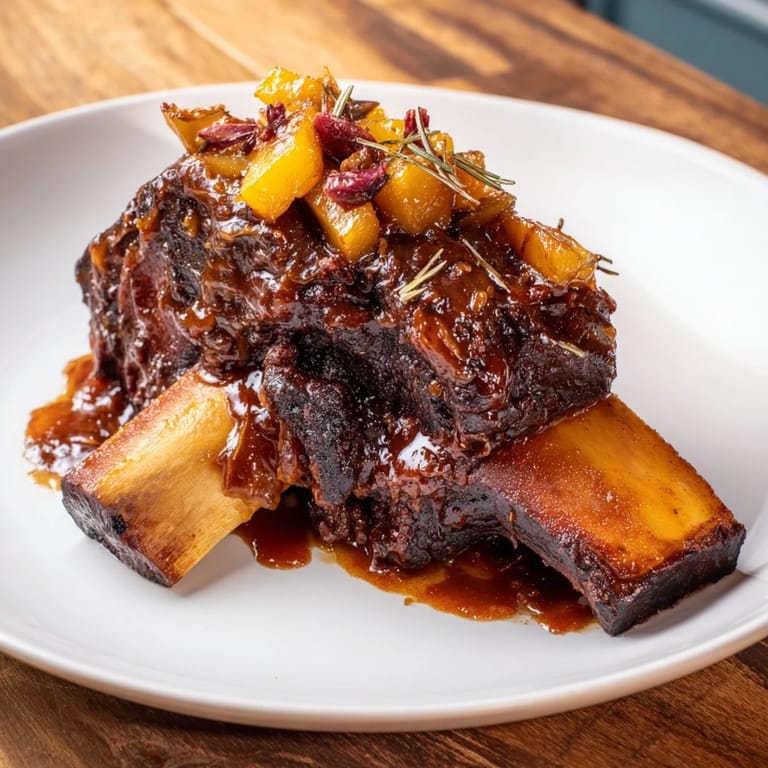 Pin it
 There's a moment when you pull this out of the oven and everyone goes quiet. It happened at Thanksgiving two years ago when my brother-in-law, a man of few words, just nodded and said, Yeah, that's the one. We've made it a tradition since.
What to Serve It With
I like it best with roasted root vegetables tossed in the same pan drippings, or a heap of creamy mashed potatoes that soak up the glaze. A crisp apple slaw on the side cuts through the richness and adds crunch. Keep it simple and let the pork be the star.
Make-Ahead Magic
You can roast the pork a day ahead and reheat it gently in a low oven with a splash of broth. The glaze keeps in the fridge for a week and tastes even better the next day when the flavors settle. I've reheated slices in a skillet with a spoonful of glaze and made the best breakfast hash of my life.
Little Tweaks That Matter
If you want extra crispy skin, hit it with the broiler for 2–3 minutes at the very end, but watch it like a hawk. Swap the apple cider for hard cider if you want a deeper, more grown-up flavor. I've also stirred a pinch of smoked paprika into the glaze when I'm feeling bold.
- Score the skin in a crosshatch pattern so the fat renders evenly and the glaze seeps in.
- Use a meat thermometer if you're nervous, you're aiming for around 190°F internal for pull-apart tenderness.
- Save the pan drippings and aromatics, they make an incredible base for gravy or soup the next day.
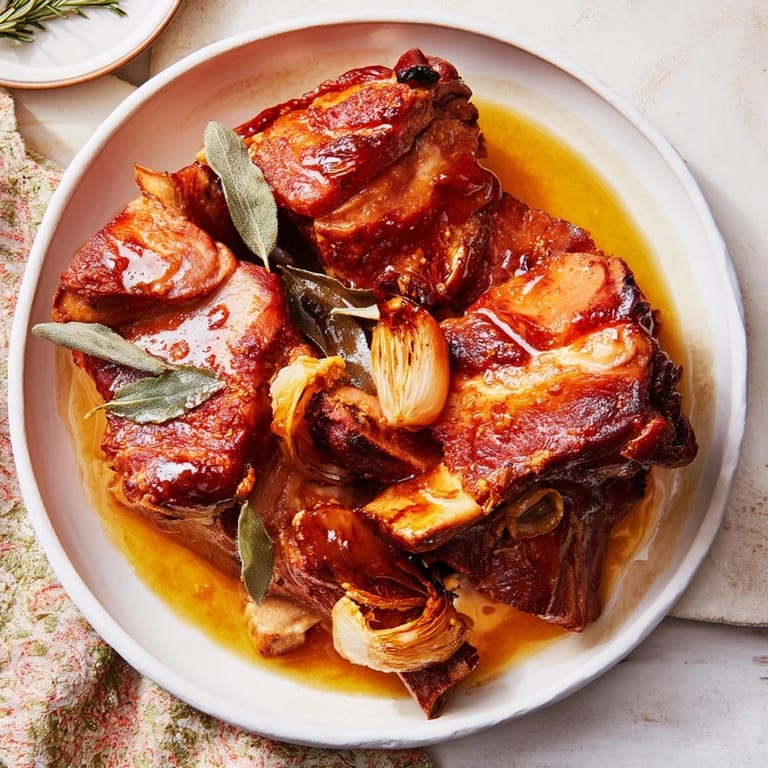 Pin it
 This is the kind of dish that makes people linger at the table long after the plates are empty. Serve it once and it'll find its way onto your regular rotation without you even deciding.
Recipe FAQ
- → How long should the pork shoulder roast?
Roast the pork shoulder uncovered at 300°F for 4 hours, then increase heat to 425°F for 20–30 minutes to caramelize the glaze.
- → What ingredients create the cider glaze?
The glaze combines apple cider, apple cider vinegar, Dijon mustard, brown sugar, black pepper, and butter simmered until thickened.
- → How can I get extra crispy skin?
Finish the pork under a broiler for 2–3 minutes after glazing to achieve a crisp, golden crust.
- → What herbs complement the pork during roasting?
Fresh rosemary and thyme, along with onion and garlic, are placed beneath the shoulder to infuse aromatic flavors.
- → Can I substitute any ingredients in the glaze?
Hard cider can replace apple cider for a more complex flavor, but adjust sweetness accordingly.
- → How long should the meat rest before serving?
Rest the pork loosely covered with foil for 20 minutes to allow juices to redistribute for tender slices.