 Pin it
 My neighbor Maria once knocked on my door holding a platter of braciole, still warm, the tomato sauce pooling around the rolled meat like liquid velvet. She didn't say much, just smiled and handed it over, but that first bite taught me more about Sicilian cooking than any cookbook ever could. The sweetness of raisins against salty pecorino, the surprise crunch of pine nuts, all of it wrapped in tender beef that had been loved into submission by hours of slow simmering. I begged her for the recipe, and she laughed, saying her nonna never wrote anything down, but she'd show me next Sunday. That Sunday turned into a monthly tradition, her kitchen filled with steam and stories, my notebook covered in sauce splatters.
I made this for my brother's birthday last year, doubling the recipe because I knew his friends would show up hungry. They did, and watching them tear into crusty bread to sop up every drop of sauce, arguing over who got the last piece, I understood why Maria kept making this for every gathering. It's not fancy food, it's the kind that makes people linger at the table, pouring more wine, telling longer stories. My brother still texts me asking when I'm making it again.
Ingredients
- Beef top round or flank steak: Thin slices are essential here because they roll easily and turn buttery soft after braising, so ask your butcher to slice them about a quarter inch thick if you can.
- Pecorino cheese: The sharp, salty bite of pecorino is what makes this Sicilian, not Italian-American, so don't swap it for parmesan unless you want to start a friendly argument.
- Pine nuts: Toast them lightly in a dry pan until they smell nutty and golden, it only takes three minutes but the flavor difference is huge.
- Raisins: They plump up in the sauce and add little bursts of sweetness that balance the richness of the beef and cheese.
- Fresh parsley and basil: Fresh herbs matter here, the dried stuff won't give you that bright, grassy note that cuts through the tomato.
- Garlic: Minced fine so it melts into the filling and the sauce, becoming more of a whisper than a shout.
- Breadcrumbs: They help bind the filling and soak up all the good flavors, turning into a savory paste inside the roll.
- Crushed tomatoes: Go for good quality canned tomatoes, the kind that taste like summer even in January, because they're the backbone of your sauce.
- Dry red wine: It's optional but worth it, adding depth and a little acidity that makes the sauce taste more complex.
- Kitchen twine: Secure those rolls tightly or they'll unravel in the pan, and nobody wants to fish out filling from tomato sauce.
Tired of Takeout? 🥡
Get 10 meals you can make faster than delivery arrives. Seriously.
One email. No spam. Unsubscribe anytime.
Instructions
- Prep the beef:
- Lay your beef slices on a cutting board and give them a gentle pound with a meat mallet until they're an even quarter inch thick, which helps them cook evenly and roll without tearing. Season both sides with salt and pepper like you mean it.
- Make the filling:
- Mix together the pecorino, toasted pine nuts, raisins, parsley, basil, garlic, and breadcrumbs in a bowl until everything is evenly distributed and smells incredible. This is the heart of the dish, so taste a pinch and adjust the cheese or herbs if needed.
- Roll and tie:
- Spoon the filling onto each beef slice, leaving a small border around the edges, then roll them up tightly like little sleeping bags, tucking in the sides as you go. Tie each one with kitchen twine or secure with toothpicks so they hold their shape during cooking.
- Sear the braciole:
- Heat olive oil in a large skillet over medium-high heat until it shimmers, then add the braciole and sear them on all sides until they're deeply browned, about six to eight minutes total. This step builds flavor you can't get any other way, so don't rush it.
- Build the sauce base:
- In the same skillet, add a little more olive oil and sauté the chopped onion until it's soft and translucent, about three minutes, then add the garlic and cook just until fragrant. Pour in the red wine if you're using it and let it bubble and reduce by half, scraping up all those tasty browned bits stuck to the pan.
- Simmer in tomato sauce:
- Add the crushed tomatoes, oregano, salt, pepper, and a pinch of sugar if your tomatoes taste too acidic, then bring everything to a gentle simmer. Nestle the seared braciole into the sauce, cover the skillet, and let it all simmer on low heat for about an hour and fifteen minutes, turning the rolls occasionally so they cook evenly and soak up the sauce.
- Finish and serve:
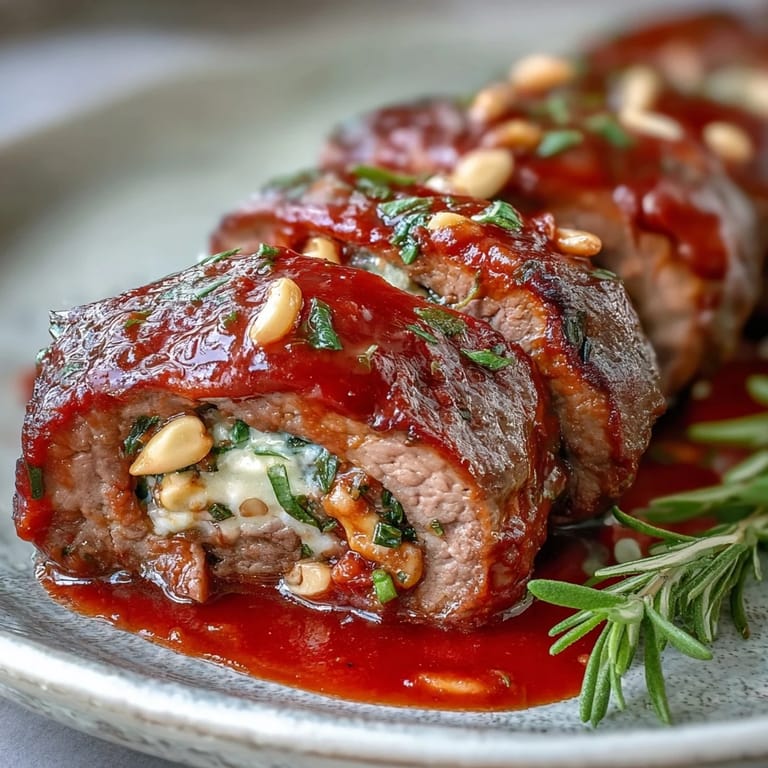
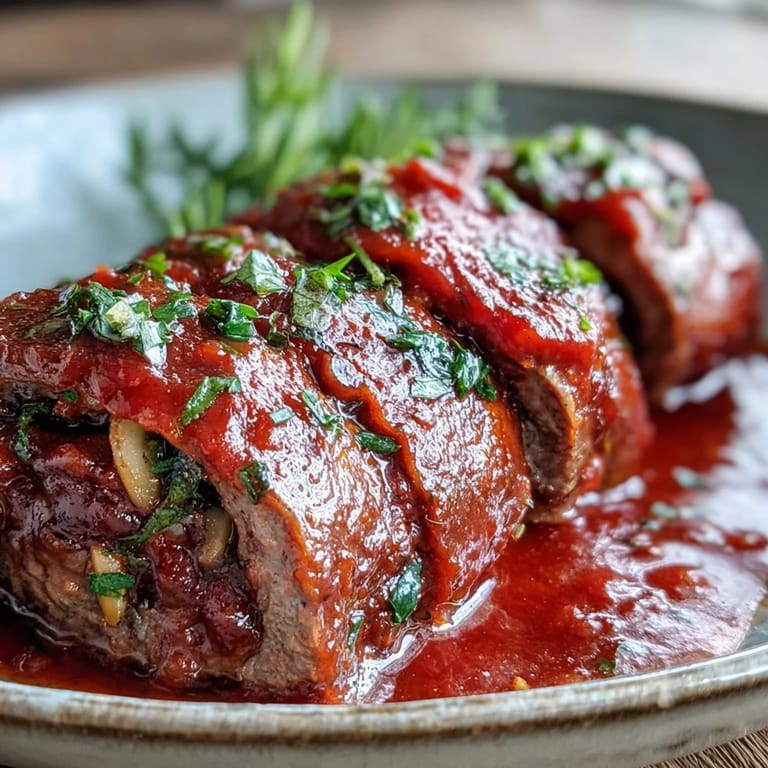
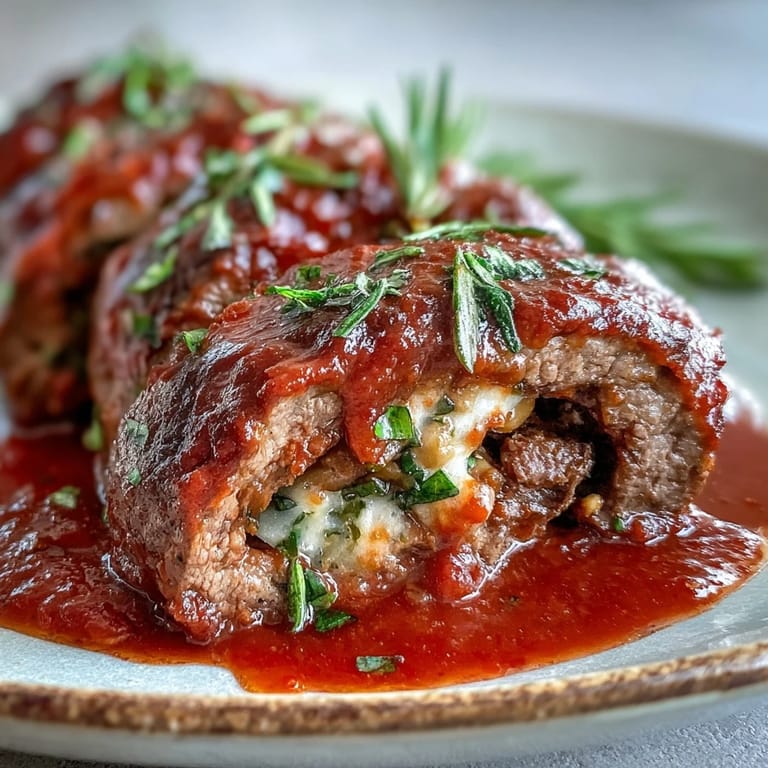
- Once the beef is fork-tender and the sauce has thickened, carefully remove the braciole and snip off the twine or pull out the toothpicks. Slice each roll into thick rounds and serve with the rich tomato sauce spooned generously over the top.
 Pin it
 The first time I nailed this recipe, I called Maria to tell her, and she just laughed and said now you're Sicilian. It's become my go-to for any occasion that needs more than just food, when I want to feed people something that feels like care you can taste. There's something about slicing into those rolls and seeing the filling spiral through the meat, the sauce clinging to every bite, that makes even a regular Sunday feel special.
What to Serve Alongside
This dish begs for something to soak up the sauce, so I usually make a big pot of pasta, toss it with some of the tomato sauce, and serve the braciole on top like the star it is. Creamy polenta works beautifully too, turning into a soft bed for the rolls and sauce, or you can go the rustic route with thick slices of crusty bread for dipping. A simple arugula salad with lemon and olive oil on the side cuts through the richness and makes the meal feel balanced without any fuss.
How to Store and Reheat
Braciole keeps beautifully in the fridge for up to three days, stored in an airtight container with all that gorgeous sauce, which only deepens in flavor as it sits. When you reheat it, do it gently on the stovetop over low heat or in the oven covered with foil, adding a splash of water or broth if the sauce has thickened too much. I've even frozen it successfully, though I slice the rolls first and freeze them in sauce, then thaw and reheat when I need a meal that tastes like I spent all day cooking.
Variations Worth Trying
Maria used to tuck a wedge of hard-boiled egg into the center of each roll, which added a creamy richness and made them look even more impressive when sliced. Some Sicilian cooks add a few thin slices of prosciutto to the filling for extra saltiness and depth, or swap the raisins for dried figs if you want a more earthy sweetness. If you're feeling adventurous, a handful of fresh spinach or a smear of sun-dried tomato paste inside the rolls brings color and a slightly different flavor profile that's still completely delicious.
- Try adding a pinch of red pepper flakes to the sauce if you like a little heat threading through the sweetness.
- Swap pecorino for a mix of pecorino and ricotta salata for a creamier, milder filling.
- Use chicken thighs instead of beef for a lighter version that still braises beautifully in the tomato sauce.
 Pin it
 This is the kind of recipe that makes you feel like you've accomplished something real, even if dinner is just for yourself on a quiet evening. Make it once and you'll understand why it's been showing up on Sicilian tables for generations.
Recipe FAQ
- → What cut of beef works best for braciole?
Top round or flank steak works perfectly as they're lean, tender when braised, and easy to roll. Pound them to 1/4-inch thickness for even cooking and easier rolling.
- → Can I make braciole ahead of time?
Yes, you can assemble the rolls up to 24 hours in advance and refrigerate. You can also cook them completely and reheat gently in the sauce before serving.
- → What can I substitute for pine nuts?
Chopped walnuts or almonds work well as alternatives. Toast them lightly first to bring out their flavor and add the characteristic nutty richness to the filling.
- → How do I prevent the rolls from falling apart?
Secure them tightly with kitchen twine or toothpicks after rolling. Don't overfill, leave a small border, and sear them properly to seal before adding to the sauce.
- → What should I serve with braciole?
Pasta, polenta, or crusty Italian bread are traditional accompaniments. The rich tomato sauce is perfect for tossing with rigatoni or spooning over creamy polenta.
- → Can I use a different cheese instead of pecorino?
Parmesan or a mix of parmesan and Romano cheese works well. Pecorino adds authentic Sicilian sharpness, but other hard Italian cheeses provide similar savory depth.