 Pin it
 My grandmother's kitchen in St. Petersburg always smelled like boiling water and fresh dill right around dinner time, and that's when I learned that pelmeni weren't just food—they were a ritual. She'd teach me to fold them while standing on a stool, my small hands fumbling with the dough circles while hers moved with practiced precision. Years later, I found myself recreating that moment in my own kitchen, and somehow the muscle memory came back the second my fingers touched the dough.
I'll never forget the first time I served these to my Russian friend Dmitri—he took one bite and got quiet in that way people do when food reminds them of home. He asked for seconds before even finishing the first, and suddenly I understood why his grandmother made these every single week, even when there were easier dinners to prepare.
Ingredients
- All-purpose flour (2 cups): This is your foundation, and cold water matters just as much—the combination creates a dough tender enough to bite through but sturdy enough to hold the filling without tearing.
- Cold water (1/2 cup) and egg: These bind the dough together and create that silky texture that makes pelmeni so different from other dumplings—don't skip the egg or your dough will be tough.
- Salt (1/2 tsp for dough): A small amount in the dough enhances flavor throughout, and you'll add more to the filling, so taste as you build.
- Ground pork and beef (7 oz each): Using both meats gives you depth that one alone can't deliver—the pork adds sweetness and the beef brings richness and structure.
- Onion, finely grated: Grating instead of mincing releases more juice and flavor, which keeps your filling moist and tender rather than grainy.
- Garlic (2 cloves), minced: Fresh garlic is non-negotiable here; it needs to be minced small enough to distribute evenly through each bite.
- Black pepper and cold water in the filling: The water is a secret weapon—it keeps the cooked meat from turning dense and chewy, and pepper should be generous because the filling is rich.
- Sour cream (1 cup): Full-fat sour cream is crucial; the thinner stuff won't coat the pelmeni the same way, and it's really what brings everything together at the end.
- Fresh dill: Optional but I'd argue essential—it adds a brightness that cuts through the richness and makes you want another spoonful.
Tired of Takeout? 🥡
Get 10 meals you can make faster than delivery arrives. Seriously.
One email. No spam. Unsubscribe anytime.
Instructions
- Mix and knead your dough base:
- Combine flour and salt in a large bowl, then add the egg and cold water gradually—it's tempting to dump it all at once, but adding it slowly helps you control the texture. Knead for the full 8–10 minutes until it's silky and elastic, not rough or sticky.
- Let the dough rest:
- Those 20 minutes aren't wasted time; the gluten relaxes and the dough becomes easier to roll. Cover it and step away—patience here saves you headaches later.
- Combine your filling with confidence:
- Mix both meats with the grated onion, garlic, salt, pepper, and cold water until it's sticky and well-blended—this is when you taste a tiny pinch (cooked quickly in a pan) to check the seasoning.
- Roll and cut with precision:
- Flour your surface well and roll the dough paper-thin, about 2 mm thick—it's thinner than you think you need, but trust it. Cut circles with a 2.5-inch cutter and work quickly so the dough doesn't dry out.
- Fill and shape each pelmeni:
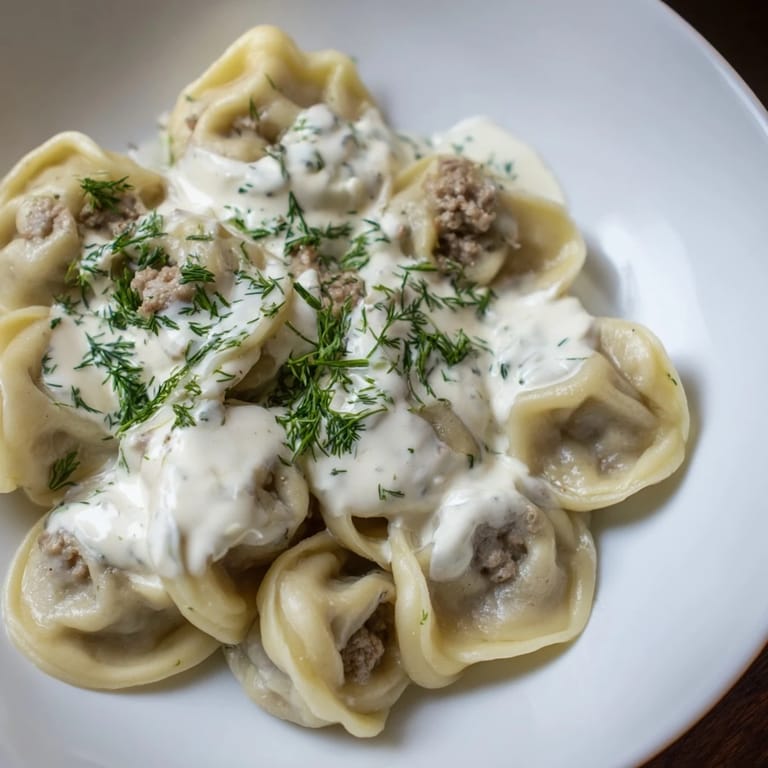
- Place exactly 1 teaspoon of filling in the center of each circle—too much and they burst, too little and they're empty. Fold into a half-moon and pinch the edges tight, then bring the two corners together and press to seal, creating the distinctive pelmeni shape.
- Boil until they float:
- Bring a large pot of salted water to a rolling boil, then drop pelmeni in batches, stirring gently so they don't stick to the bottom or each other. They're done 2–3 minutes after they float, when the filling is cooked through.
- Finish with sour cream:
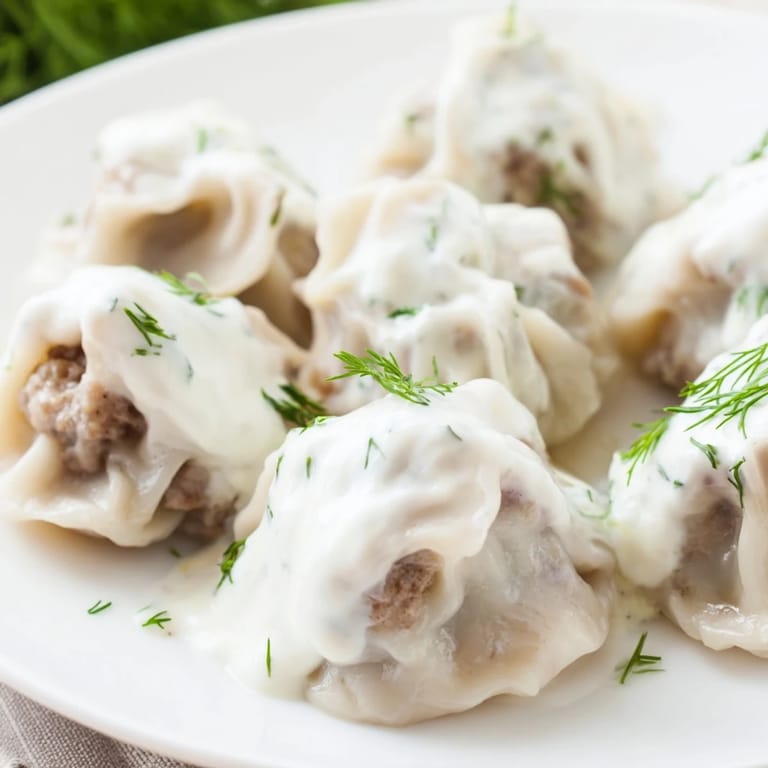
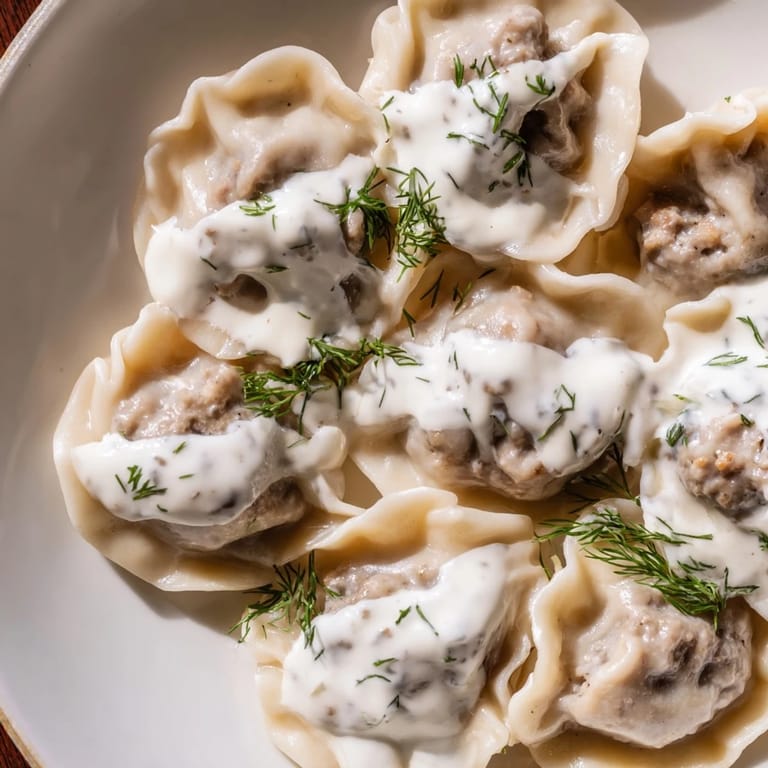
- Scoop them out with a slotted spoon into bowls and top generously with sour cream and fresh dill while they're still steaming.
 Pin it
 There's a moment when you pull the first batch from the boiling water and see them glistening in the spoon, steam rising—that's when you realize you've made something real, something that connects you to centuries of Russian kitchens. Pelmeni stopped being a recipe for me and became a way to say I care.
The Folding Technique That Changes Everything
The shape itself is part of the magic, and it's easier than it looks once you understand the motion. Half-moon into pelmeni is two folds, and they're both about creating a seal tight enough to survive boiling water while keeping the dough thin enough to bite through without chewy resistance. I practiced on a Sunday afternoon with no pressure, just repetition, until my hands knew the motion without thinking.
Why Freezing Makes This a Weeknight Dinner
The best part about pelmeni is that they freeze beautifully before cooking, which means you can spend one evening making several batches and then have dinner sorted for nights when you're tired or busy. Lay them on a tray, freeze until solid, then transfer to a bag where they'll keep for months—you don't even thaw them, just drop them straight into boiling water and add a few minutes to the cooking time. This is why pelmeni were so important in Russian households before modern convenience foods existed; they were survival food that tasted like love.
Serving and Flavor Variations
The sour cream is traditional and essential, but there are other ways to finish them that feel equally authentic. Some people add a pinch of nutmeg to the filling, which sounds strange until you taste it and realize it adds warmth without announcing itself, and others serve with melted butter or a splash of vinegar for sharpness and brightness.
- A nutmeg whisper in the filling transforms it from savory to something more nuanced and restaurant-worthy.
- Melted butter mixed with dill creates richness that sour cream can't deliver alone.
- Keep vinegar on the table because some people will want that acidic edge to cut through the richness.
 Pin it
 Pelmeni are proof that sometimes the most meaningful food is the most humble, the kind that takes time and creates memories with each bite. Make these, freeze them, and you'll always have comfort ready.