 Pin it
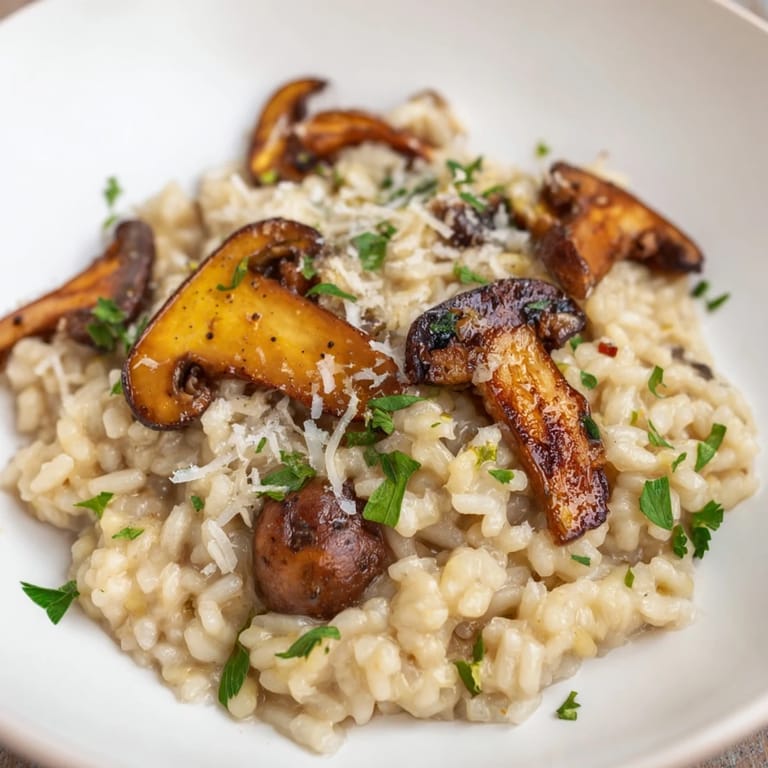
 I stumbled into risotto on a rainy Tuesday when the farmers market had bins overflowing with wild mushrooms. The vendor convinced me to try making it myself, and I left with a paper bag of shiitakes and a scribbled note on the back of a receipt. That evening, my kitchen filled with the smell of toasting rice and butter, and I realized I'd been missing out on something quietly magnificent.
I made this for my sister one winter night when she needed comfort food that didn't involve a lecture. We sat at the counter with bowls in our laps, scraping up every last grain. She told me later it was the first meal in weeks that made her feel like herself again.
Ingredients
- Mixed mushrooms (cremini, shiitake, button): Roasting them separately concentrates their earthy flavor and prevents the risotto from turning watery.
- Arborio rice: The high starch content is what makes risotto creamy without needing cream, so don't swap it for long grain.
- Vegetable broth: Keeping it warm on the stove means the rice cooks evenly and you won't shock it with cold liquid.
- Dry white wine: A crisp Sauvignon Blanc or Pinot Grigio adds acidity that balances the richness of butter and cheese.
- Parmesan cheese: Freshly grated melts into the rice like silk, while pre-shredded versions clump and taste dusty.
- Fresh thyme: A small handful tossed with the mushrooms before roasting adds a subtle herbal backbone.
Tired of Takeout? 🥡
Get 10 meals you can make faster than delivery arrives. Seriously.
One email. No spam. Unsubscribe anytime.
Instructions
- Roast the mushrooms:
- Preheat your oven to 220°C (425°F) and toss the sliced mushrooms with olive oil, salt, pepper, and thyme. Spread them out on a baking sheet and roast for 20 to 25 minutes, stirring halfway, until they're golden and their edges crisp up.
- Start the risotto base:
- In a large, heavy saucepan, melt butter with olive oil over medium heat, then add the finely chopped onion. Cook for about 5 minutes until it's soft and translucent, stirring occasionally so it doesn't brown.
- Toast the rice:
- Stir in the minced garlic and cook for a minute until it smells sweet and sharp. Add the arborio rice and stir constantly for 2 minutes so each grain gets coated and starts to turn slightly translucent at the edges.
- Deglaze with wine:
- Pour in the white wine and stir until it's almost completely absorbed by the rice. You'll hear the sizzle quiet down as the liquid disappears.
- Add broth gradually:
- Ladle in warm vegetable broth one scoop at a time, stirring frequently and letting each addition absorb before adding the next. This takes about 25 to 30 minutes, and the rice should be creamy and tender but still have a slight bite in the center.
- Finish with mushrooms and cheese:
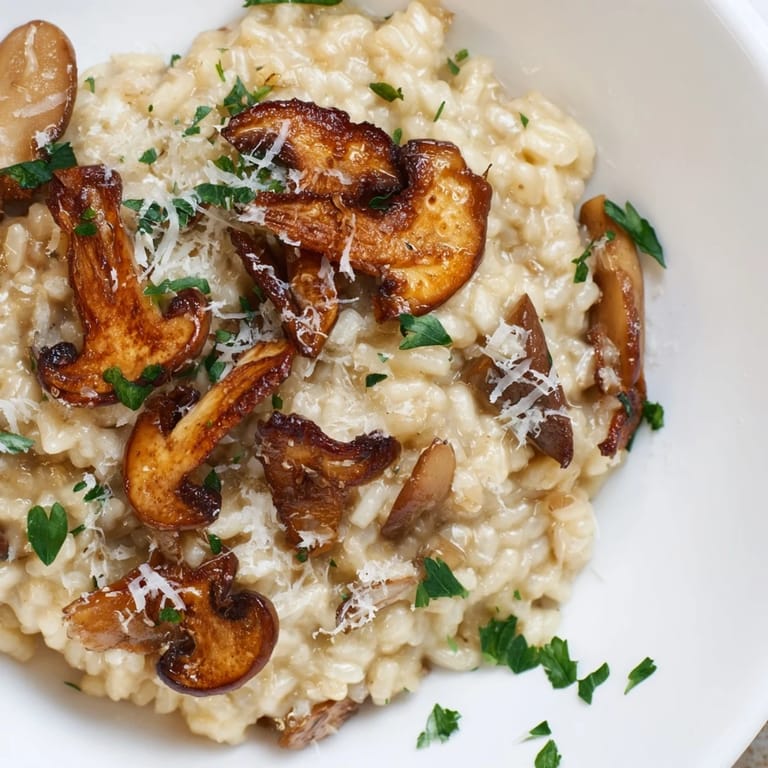
- Stir in the roasted mushrooms (save a few for garnish if you want), grated Parmesan, and chopped parsley. Taste and adjust with salt and pepper, then serve immediately while it's still steaming.
 Pin it
 There was a night I served this to friends who'd never had risotto before, and one of them scraped the pot clean with a wooden spoon when she thought no one was looking. We laughed, and I made her promise to try making it herself. She texted me a photo two weeks later with the caption, I get it now.
Choosing Your Mushrooms
A mix of textures works best, cremini for meatiness, shiitake for depth, and button mushrooms for their mild sweetness. I've tried using only one type, and the risotto tasted flat. If you can find fresh porcini or maitake, toss in a handful for an extra layer of flavor that feels almost wild.
Getting the Texture Right
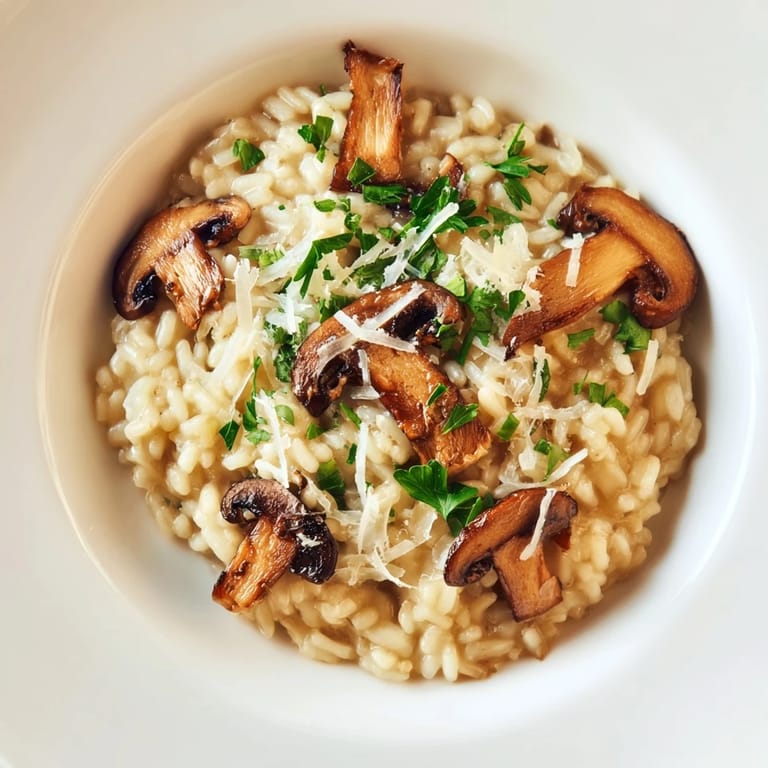
Risotto should flow slowly across the plate when you spoon it out, not sit in a stiff mound or spread like soup. The Italians call it all'onda, meaning it moves like a wave. If it's too thick, stir in a splash more broth at the end until it loosens just enough.
Storing and Reheating
Risotto is best eaten right away, but leftovers can be gently reheated with a little broth or water stirred in over low heat. You can also press cold risotto into patties, coat them in breadcrumbs, and pan fry them for crispy risotto cakes that are just as satisfying.
- Store leftovers in an airtight container in the fridge for up to 3 days.
- Add liquid gradually when reheating so it doesn't turn gummy.
- Don't microwave it on high or the rice will dry out and harden at the edges.
 Pin it
 This dish has a way of slowing you down, which is exactly what I need some nights. It asks for your attention, and in return, it gives you something warm and generous that tastes like care.
Recipe FAQ
- → What type of mushrooms work best?
A combination of cremini, shiitake, and button mushrooms provides the best flavor and texture. Cremini adds earthiness, shiitake brings depth, and button mushrooms offer a milder taste. You can use all of one variety, but mixing them creates more complexity.
- → Why must the broth be kept warm?
Warm broth allows the arborio rice to cook evenly and gradually release its starches, creating the signature creamy texture. Cold broth would shock the rice and interrupt this process, resulting in unevenly cooked grains.
- → Can I substitute arborio rice with another variety?
Arborio is ideal for its high starch content and firm center. Carnaroli or vialone nano rice are excellent alternatives. Short-grain varieties work best; avoid long-grain rice as it won't achieve the same creamy consistency.
- → How do I know when the risotto is done?
The rice should be creamy yet still have a slight firmness in the center (al dente). It should flow slightly on the plate rather than sit stiffly. This typically takes 25-30 minutes of gradual broth addition.
- → Can I make this ahead of time?
Risotto is best served immediately after cooking. However, you can roast the mushrooms several hours ahead and reheat them gently. If you must prepare ahead, undercook the rice slightly and finish cooking just before serving with additional warm broth.
- → What wine pairs well with this dish?
A crisp Pinot Grigio complements the earthiness of the mushrooms beautifully. For red wine lovers, a light Pinot Noir works equally well, cutting through the richness without overpowering the delicate flavors.