 Pin it
 My grandmother's kitchen always smelled like butter and potato starch on pierogi day. She'd press circles of dough with the rim of a glass, fill each one with creamy potato and cheese, and somehow her hands moved faster than I could follow. The first time I made them alone, I was terrified the filling would leak out, but the dough held firm, and when those golden dumplings floated to the surface of boiling water, I understood why she made them every holiday.
Years ago, I made pierogi for a potluck and watched people go back for thirds without realizing what they were eating until someone pointed out it was homemade. That moment stuck with me—it's the kind of dish that feels fancier than it is, which is exactly what makes it so fun to share.
Ingredients
- All-purpose flour (3 cups): This is your dough foundation, and the sour cream in the mix makes it tender rather than tough, so don't skip it or substitute.
- Egg and sour cream: These add richness and elasticity, making the dough forgiving when you're learning to seal the edges.
- Lukewarm water: Cold water won't hydrate the flour properly; too-hot water can cook the egg, so get it just right.
- Russet potatoes: Their starch content creates that creamy mash you want; waxy potatoes will give you gluey filling instead.
- Farmers cheese or ricotta: Farmers cheese has a slight tang that lifts the potato flavor, but if you use ricotta, drain it really well or your filling gets mushy.
- Sharp cheddar cheese: The sharpness cuts through the richness and prevents the filling from tasting one-note.
- Butter for caramelizing onions: This slow, gentle cooking is what turns regular onions into something sweet and almost jam-like.
Tired of Takeout? 🥡
Get 10 meals you can make faster than delivery arrives. Seriously.
One email. No spam. Unsubscribe anytime.
Instructions
- Build and rest the dough:
- Mix flour and salt in a bowl, then create a well in the center like you're making a nest. Add your egg, melted butter, sour cream, and water, stirring until shaggy, then knead on a floured surface for about 5–7 minutes until it's smooth and springs back when you poke it. The 30-minute rest isn't negotiable—it gives the gluten time to relax so rolling becomes easy instead of frustrating.
- Prepare the filling:
- Boil cubed potatoes until a fork slides through without resistance, usually 15–18 minutes depending on size. Drain and mash them while still warm, then fold in the sautéed onion (which you cook until golden and fragrant, about 5 minutes), farmers cheese, and sharp cheddar. Season generously and let it cool completely so it's easier to handle.
- Shape the pierogi:
- Roll your dough thin—about 3 mm, which is roughly the thickness of a coin—then cut circles using a 3-inch cutter or the rim of a drinking glass. The key is a heaping teaspoon of filling per dumpling; too much and they burst, too little and they feel skimpy. Fold each circle in half, pinch the curved edge to seal (I like to use a fork to crimp it), then keep them under a towel so the dough doesn't dry out.
- Boil until they float:
- Use a pot of gently boiling salted water and work in batches so they have room to move around. They're done 1–2 minutes after they float to the surface, which is faster than you'd expect. Fish them out with a slotted spoon and let them drain on a clean towel.
- Caramelize the onions slowly:
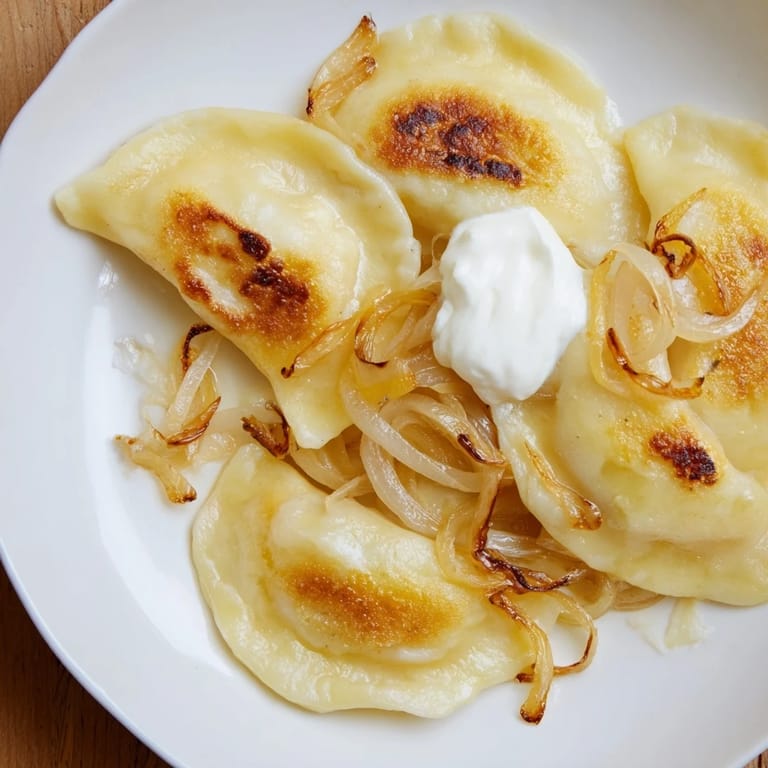
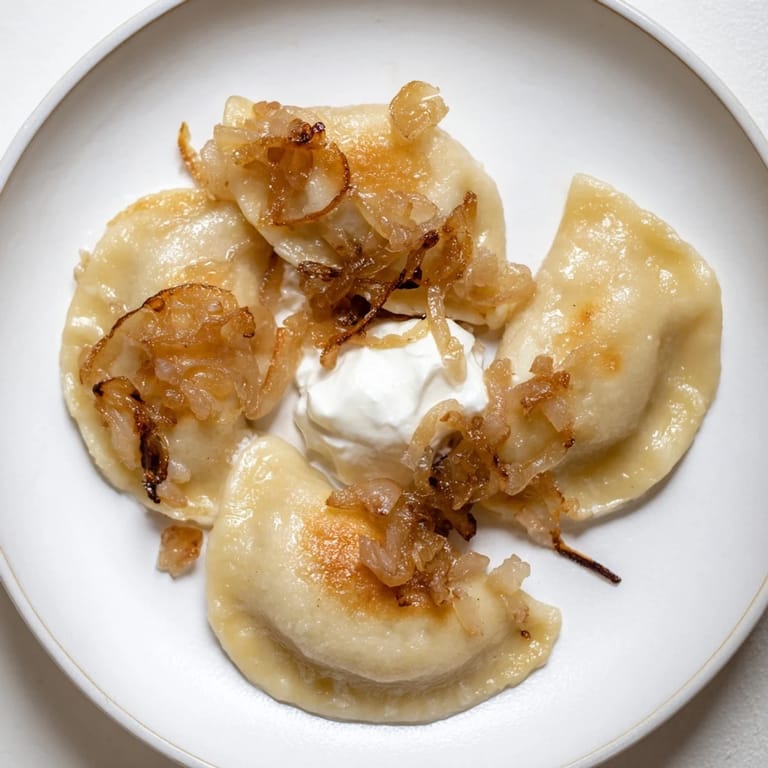
- This is where patience pays off—low heat, stirring often, for about 20–25 minutes until the onions collapse into themselves and turn deep golden brown. They'll smell impossibly sweet, and that's exactly right.
- Pan-fry for the golden finish:
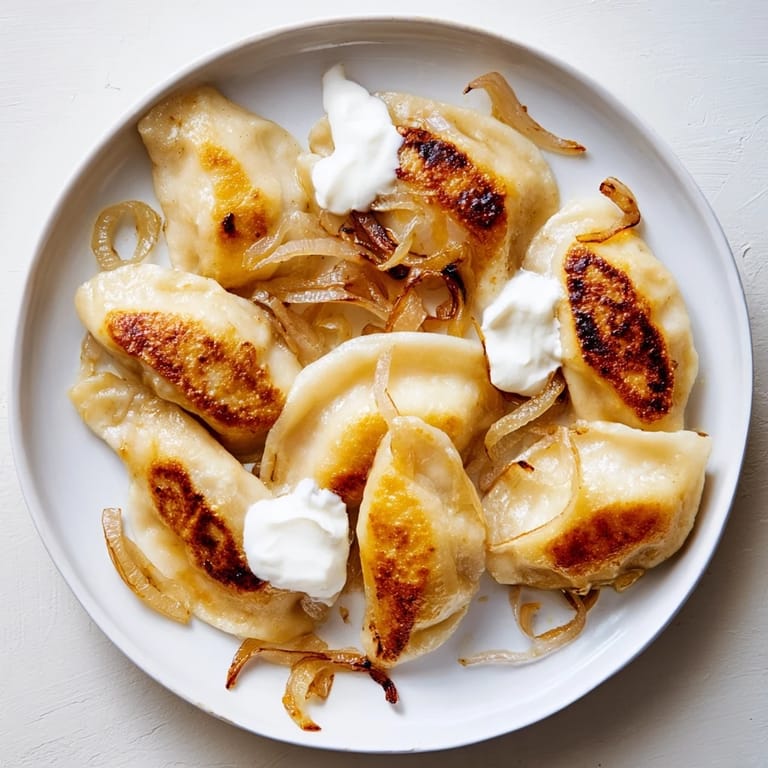
- Use the same skillet and add a little of the caramelized onion butter, then fry the boiled pierogi in batches until both sides turn crispy and light golden, about 2–3 minutes per side. Don't crowd the pan or they'll steam instead of fry.
 Pin it
 I remember my friend taking one bite and then getting quiet for a moment before asking if I could teach her how to make them. That silence meant more than any compliment—it was the sound of someone realizing food could be this good and this personal at the same time.
Freezing and Make-Ahead Tips
Uncooked pierogi freeze beautifully for up to two months if you arrange them on a baking sheet first, so they don't stick to each other, then transfer them to a freezer bag. You can boil them straight from frozen without thawing—just add a minute or two to the cooking time since they'll take longer to heat through. I've pulled out frozen pierogi at 9 p.m. when unexpected guests arrived, and nobody ever guessed they weren't made that day.
Cheese and Filling Variations
While the potato-and-cheese filling is the classic, you can swap farmers cheese for well-drained cottage cheese if that's what you have, though the flavor shifts slightly more savory. Some people add crispy bacon lardons to the caramelized onions for a richer, non-vegetarian version, and honestly, it's hard to argue with bacon on top of butter and onions. The filling can also handle fresh dill stirred in at the end if you love herbaceous flavors, though I usually stick with simplicity and let the caramel onions do the talking.
Serving and Pairing
Serve pierogi hot while they're still crispy on the outside, topped with a generous spoonful of caramelized onions and a dollop of cool sour cream. The contrast of temperatures and textures is part of the magic. A crisp Polish lager or dry white wine pairs beautifully, but honestly, they're equally good eaten standing up in the kitchen right after they come out of the pan.
- Don't skip the sour cream topping—it's not an optional garnish but a flavor balancer that makes the whole dish sing.
- If you're making these for a crowd, boil them all ahead of time and reheat in a buttered skillet just before serving so everything stays warm and crispy.
- Leftover pierogi keep for a few days in the fridge and are secretly amazing fried in butter for breakfast.
 Pin it
 Pierogi are the kind of food that connects you to people and moments. Once you master them, you'll understand why my grandmother made them over and over.
Recipe FAQ
- → What type of cheese is best for the filling?
Farmers cheese or well-drained ricotta works well, combined with sharp cheddar for a creamy and slightly tangy filling.
- → How do I prevent pierogi from sticking?
Dust the work surface and dough lightly with flour and keep assembled pierogi covered with a damp towel to avoid drying and sticking.
- → What is the best way to cook the pierogi?
Boil them until they float, then pan-fry in butter until golden and crisp on both sides.
- → How are the caramelized onions prepared?
Sauté thinly sliced onions slowly in butter over low heat until deeply golden and sweet, about 20-25 minutes.
- → Can pierogi be frozen before cooking?
Yes, freeze uncooked pierogi on a tray then store in bags for up to two months before cooking.