 Pin it
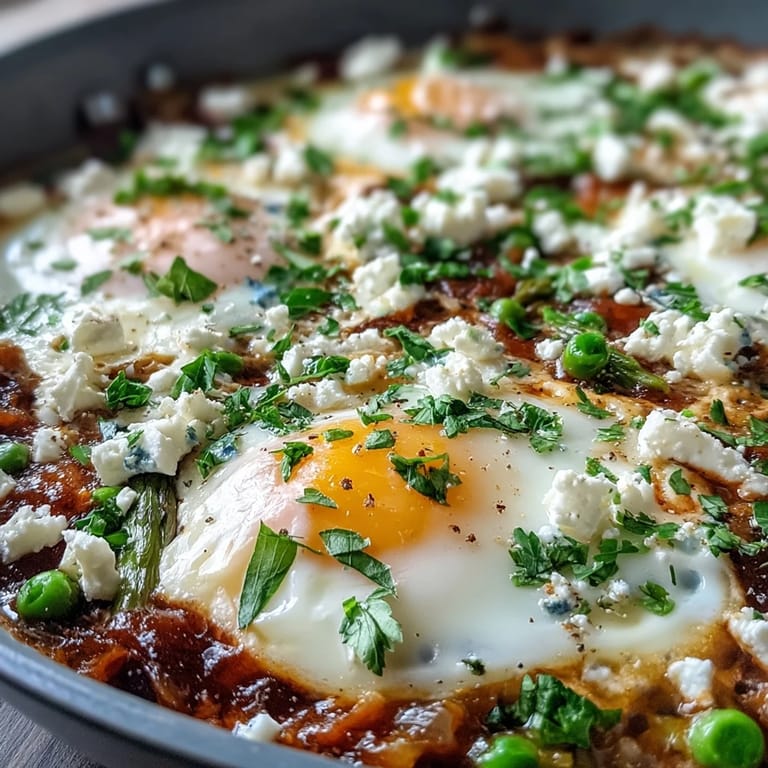
 There's something about spring that makes me crave this dish—maybe it's the farmers market bursting with tender asparagus and fresh broad beans, or maybe it's just that bright green and red combination that feels like celebration on a plate. I stumbled onto this pea and broad bean shakshuka one April morning when I had half a dozen vegetables that needed using and a craving for something warm but alive. The first time I made it, I almost didn't add the eggs, thinking the vegetable sauce was enough, but that runny yolk breaking into the spiced tomato sauce changed everything. Now it's become my go-to when I want to impress without fussing, a dish that feels both comforting and surprisingly elegant.
I made this for a group of friends on a Saturday brunch, and what stuck with me wasn't the compliments but watching everyone lean over their bowls, completely focused on that moment when their spoon broke the yolk. One friend asked why restaurant brunch felt so complicated when this existed, and honestly, I didn't have an answer. We ended up sitting at the table for three hours, the shakshuka long finished, just talking. That's when I knew this recipe was special—it's not just food, it's an invitation to slow down.
Ingredients
- Olive oil: Use a good quality one you actually like tasting—it flavors the base and shouldn't be an afterthought.
- Onion: The foundation of everything; take your time softening it properly.
- Garlic cloves: Mince them finely so they distribute evenly through the sauce.
- Red bell pepper: Adds sweetness and that gorgeous color.
- Asparagus: Trim the woody ends, and cut into similar sizes so they cook evenly.
- Peas and broad beans: Fresh are wonderful if you can find them, but frozen work beautifully—no shame in that.
- Canned chopped tomatoes: Or passata if you prefer a smoother sauce.
- Tomato paste: This concentrates the tomato flavor and adds depth.
- Ground cumin: Warm and slightly nutty; it's what makes this taste like shakshuka.
- Smoked paprika: Don't skip this—it adds a subtle smokiness that feels sophisticated.
- Ground coriander: Just a touch, it adds a whisper of brightness.
- Chili flakes: Optional, but they wake everything up.
- Salt and black pepper: Season as you go, not just at the end.
- Large eggs: The stars of the show; they need good homes in that sauce.
- Fresh parsley or mint: Chopped just before serving for maximum freshness and color.
- Feta cheese: Crumbled over top, it's optional but adds a tangy contrast.
- Lemon wedges: Essential for brightness at the end.
Tired of Takeout? 🥡
Get 10 meals you can make faster than delivery arrives. Seriously.
One email. No spam. Unsubscribe anytime.
Instructions
- Build your base:
- Heat olive oil in a large deep skillet over medium heat and add your chopped onion, letting it soften and turn translucent for about 4 to 5 minutes. You want it to be the foundation of flavor, not rushed.
- Add garlic and pepper:
- Stir in the minced garlic and diced red bell pepper, cooking for 2 to 3 minutes until the pepper is just beginning to soften. The kitchen should start smelling incredible by now.
- Toast your spices:
- Add cumin, smoked paprika, ground coriander, and chili flakes, cooking for just 1 minute to wake them up and release their aromatic oils. Don't let them burn—this is crucial.
- Build the sauce:
- Stir in tomato paste first, letting it caramelize slightly for a minute, then add your chopped tomatoes and a pinch of salt and pepper. Simmer uncovered for about 10 minutes, stirring occasionally, until the sauce thickens slightly and the raw tomato edge mellows.
- Add the spring vegetables:
- Add asparagus, peas, and broad beans, cover the pan, and cook for 7 to 8 minutes until they're just tender but still have some structure. You don't want mushy vegetables—they should taste like spring.
- Create wells and crack eggs:
- Using the back of a spoon, make small indentations or wells throughout the sauce, spacing them evenly around the pan. Crack one egg into each well, being careful not to break the yolks.
- Cook the eggs gently:
- Cover the pan and cook over gentle heat for 5 to 7 minutes, depending on how runny you like your yolks. The whites should be set but the yolks still jiggle slightly when you nudge the pan.
- Finish and serve:
- Remove from heat and scatter fresh parsley or mint over the top, add crumbled feta if you're using it, and serve immediately with lemon wedges and crusty bread on the side.
 Pin it
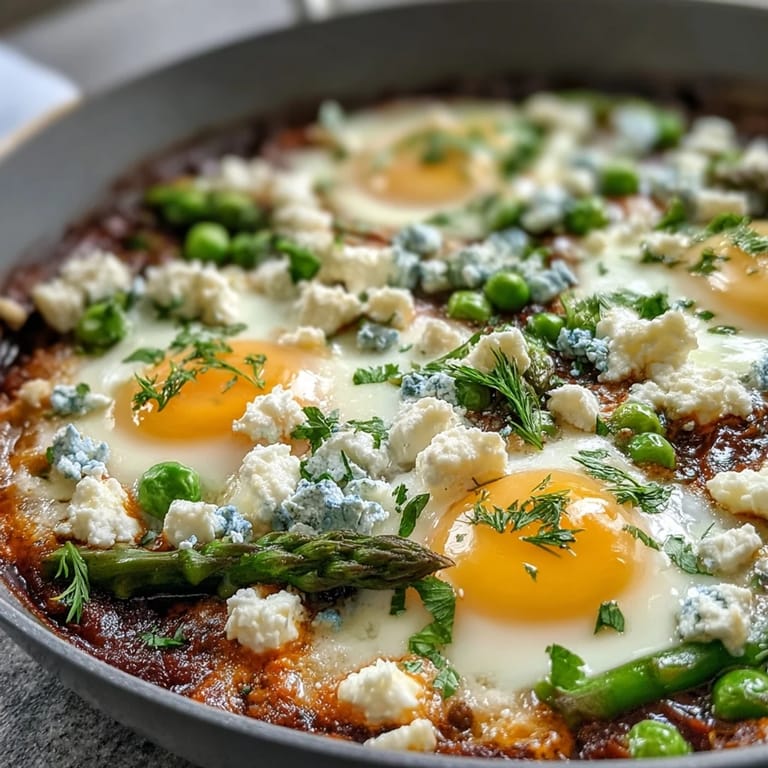
 There was one morning when I made this for just myself, no occasion or guests, and I sat on my kitchen stool with one ear of music playing and took my time with each spoonful. That's when it clicked—this dish isn't just about feeding people, it's about feeding yourself with intention. It's permission to have a beautiful, restaurant-worthy meal on an ordinary Tuesday, to remember that good food at home is always worth the small effort.
Why Spring Vegetables Matter Here
The beauty of this shakshuka is that it celebrates whatever fresh vegetables are at their peak—in spring, that's peas, broad beans, and asparagus, but the formula works with whatever you find. I've made it with spinach in late spring, with zucchini in early summer, and each version tastes distinctly of that moment in the season. The key is respecting the vegetables' cooking times, adding sturdier ones first and more delicate ones later.
The Spice Balance
This is where you make the recipe your own—the spices I've listed are a suggestion, not a rule. I learned this the hard way by over-cumin-ing an early batch, making it taste one-note and heavy. Now I taste as I go, adjusting the smoked paprika or coriander, letting the flavors build gradually rather than all at once. If you like heat, add the chili flakes or a fresh chopped chili; if you prefer gentle, you can skip them entirely.
Serving and Variations
This dish shines served with warm flatbread, sourdough, or pita for scooping up that precious sauce and breaking the yolks into. For a vegan version, simply omit the eggs and feta, then add a can of drained chickpeas for protein—it's just as satisfying, just different. You can make this ahead through the sauce-building step, then add vegetables and eggs fresh when you're ready to eat, which makes it brilliant for entertaining.
- If broad beans are hard to find fresh, frozen are absolutely fine and often even more convenient.
- A squeeze of lemon juice at the very end brightens everything and cuts through the richness of the eggs.
- Serve this in shallow bowls so everyone gets sauce, vegetables, and a whole egg in each spoonful.
 Pin it
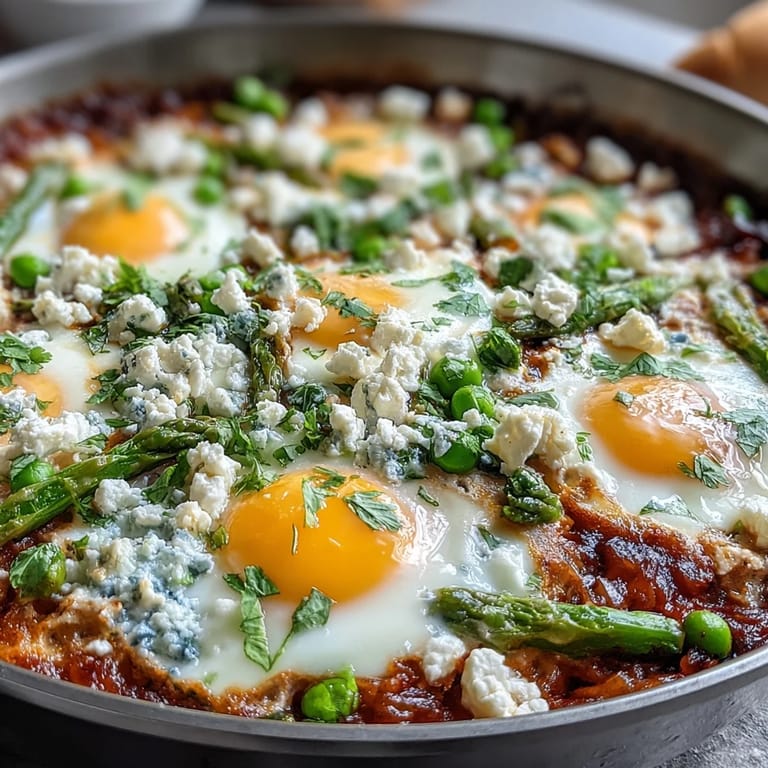
 This shakshuka has become my answer to the question of what to make when I want something that feels special but doesn't require special skills. It's proof that the best meals often come from listening to what's in your kitchen and what your body is craving, then trusting that simple, good ingredients will take care of the rest.
Recipe FAQ
- → Can I make this dish ahead of time?
The vegetable base can be prepared up to a day in advance and refrigerated. When ready to serve, reheat gently and add the eggs to finish cooking.
- → What can I substitute for broad beans?
Edamame, lima beans, or additional peas work well as substitutes. You could also use chopped green beans for a different texture.
- → How do I know when the eggs are done?
The whites should be completely set and opaque, while the yolks remain slightly runny. This usually takes 5-7 minutes when covered. For firmer yolks, cook an additional 2-3 minutes.
- → Is this suitable for meal prep?
Yes, though eggs are best cooked fresh. Store the vegetable sauce separately and reheat with freshly cracked eggs when serving, or cook completely and enjoy within 2-3 days.
- → Can I freeze this dish?
The vegetable base freezes well for up to 3 months. Avoid freezing once eggs are added as the texture becomes rubbery. Thaw overnight and reheat before adding fresh eggs.
- → What's the best way to serve shakshuka?
Serve directly from the pan family-style, with warm pita, flatbread, or crusty sourdough for dipping. Lemon wedges add brightness and extra herbs keep flavors fresh.