 Pin it
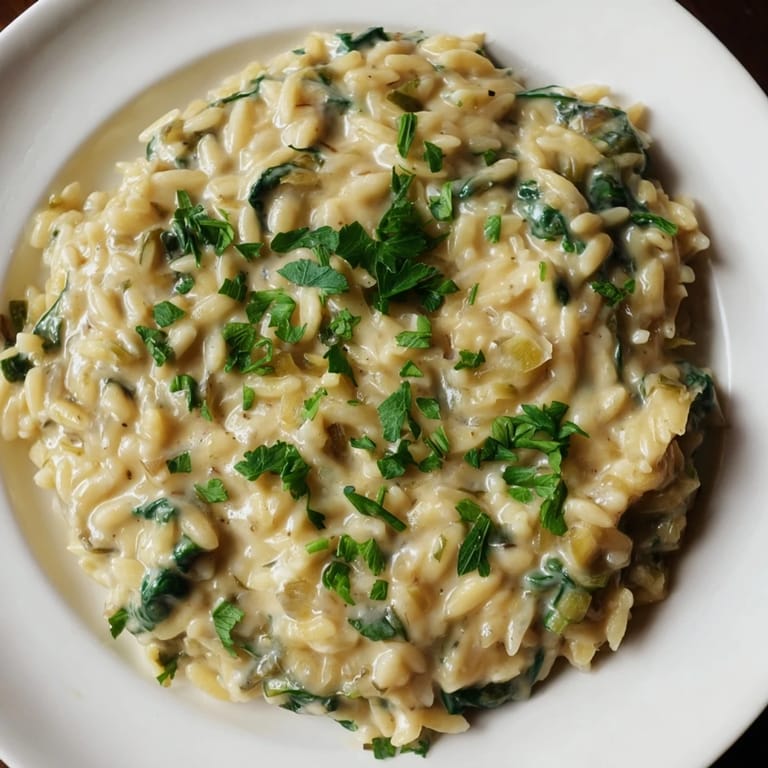
 There's something almost meditative about watching orzo tumble around a hot skillet, soaking up butter and garlic before the liquid hits. I stumbled onto this one-pot version on a particularly rainy Tuesday when I was too tired to stand over multiple pans, and what emerged was so creamy and satisfying that it became my go-to answer for 'what's for dinner.' The magic is in that toasted grain moment and the way cream just softens everything into comfort.
I made this for my sister one snowy evening when she dropped by unexpectedly, and I remember her surprise that something this elegant came from a single pan on the stove. We ate it straight from the skillet while standing in the kitchen, and she asked for the recipe before she even finished her bowl—that's when I knew it was a keeper.
Ingredients
- Orzo pasta: This small rice-shaped pasta is the star, soaking up every drop of broth and cream instead of drowning in it like longer pastas would.
- Butter: Use unsalted so you control the salt level, and it creates a beautiful golden base when you toast the onions and garlic.
- Heavy cream and milk: The cream brings richness while milk keeps it from being heavy, balancing the dish so it feels nourishing rather than heavy.
- Parmesan and mozzarella: Parmesan adds that sharp, salty depth while mozzarella melts silky smooth—skip the mozzarella if you want a lighter version.
- Fresh garlic and onion: These are your aromatics, and mincing them small means they distribute evenly and cook down into the sauce rather than staying chunky.
- Baby spinach: It wilts in seconds at the end, adding color and nutrition without any fuss or bitterness.
- Fresh parsley: A handful stirred in at the very end brightens everything and makes it look finished.
- Vegetable broth: Low-sodium lets you taste the other flavors and control salt yourself.
Tired of Takeout? 🥡
Get 10 meals you can make faster than delivery arrives. Seriously.
One email. No spam. Unsubscribe anytime.
Instructions
- Start with the base:
- Melt butter in your largest pan over medium heat, then add diced onion. Let it cook gently for 3 to 4 minutes until it softens and turns translucent at the edges—you're building flavor here, not rushing.
- Wake up the garlic:
- Stir in minced garlic and cook for just a minute until the smell hits you and fills the whole kitchen. This is the moment you know things are about to taste good.
- Toast the orzo:
- Add your orzo and keep stirring for 2 minutes so each grain gets coated in that buttery, garlicky mixture. You want a light golden color, which means the starches are beginning to brown slightly.
- Add the liquids:
- Pour in your broth and milk, stir well, and bring everything to a gentle simmer. Let it bubble away uncovered for 10 to 12 minutes, stirring often so nothing sticks to the bottom, until the orzo is tender and most of the liquid has been absorbed.
- Introduce the cream:
- Turn the heat down slightly, then add your heavy cream, Parmesan, and mozzarella if you're using it. Stir gently until the cheese melts completely and everything becomes silky and creamy.
- Finish with greens:
- Fold in the spinach and let it wilt for a minute or two, then taste and adjust salt, pepper, and those red pepper flakes if you like a little heat.
- Plate and serve:
- Remove from heat, scatter fresh parsley over the top, and serve while it's still steaming hot.
 Pin it
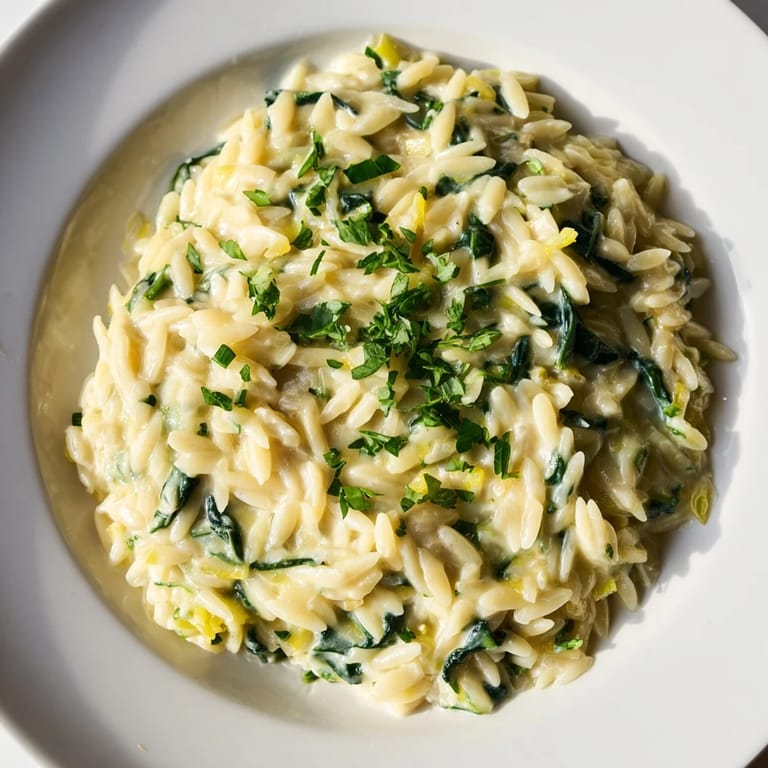
 There was a moment while teaching my friend to make this when she worried she'd overcooked the orzo because it looked mushy, but then the cream went in and it transformed into something luxurious and perfect. That's when she understood that this recipe isn't fussy—it just rewards you for paying attention.
Making It Your Own
This recipe is a blank canvas more than you'd think. I've made it with kale when spinach looked sad at the market, and the slight bitterness against the cream was wonderful. Some nights I add sautéed mushrooms or leftover roasted chicken, and it becomes a different meal entirely while still staying true to that one-pot simplicity.
A Word on Texture
The beauty of this dish is that creamy sauce that clings to every grain without drowning it. The key is watching as it cooks—you want the broth to be mostly absorbed but the pan shouldn't be completely dry. There's a sweet spot where the sauce is silky but not soupy, and you'll feel it the moment you stir it.
Quick Swaps and Shortcuts
For a lighter version, cut the cream in half and use all milk instead. For something richer, add a splash of white wine when you pour in the broth—it'll cook off in a minute but adds complexity. Red pepper flakes are optional but honestly worth keeping on the table for anyone who wants their bowl a little spicier.
- If you don't have fresh parsley, dried parsley works, though fresh always tastes brighter and more alive on top.
- Vegetable broth can be swapped for chicken broth if you're not vegetarian, and it brings a slightly deeper flavor.
- This dish keeps beautifully in the fridge for two days and actually tastes even creamier the next day when the orzo has absorbed more of the sauce.
 Pin it
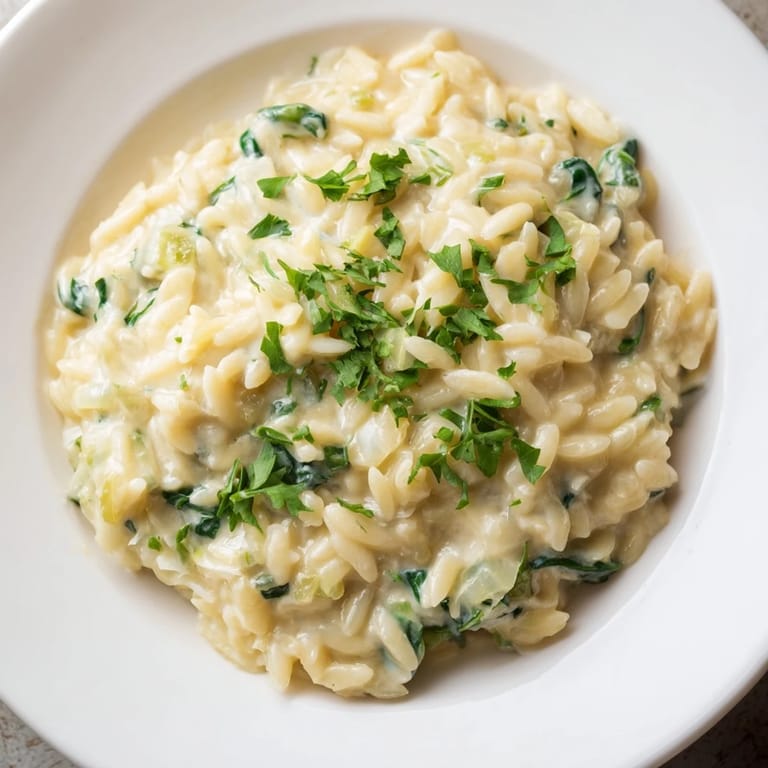
 This is one of those dishes that tastes like you've been cooking all day but takes barely half an hour. It's the kind of meal that makes a regular Tuesday feel like something worth celebrating.
Recipe FAQ
- → What type of pasta is used in this dish?
Orzo pasta is used, a small rice-shaped pasta that cooks quickly and absorbs flavors well.
- → Can I substitute the cheeses in this dish?
Yes, Parmesan and mozzarella contribute creaminess, but you can swap mozzarella for other melting cheeses or use plant-based alternatives for a dairy-free version.
- → How is the creamy texture achieved without heaviness?
Combining broth, milk, and a modest amount of cream creates a rich but balanced sauce that coats the orzo without feeling heavy.
- → What greens can be used besides spinach?
Kale, arugula, or Swiss chard are great alternatives. Add them towards the end of cooking to wilt slightly while retaining nutrients.
- → Is this dish suitable for vegan modifications?
Yes, by using plant-based butter, cream, cheese, and a vegan-friendly broth, this dish can be made vegan while keeping its creamy texture.