 Pin it
 The kitchen windows were wide open one breezy April evening when I realized I had fish thawing and a box of spaghetti but no real plan. I grabbed a lemon from the fruit bowl, and suddenly the whole meal came together in my head. The butter started to sizzle, garlic hit the pan, and within minutes the entire apartment smelled like a coastal Italian trattoria. That night, what began as improvisation became one of my most requested weeknight dinners.
I made this for my sister during her first week working from home, back when we were all learning to cook more intentionally. She wandered into the kitchen halfway through, drawn by the smell of garlic and lemon, and ended up staying to help flip the fish. We ate on the back porch with cold white wine, and she told me it tasted like vacation. Now, every time she visits, she asks if we can make the lemon fish pasta again.
Ingredients
- White fish fillets: Sea bass is buttery and mild, but cod or halibut work beautifully too, just make sure they are skinless and evenly sized so they cook at the same rate.
- Olive oil: Use a decent quality oil here since it becomes part of the sauce, not just a cooking fat.
- Lemon zest and juice: Zest first before juicing, and use fresh lemons only because bottled juice tastes flat and artificial.
- Spaghetti or linguine: The flat shape of linguine grabs more sauce, but spaghetti is traditional and works perfectly.
- Unsalted butter: Lets you control the saltiness of the sauce, especially once the Parmesan goes in.
- Garlic cloves: Mince them finely so they melt into the butter without burning or leaving harsh raw bites.
- Pasta water: This starchy liquid is what makes the sauce silky and helps everything cling together.
- Fresh parsley: Flat leaf parsley has more flavor than curly, and it brightens the whole dish with color and freshness.
- Parmesan cheese: Freshly grated melts into the sauce, while pre-shredded stuff just clumps and tastes like cardboard.
Tired of Takeout? 🥡
Get 10 meals you can make faster than delivery arrives. Seriously.
One email. No spam. Unsubscribe anytime.
Instructions
- Boil the pasta:
- Bring a large pot of salted water to a rolling boil, then cook the spaghetti until it still has a slight bite in the center. Before draining, scoop out half a cup of the cloudy pasta water and set it aside.
- Prep and season the fish:
- Pat the fillets completely dry with paper towels so they sear instead of steam, then drizzle with olive oil and season both sides with salt, pepper, and lemon zest. Let them sit while the grill heats up.
- Grill the fish:
- Place the fillets on a hot grill pan or outdoor grill and let them cook undisturbed for three to four minutes per side until they turn opaque and flake easily with a fork. Cover loosely with foil to keep them warm while you finish the pasta.
- Start the sauce:
- Melt the butter with olive oil in a large skillet over medium heat, then add the minced garlic and stir constantly for about a minute until it smells nutty and fragrant but has not turned brown. Burnt garlic tastes bitter and will ruin the sauce.
- Add lemon and pasta:
- Stir in the lemon zest and juice, then add the drained spaghetti and toss everything together with tongs, adding splashes of pasta water until the sauce coats every strand in a glossy sheen. The starch in the water helps emulsify the butter and oil into a creamy coating.
- Finish and plate:
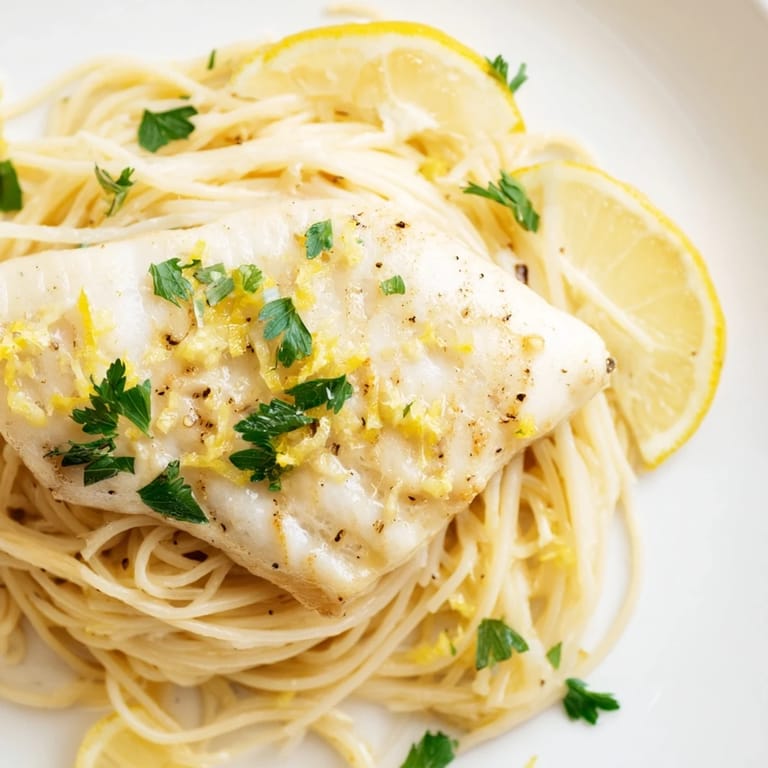
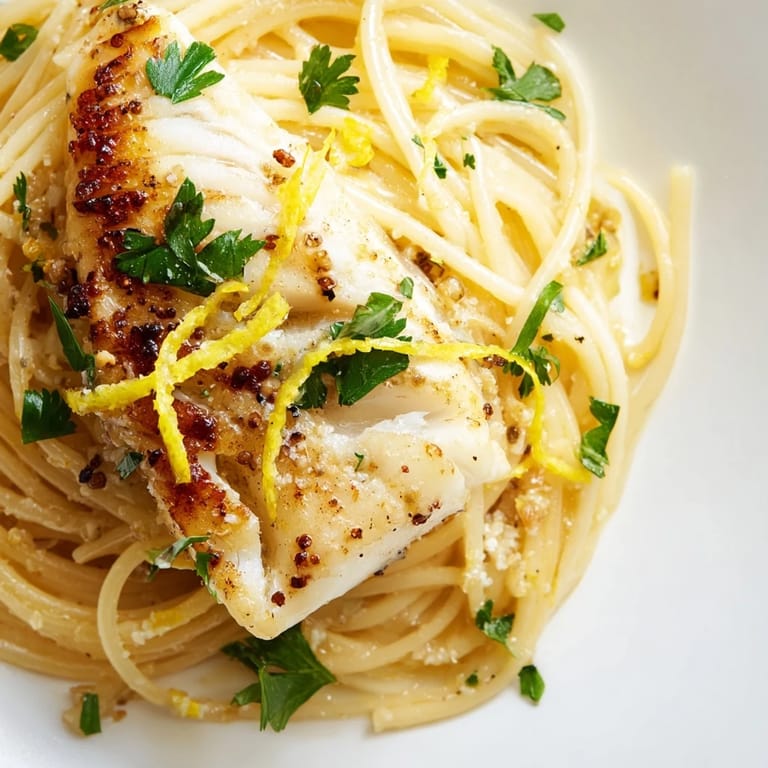
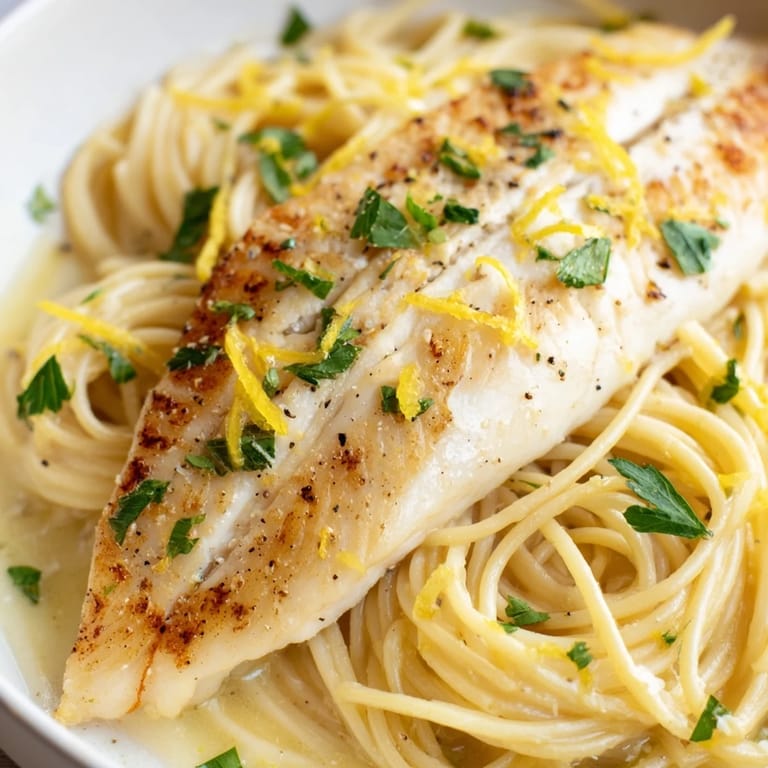
- Toss in the chopped parsley and grated Parmesan, then taste and adjust the salt and pepper. Divide the pasta among four plates and top each with a grilled fish fillet, then garnish with lemon wedges and extra parsley.
 Pin it
 One summer evening, I made this for a neighbor who had just moved in and did not know anyone yet. We sat on my tiny balcony with mismatched plates, and she told me she had not had a home cooked meal in weeks. When she left, she hugged me at the door and said the lemon reminded her of her grandmother's kitchen in Sorrento. Food has a way of building bridges like that, even between strangers.
Choosing Your Fish
Sea bass is ideal because it stays moist and has a delicate sweetness that does not compete with the lemon, but it can be pricey or hard to find depending on where you live. Cod is a fantastic budget friendly substitute with a similar flaky texture, and halibut works if you want something a little meatier. I have also used tilapia in a pinch, though it is more fragile and needs a gentler hand on the grill. Whatever you choose, make sure the fillets are about the same thickness so they cook evenly, and ask your fishmonger to remove the skin if it is still on.
Getting the Sauce Right
The key to a silky lemon butter sauce is emulsification, which sounds fancy but really just means the fat and water blend together instead of separating into greasy puddles. The starch from the pasta water acts like glue, binding the butter, oil, and lemon juice into a cohesive coating that clings to the noodles. If your sauce looks broken or oily, add another splash of pasta water and toss vigorously with tongs until it comes together. I learned this the hard way after serving a plate of spaghetti swimming in separated butter, and now I always keep extra pasta water on hand just in case.
Serving and Pairing
This dish is best served immediately while the pasta is still glossy and the fish is warm, because reheating never quite captures the same magic. I like to serve it with a simple arugula salad dressed in olive oil and a squeeze of lemon, or roasted asparagus if it is in season. A crisp white wine like Sauvignon Blanc or Pinot Grigio cuts through the richness of the butter and echoes the citrus notes beautifully.
- If you are feeding kids or anyone who is not a fan of visible herbs, stir the parsley into the sauce instead of sprinkling it on top.
- Leftovers can be gently reheated in a skillet with a splash of water or broth, though the fish is better eaten cold on a salad the next day.
- For a pop of color and a hint of brine, toss in a handful of halved cherry tomatoes or a few capers right before serving.
 Pin it
 This is the kind of meal that makes you feel like a better cook than you actually are, and I mean that in the best way. It is simple, forgiving, and always turns out beautifully, even on a hectic Wednesday night when you are half distracted and the kitchen is a mess.
Recipe FAQ
- → What type of white fish works best for this dish?
Sea bass and cod are excellent choices for their mild, delicate flavor and firm texture. Other suitable options include halibut, flounder, or snapper. Select fillets of similar thickness for even cooking.
- → How do I prevent the fish from sticking to the grill?
Ensure your grill pan or grates are well-oiled and preheated to medium-high heat. Pat the fish completely dry before cooking, and avoid moving fillets excessively. A light drizzle of olive oil on the fish helps prevent sticking.
- → Can I make this dish without a grill?
Yes, pan-sear the fish instead. Heat olive oil in a skillet over medium-high heat and cook fillets 3-4 minutes per side until opaque. This method produces equally delicious results with a golden crust.
- → What wine pairs well with this dish?
Crisp white wines complement the lemon-butter sauce beautifully. Sauvignon Blanc and Pinot Grigio are ideal choices, as their acidity brightens the citrus flavors and cuts through the richness of the butter.
- → How do I make this gluten-free?
Simply substitute gluten-free pasta for regular spaghetti or linguine. The cooking time may vary slightly, so follow package instructions. All other ingredients are naturally gluten-free, making adaptation simple.
- → Can I prepare components ahead of time?
Yes, you can season the fish and prepare ingredients 2-3 hours in advance. However, cook pasta and assemble the dish fresh for best results, as the sauce coats the pasta optimally when served immediately.