 Pin it
 The first time I made Czech goulash, I was standing in a Prague kitchen with a friend's grandmother who barely spoke English, armed only with a wooden spoon and the kind of confidence that comes from not knowing what you're doing. She kept tapping the paprika tin and saying something I couldn't understand, but her meaning was clear when that gorgeous rust-red spice hit the hot oil. What followed was hours of patient simmering, the kitchen filling with a warmth that had nothing to do with the stove, and by evening I understood why this dish had survived centuries of winters and wars.
I made this for my partner on a cold November evening when we'd both had the kind of day that only hot food and minimal talking could fix. He came home to a kitchen that smelled like paprika and caramelized onions, and the way he just sat down without taking off his coat told me everything. We ate straight through until the pot was empty, and he didn't say much, but he didn't need to.
Ingredients
- Beef chuck: You need the marbling and connective tissue here, which breaks down into gelatin during long cooking and creates that silky, luxurious sauce texture.
- Sweet Hungarian paprika: This is the soul of the dish, and it matters tremendously that it's sweet and genuinely Hungarian, not the generic stuff that's been sitting in a warehouse since last spring.
- Caraway seeds: They add an unexpected earthiness that makes people ask what that subtle flavor is, the kind of question that means you're on the right track.
- Beef broth: Using homemade broth elevates this from good to unforgettable, but a quality store-bought version works when time is tight.
- Potatoes for frying: Waxy potatoes like Yukon golds stay firmer than starchy varieties, holding their shape through the oil without turning into mush.
Tired of Takeout? 🥡
Get 10 meals you can make faster than delivery arrives. Seriously.
One email. No spam. Unsubscribe anytime.
Instructions
- Toast your aromatics:
- Heat the oil until it shimmers, then add onions and let them turn golden and translucent, about 8 minutes. This isn't hurrying, it's building the base that everything else rests on.
- Bloom the spices:
- Stir in garlic, caraway, and paprika, cooking for just one minute while stirring constantly. You'll smell when it's right, and you'll feel the urgency not to let the paprika scorch.
- Brown the beef:
- Add the meat and let it sit undisturbed for a few minutes before stirring, letting the heat do its work. This browning creates complexity, not just color.
- Build the sauce:
- Add tomato paste, herbs, salt, pepper, and bay leaf, stirring everything together. The flour comes next, dusted over and stirred until it coats the meat like a light veil.
- Add liquid and simmer:
- Pour in the bell pepper and broth, bring to a boil, then lower the heat to the gentlest simmer and cover. Listen for the occasional quiet bubble, not aggressive rolling boils, and stir every 15 minutes or so for 1.5 to 2 hours until the beef is soft enough to break with a wooden spoon.
- Prepare the potatoes:
- While the goulash cooks, cut your potatoes into thin matchsticks using a mandoline if you have one, then rinse them in cold water. The starch removal is crucial, so pat them completely dry with paper towels, or they'll sputter dangerously in the hot oil.
- Fry until golden:
- Heat oil to 180°C and fry the potatoes in small batches, about 3 to 4 minutes per batch, until they're crispy and golden. Transfer each batch to paper towels and season immediately with salt while they're still warm.
- Finish and serve:
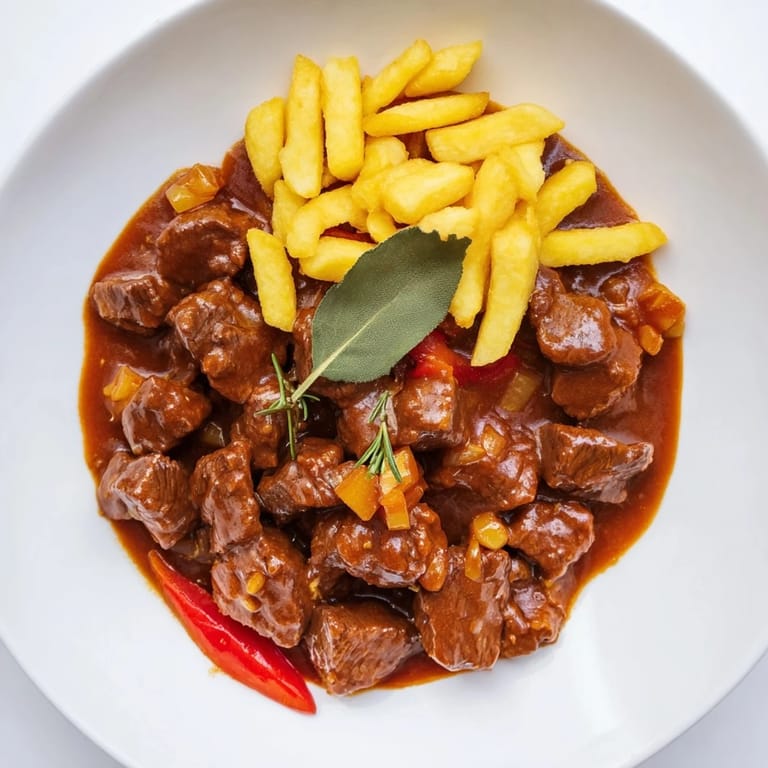
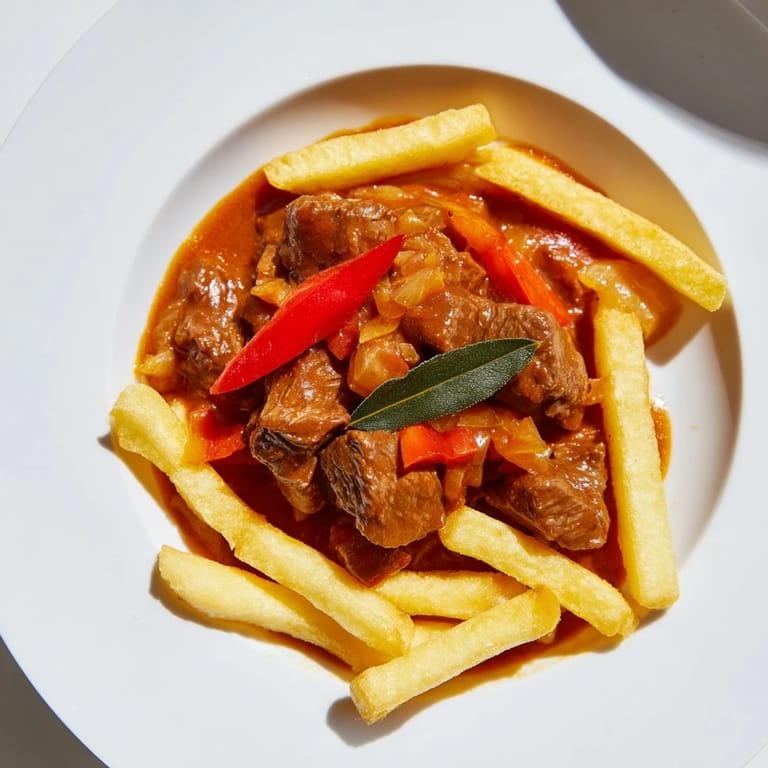
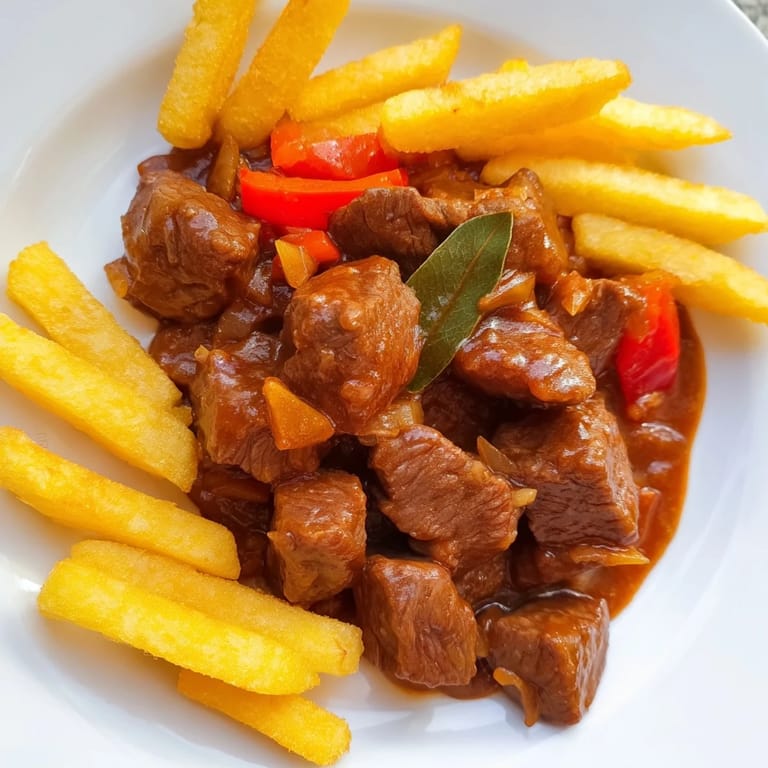
- Remove the bay leaf from the goulash, taste the sauce, and adjust the salt and pepper. Serve the hot goulash in deep bowls, crowned with a generous handful of crispy potato strips.
 Pin it
 There's a moment toward the end of cooking when you lift the lid and the steam hits your face, and you know without tasting that the goulash is ready. It's when the kitchen has turned so fragrant that you almost forget you're tired, and when the beef falls apart at the slightest pressure from a spoon. That's the moment when this dish stops being a recipe and becomes something you'll remember.
The Art of Not Rushing the Beef
Goulash is a study in patience, and I learned this the hard way by trying to speed things up with higher heat. The low simmer is non-negotiable because it's what transforms tough, economical cuts into something tender and rich. You're not just cooking the beef, you're slowly extracting collagen and developing flavor compounds that can't happen in a rush. Every 15 minutes or so, stir the pot and listen to how the sauce sounds, settling into a quiet rhythm that feels almost meditative.
Potato Strips: Texture That Matters
The crispy potato strips aren't a garnish, they're structural, providing a textural contrast that makes the dish complete. I've tried serving goulash with regular boiled potatoes, with egg noodles, with bread, and none of it compares to those golden, shatteringly crisp matchsticks. They should be eaten hot and will soften slightly as they sit, so time your frying strategically to minimize waiting. If you're nervous about deep frying, rest assured that the oil temperature is your friend; too cool and they're greasy, too hot and they burn, but at 180°C you've got a reliable window.
Why This Dish Matters
Czech goulash represents something irreducible about slow cooking: it's the kind of meal that makes people sit longer at the table, that makes conversation flow differently, that doesn't reward haste or shortcuts. This isn't elegant plating or complicated technique, it's just good ingredients, time, and the willingness to let flavors build layer by layer. Serve it with sour cream if you like, chopped parsley on top, and maybe a cold pilsner on the side, which is how it was meant to be eaten.
- Always save a spoonful of the finished goulash before adding the potatoes, so you can taste the sauce separately and remember what it tasted like before the crispness.
- Leftover goulash actually improves the next day, so make extra and refrigerate it for when you need comfort food without the work.
- If your goulash seems thin after cooking, simmer it uncovered for 10 more minutes to concentrate the sauce, but resist the urge to add flour at the end.
 Pin it
 This is the kind of meal that stays with you long after the pot is empty, the kind that brings people back to the table again and again. Make it once and you'll understand why it survived centuries.
Recipe FAQ
- → What cut of beef works best for this dish?
Beef chuck cut into cubes is ideal since it becomes tender after slow cooking and absorbs flavors well.
- → How do I get the potato strips crispy?
Fry thinly cut potato strips in hot oil (around 180°C) in batches until golden, then drain on paper towels and season with salt.
- → What spices add the authentic flavor?
Sweet Hungarian paprika, caraway seeds, and marjoram provide the distinctive aroma and taste typical of this dish.
- → Can I prepare this dish gluten-free?
Yes, by using gluten-free flour when thickening the sauce, the dish remains suitable for gluten-free diets.
- → How long should the beef simmer?
Simmer gently for 1.5 to 2 hours until the beef is tender and the sauce has thickened.
- → Is there a recommended beverage pairing?
This dish pairs wonderfully with a Czech Pilsner or a light red wine to complement the rich flavors.