 Pin it
 The first time I made cinnamon roll pancakes, I wasn't trying to be fancy—I just wanted my regular Sunday breakfast to feel like a celebration without the two-hour rising time. I melted butter at the stove while half-listening to my neighbor's lawn mower outside, thinking about how cinnamon swirls belonged on pancakes as much as they did on actual rolls. By the time my roommate stumbled into the kitchen twenty minutes later, the smell of toasted cinnamon and caramelized brown sugar had already won them over. They've asked me to make them every time they visit since.
I made these for my book club once, and I remember standing at the stove flipping pancakes while everyone sat around the kitchen island debating the ending of that month's pick. Someone asked if the swirl was hard to do, and I realized I'd been so focused on getting the glaze right that I'd stopped thinking of it as complicated. That's when I knew the recipe had clicked—when you're not worried about the steps anymore, just excited about sharing the result.
Ingredients
- All-purpose flour (1 1/2 cups): This is your foundation—make sure it's not packed down when you measure or your pancakes will be dense and heavy.
- Granulated sugar (3 tbsp): Adds subtle sweetness to the base batter so the filling isn't the only source of flavor.
- Baking powder (1 tbsp): The secret to fluffiness; don't skip it or substitute with baking soda unless you adjust for acid.
- Salt (1/2 tsp): A small but crucial amount that makes every other flavor pop.
- Milk (1 1/4 cups): Whole milk works best here; it creates a richer crumb than skim.
- Large eggs (2): These bind everything together and add richness—room temperature eggs mix more smoothly.
- Unsalted butter, melted (3 tbsp for batter): Melted rather than soft gives you a smoother, lump-free batter.
- Vanilla extract (1 tsp): A touch of depth that grounds the cinnamon flavor.
- Unsalted butter, melted (1/3 cup for swirl): This carries the brown sugar and cinnamon mixture so it spreads evenly without burning.
- Packed light brown sugar (1/2 cup): The molasses in brown sugar adds a caramel note that white sugar can't match.
- Ground cinnamon (1 1/2 tsp): Don't use the stale tin from three years ago; fresh cinnamon makes a real difference in taste and aroma.
- Cream cheese, softened (2 oz): The tangy backbone of the glaze that prevents it from being one-note sweet.
- Unsalted butter, softened (3 tbsp for glaze): Softened means it whips in smoothly without streaks.
- Powdered sugar (3/4 cup): Already fine and dissolves instantly into the glaze without lumps.
- Milk (2 tbsp for glaze): Adjusts the consistency—add it slowly so you don't overshoot and end up with a sauce instead of a drizzle.
Tired of Takeout? 🥡
Get 10 meals you can make faster than delivery arrives. Seriously.
One email. No spam. Unsubscribe anytime.
Instructions
- Mix the dry base:
- Combine flour, sugar, baking powder, and salt in a bowl, whisking until everything is evenly distributed. This prevents lumps and ensures the leavening agents spread throughout.
- Blend the wet mixture:
- Whisk milk, eggs, melted butter, and vanilla until the eggs are fully incorporated and the color is uniform. Pour this into the dry ingredients and stir just until a few streaks of flour remain—overmixing toughens the pancakes.
- Let the batter breathe:
- Set the batter aside while you prepare the swirl and glaze; this gives the flour time to fully hydrate and the baking powder time to distribute evenly. You'll notice the batter thickens slightly.
- Prepare the cinnamon swirl:
- Stir melted butter, brown sugar, and cinnamon together until it looks like wet sand, then transfer to a piping bag or zip-top bag with a tiny corner snipped off. This makes it easy to pipe clean lines onto each pancake.
- Make the glaze:
- Beat softened cream cheese and butter until smooth and fluffy, then add powdered sugar and vanilla and beat again. Slowly drizzle in milk while whisking until the glaze is thick but pourable—it should coat a spoon without immediately running off.
- Heat and grease your cooking surface:
- Use a nonstick skillet or griddle over medium-low heat; too high and the bottoms burn before the insides cook through. A light coating of butter or oil prevents sticking.
- Cook the pancakes:
- Pour 1/4 cup of batter onto the skillet and immediately pipe a spiral or loose zigzag of cinnamon swirl over the top. When bubbles form on the surface and the edges look set (about 2-3 minutes), slide your spatula underneath and flip gently.
- Finish cooking:
- The second side needs only about 2 minutes to set and develop a light golden color. You're not looking for a dark brown on the bottom—a gentle brown means the inside is fluffy.
- Serve with the glaze:
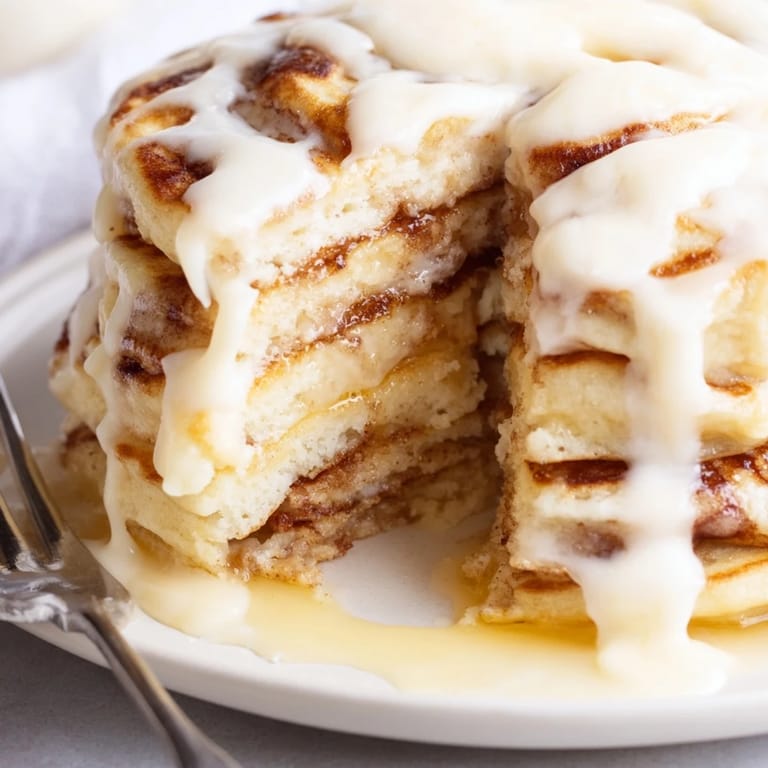
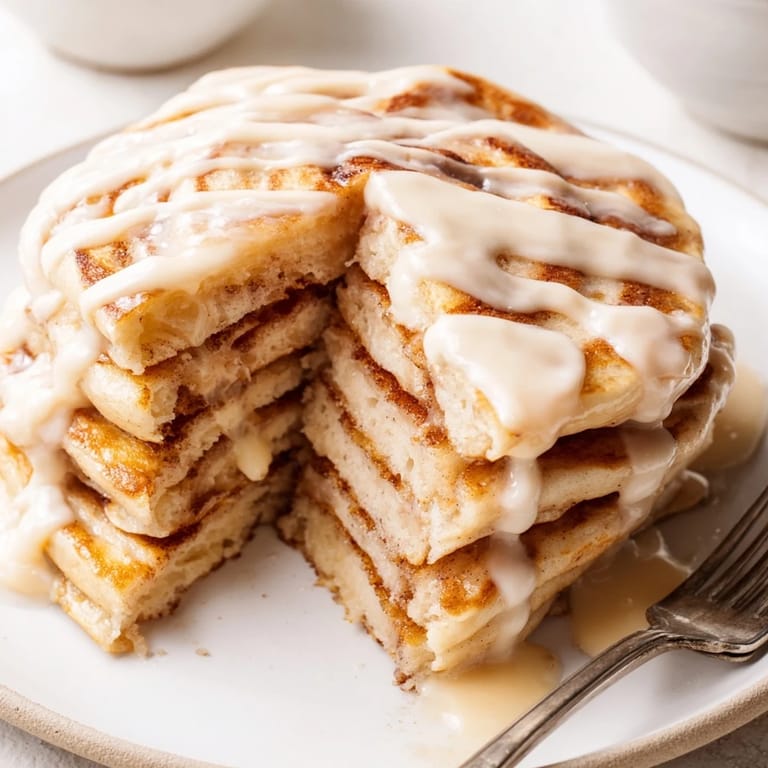
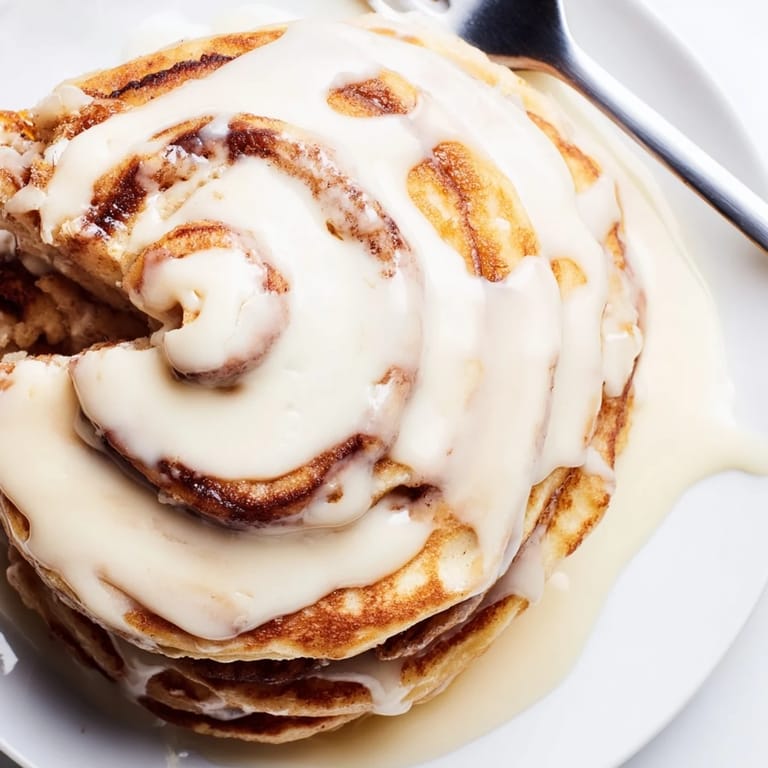
- Stack warm pancakes on a plate and drizzle the cream cheese glaze generously over the top, letting it cascade down the sides. The warmth of the pancakes softens the glaze just enough to coat everything.
 Pin it
 My mom called one morning while I was making these for myself, and I held the phone to my ear while piping the cinnamon swirls, trying to explain why I sounded distracted. When she asked what I was making, I told her, and she went quiet for a moment. Then she said, 'That sounds like something you'd serve at a special dinner, not just for yourself.' That comment stuck with me—the idea that you don't need a guest list or an occasion to cook something that feels celebratory.
The Cinnamon Swirl Technique
The swirl is what transforms regular pancakes into something memorable, and the method matters more than you'd think. When you pipe the melted butter and brown sugar mixture onto raw batter, it doesn't fully sink in; instead, it creates pockets and streaks that caramelize as the pancake cooks. The heat melts the swirl into the surrounding batter, so by the time the pancake is done, you've got layers of cinnamon flavor running through every bite. The piping bag or snipped zip-top bag is the key—it gives you control to make the pattern deliberate rather than just spooning it on haphazardly. I've tried both methods, and the piping version always looks more intentional and tastes more evenly distributed.
The Cream Cheese Glaze That Actually Works
Cream cheese glaze can go wrong in so many ways—too thin and it slides off the pancake, too thick and it sits on top like frosting. The balance comes from softening both the cream cheese and butter before you start; cold dairy refuses to whip together smoothly and you end up with a lumpy mess. Once they're beaten together, the powdered sugar goes in gradually, and the milk comes last, added just a tablespoon at a time while you whisk. You're looking for something that coats the back of a spoon but still runs slowly—it should be thick enough to cling to the pancakes but fluid enough to pour. This glaze also stays smooth when the pancakes are warm, which matters because warm pancakes are the whole point.
Timing and Make-Ahead Options
These pancakes are best eaten straight off the griddle, but I understand that's not always realistic. If you're cooking for a crowd, keep finished pancakes in a 200°F oven on a plate; they stay warm and fluffy for a good 15 minutes without drying out. You can also make the batter and glaze ahead of time—batter keeps refrigerated for a day, though it might be slightly thicker when you cook it. The cinnamon swirl mixture is best made fresh so the brown sugar doesn't clump, but it only takes two minutes. If you're meal prepping, cooked pancakes freeze beautifully and reheat gently in a toaster oven, though you'll want to add the glaze fresh.
- Don't let batter sit more than a couple of hours or the baking powder loses its lift.
- If you notice the glaze firming up while you cook, gently warm it over low heat to thin it again.
- Serve immediately with coffee, chai, or whatever warm drink feels right in that moment.
 Pin it
 What started as a shortcut to weekend indulgence became a regular breakfast that somehow feels like celebration every single time. There's something about the smell of cinnamon and melting cream cheese that turns a quiet morning into something worth remembering.
Recipe FAQ
- → How can I create the cinnamon swirl in the batter?
Mix melted butter, light brown sugar, and ground cinnamon. Transfer to a piping or zip-top bag and snip a small corner to pipe onto pancakes before flipping.
- → What makes the glaze creamy and smooth?
A blend of softened cream cheese, butter, powdered sugar, vanilla, and milk is whisked until pourable, creating the rich glaze topping.
- → Can I prepare the batter in advance?
Yes, prepare the batter and swirl mixture ahead, but pipe the swirl just before cooking to maintain texture and flavor.
- → What cooking equipment is recommended?
A nonstick skillet or griddle works best for even cooking and easy flipping of the pancakes.
- → Are these suitable for a vegetarian diet?
Yes, the ingredients used here are vegetarian-friendly, including eggs and dairy.