 Pin it
 There's something about the smell of roasting butternut squash that transforms a quiet kitchen into something alive with possibility. A friend once told me that autumn doesn't really start until you've made this soup, and honestly, she wasn't wrong. The first time I roasted the squash separately instead of boiling it, I couldn't believe how much deeper the flavor became—like someone had turned up the volume on everything good about the vegetable. Now it's my go-to when the weather shifts and I want to feel grounded again.
I made this soup for my sister on her first morning back after moving across the country, and watching her face soften as she tasted it told me everything I needed to know. There was something about serving it in those mismatched bowls from her childhood kitchen that made the moment stick with me. She's not one for sentiment, but she asked for the recipe that day, and that meant something.
Ingredients
- Butternut squash (about 1.2 kg): Roasting this separately is the secret—it concentrates the natural sugars and gives the soup a depth you can't get any other way.
- Onion and carrots: These become the flavor foundation, so take your time letting them soften; they'll taste completely different when they're properly caramelized.
- Garlic: Two cloves is gentle enough to support rather than overpower, especially important since the squash is the real star here.
- Vegetable stock: Quality matters more than you'd think—a good stock will make the soup taste like it came from somewhere real.
- Coconut milk: This adds richness and a subtle sweetness that plays beautifully against the spices, though cream works just as well if that's what you have.
- Olive oil: Use your better oil for roasting the squash; it'll help develop those golden, caramelized edges.
- Cumin and nutmeg: These warm spices are whisper-quiet in the background, never demanding attention but somehow making everything taste more like itself.
- Salt and pepper: Taste as you go—this soup is forgiving and wants to be seasoned to your preference.
- Fresh herbs and pumpkin seeds: These aren't optional if you want the soup to feel finished; they add texture and a little brightness that lifts everything.
Tired of Takeout? 🥡
Get 10 meals you can make faster than delivery arrives. Seriously.
One email. No spam. Unsubscribe anytime.
Instructions
- Get your oven ready and prep the squash:
- Preheat to 200°C (400°F) and while that's heating, toss your diced squash with a tablespoon of olive oil, salt, and pepper. Spread it on a baking tray in a single layer—don't crowd it, or it'll steam instead of roast.
- Roast until golden and tender:
- This takes about 25 minutes, and you'll know it's right when the edges are caramelized and golden. The smell at this point is almost worth the wait on its own.
- Build your flavor base:
- While the squash is roasting, heat the remaining olive oil in a large pot over medium heat and add your chopped onion and carrots. Let them soften together for 5–7 minutes, stirring occasionally until they're tender and just starting to take on color.
- Wake up the spices:
- Add your minced garlic, cumin, and nutmeg, then cook for about a minute until the kitchen smells like warmth and possibility. This quick step is where the magic happens—the spices bloom and become something much more than their individual selves.
- Bring everything together:
- Add your roasted squash to the pot, pour in the vegetable stock, and bring it to a boil. Once it's bubbling, reduce the heat and let it simmer gently for about 10 minutes to let the flavors get to know each other.
- Blend it smooth:
- Remove from heat and use your immersion blender to purée the soup until it's silky and velvety—this is the moment it transforms from ingredients into something unified and beautiful. If you're using a regular blender, work in careful batches and be mindful of the heat.
- Finish with creaminess:
- Stir in your coconut milk or cream and heat gently, then taste and adjust your seasoning with salt and pepper. Sometimes this is when I add a tiny pinch of chili flakes if I'm feeling it.
- Serve with care:
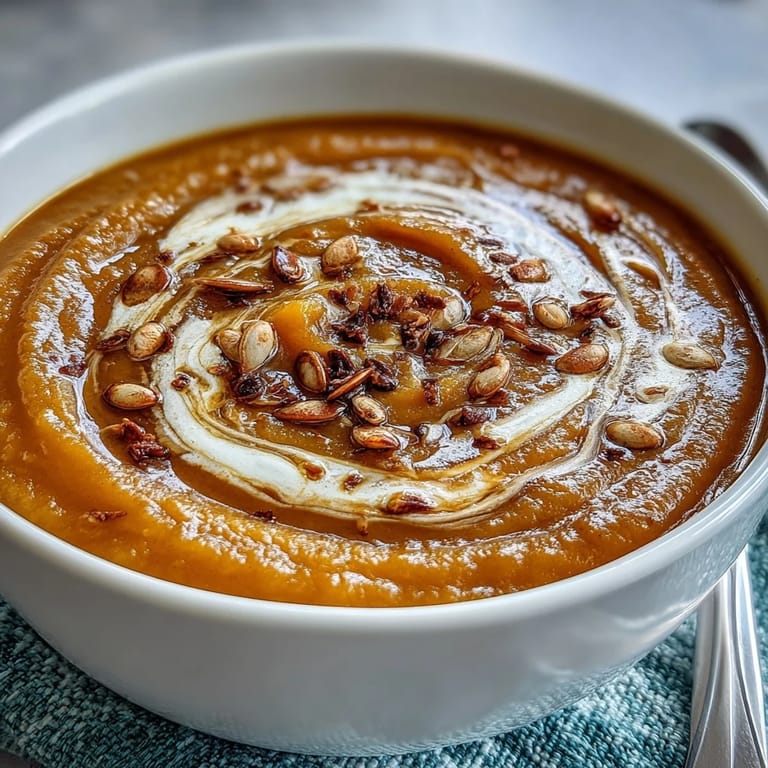
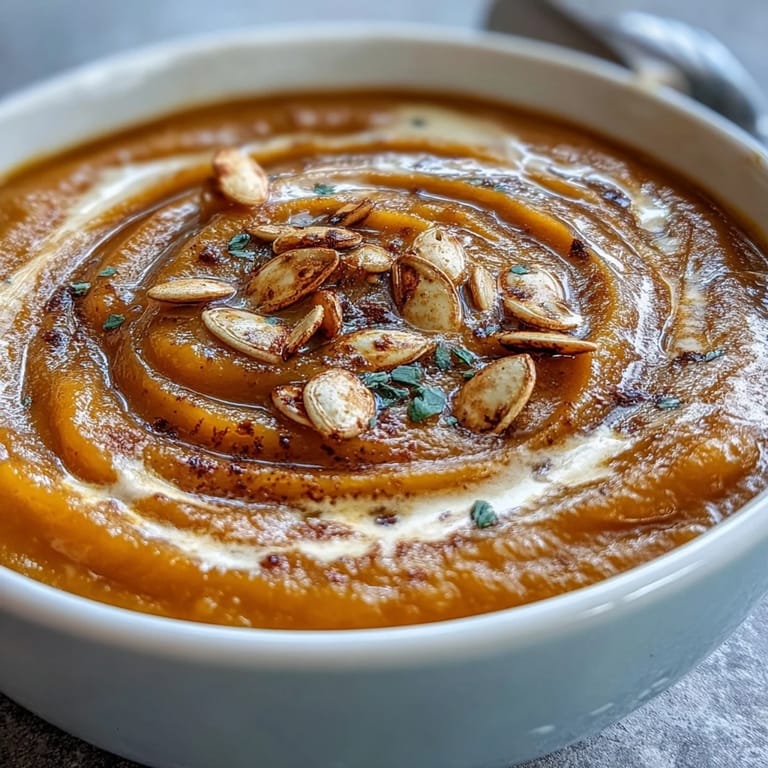
- Ladle into bowls and garnish generously with fresh herbs, toasted pumpkin seeds, and a swirl of coconut milk or cream. The garnish isn't just decoration—it gives you texture and a little burst of brightness with every spoonful.
 Pin it
 There was an evening when my neighbor came over unexpectedly, and I had nothing much to offer except this soup simmering on the stove. We sat in near-silence while we ate, and when she left, she hugged me longer than usual—sometimes the best meals are the ones that say all the things we can't quite put into words.
The Magic of Roasting
The reason roasting the squash separately makes such a difference is that dry heat caramelizes the natural sugars, creating depth and complexity that boiling simply can't achieve. When I learned this, it changed how I approached other vegetable soups too. Now I always roast when I have the time, and it's become one of those small kitchen techniques that feels like a superpower.
Variations Worth Trying
This soup is genuinely adaptable once you understand its core, which means you can make it your own without losing what makes it work. I've added a splash of maple syrup when the squash seemed less sweet than expected, and I once tried it with a pinch of smoked paprika that made it taste almost smoky and mysterious. The spice ratio can shift too—if nutmeg isn't your thing, more cumin with a whisper of coriander creates an entirely different mood.
Serving Suggestions and Storage
This soup tastes beautiful on its own but becomes something more generous when served alongside crusty bread for soaking up every last drop. It also keeps beautifully in the refrigerator for three or four days, and it freezes wonderfully if you want to make extra and save it for a day when you need comfort in a bowl. I always freeze mine before adding the cream, so when I reheat it, the flavors seem to come alive again.
- Serve with warm bread, a sharp cheese, or alongside a simple green salad for balance.
- Leftovers reheat gently on the stove or in the microwave, and a splash of fresh stock loosens it up beautifully if it thickens after sitting.
- If you're meal-prepping, freeze in portions and thaw overnight in the refrigerator before reheating gently.
 Pin it
 This soup has become my answer to almost every season, my go-to when someone needs feeding, my quiet moment on a Tuesday evening. Make it once and it'll likely become yours too.
Recipe FAQ
- → Can I freeze this soup?
Yes, this soup freezes beautifully. Cool completely before transferring to airtight containers or freezer bags. It will keep for up to 3 months. Thaw overnight in the refrigerator and reheat gently, adding a splash of liquid if needed.
- → What can I use instead of coconut milk?
Heavy cream adds rich indulgence, while Greek yogurt provides tangy protein. For a dairy-free option, try cashew cream or extra vegetable stock for a lighter version.
- → Do I have to roast the squash first?
Roasting concentrates natural sugars and adds depth, but you can skip it. Simmer raw diced squash in the pot for 25-30 minutes until tender, though the flavor will be slightly sweeter when roasted.
- → How can I make this soup thicker?
Reduce the stock by 100ml, add a peeled potato while simmering, or stir in a tablespoon of cornstarch mixed with cold water. Blending longer also creates thicker texture.
- → What toppings work well?
Try toasted pumpkin seeds, crusty croutons, crispy bacon bits, or a drizzle of balsamic glaze. Fresh herbs like parsley, cilantro, or thyme add bright contrast.
- → Can I make this in a slow cooker?
Absolutely. Add all ingredients except coconut milk to your slow cooker. Cook on low for 6-7 hours or high for 3-4 hours until squash is tender. Blend and stir in coconut milk before serving.