 Pin it
 I was standing in my kitchen on a Tuesday night, exhausted and convinced I had nothing to make for dinner. Then I spotted eggs, a block of Parmesan, and some pancetta I'd forgotten about. Twenty minutes later, I was twirling the creamiest, most satisfying pasta I'd made in weeks. That night taught me that the best meals don't need hours or fancy ingredients. Sometimes all you need is a hot pan, good timing, and a little faith in simple things.
I made this for my sister during one of her late study nights, and she looked up from her textbook like I'd just performed magic. She kept asking what was in it, convinced there was some secret ingredient. There wasn't. Just eggs, cheese, and the kind of timing you learn by paying attention. We ate it straight from the pan, laughing about how something this easy had no right to taste this good.
Ingredients
- Spaghetti or linguine: Use something with enough surface area to hold the sauce, and always cook it one minute shy of what the box says.
- Eggs: They create the creamy base without any flour or roux, but they need to be whisked smooth and added off the heat or you'll end up with scramble.
- Parmesan cheese: Freshly grated is non-negotiable here, the pre-shredded stuff won't melt the same way and can taste grainy.
- Heavy cream: Totally optional, but it gives you a little insurance if you're nervous about the eggs curdling.
- Black pepper: Crack it fresh and be generous, it's not just seasoning, it's part of the flavor foundation.
- Pancetta or guanciale: The rendered fat becomes the cooking medium for everything else, so let it get crispy and golden.
- Pasta water: This starchy liquid is what turns the egg mixture into a silky sauce, so don't skip saving some before you drain.
Tired of Takeout? 🥡
Get 10 meals you can make faster than delivery arrives. Seriously.
One email. No spam. Unsubscribe anytime.
Instructions
- Boil the pasta:
- Get your water aggressively salty, like the sea, and cook the pasta until it still has a little bite. Before draining, scoop out half a cup of that cloudy, starchy water and set it aside.
- Crisp the pancetta:
- While the pasta bubbles away, add the diced pancetta to a cold skillet and turn the heat to medium. Let it render slowly until the edges turn golden and crisp, then pull the pan off the burner.
- Whisk the sauce base:
- In a bowl, beat the eggs with the Parmesan, cream if you're using it, a small pinch of salt, and plenty of black pepper. It should look smooth and pale yellow.
- Toss the pasta with pancetta:
- Drop the hot, drained pasta straight into the skillet with the pancetta and toss it around so every piece gets coated in that salty, porky fat.
- Build the sauce:
- Off the heat, pour in your egg mixture and toss like your life depends on it. Add the reserved pasta water a splash at a time, stirring constantly, until the sauce turns glossy and clings to the noodles without pooling at the bottom.
- Serve immediately:
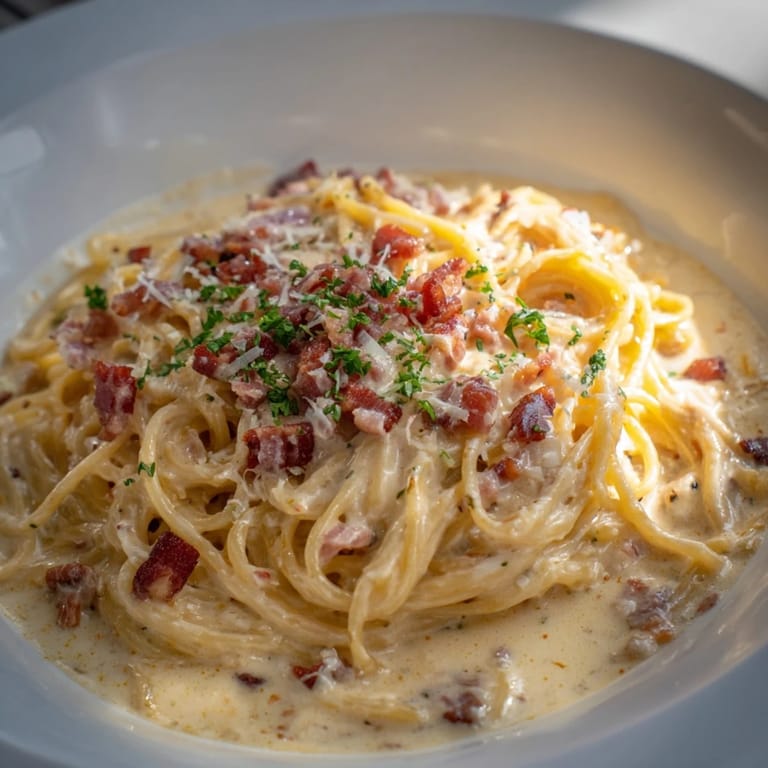
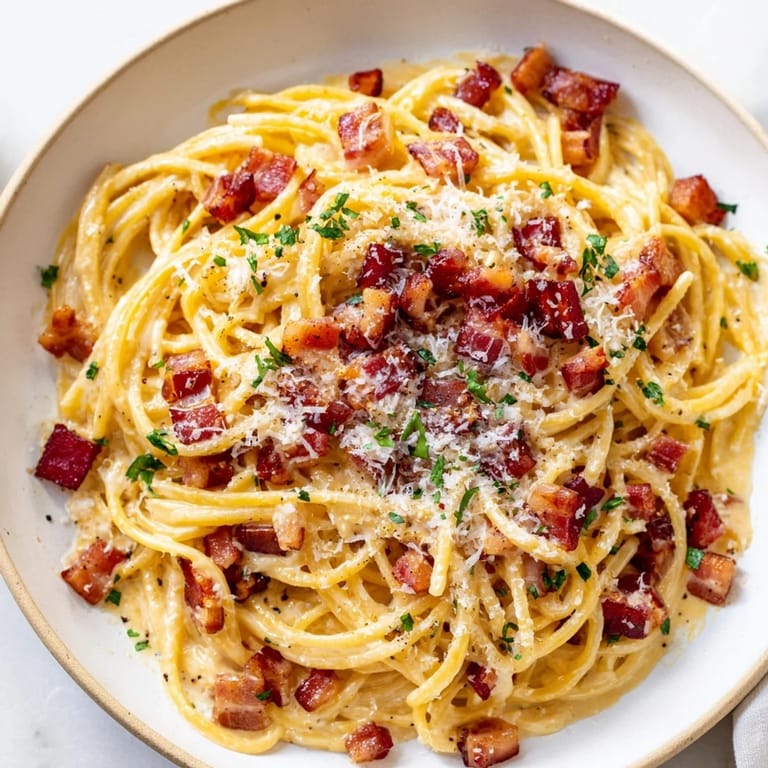
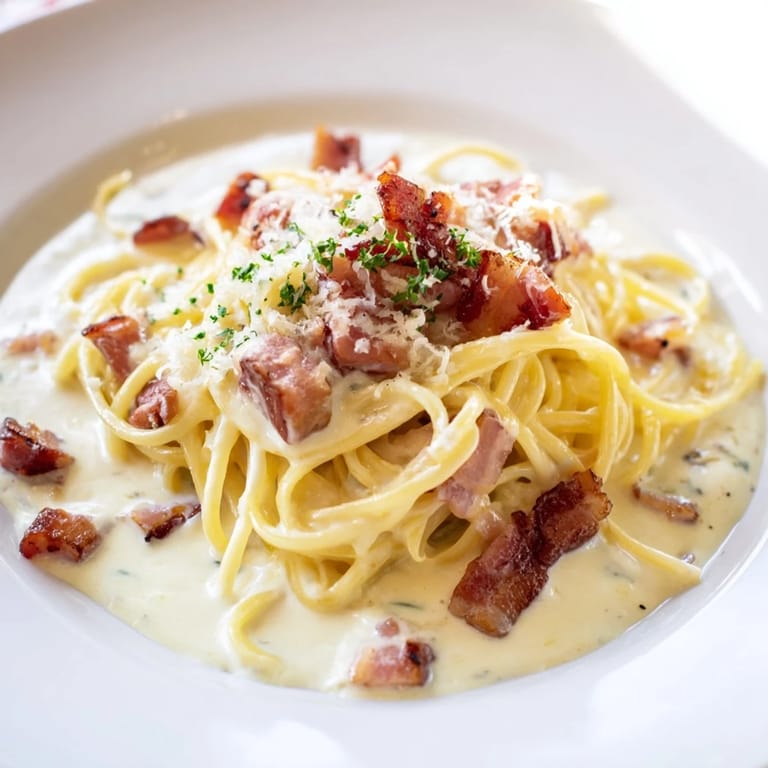
- Plate it while it's still steaming. Finish with extra Parmesan, a crack of pepper, and parsley if you're feeling fancy.
 Pin it
 One evening I made this for a friend who swore she didn't like pasta. She finished her entire plate without saying a word, then looked at me and asked if I'd make it again next week. That's when I realized carbonara isn't just dinner. It's the kind of thing that makes people rethink what they thought they knew about food.
What Makes This Different from Other Carbonara Recipes
Most versions skip the cream entirely and rely only on eggs and cheese, which is traditional and beautiful but can be tricky if you're new to the technique. Adding a splash of cream gives you a little safety net without losing that signature silkiness. It's not Roman orthodox, but it works every single time, and sometimes that matters more than tradition.
How to Know When the Sauce Is Ready
The sauce should coat the back of a spoon and cling to the pasta without sliding off immediately. If it looks watery, keep tossing and let the residual heat thicken it up. If it starts to clump, hit it with another splash of pasta water and stir like you mean it. You'll know it's right when it looks glossy, creamy, and just a little loose.
Storage and Leftovers
Carbonara is best eaten the moment it's made, but if you do have leftovers, store them in an airtight container in the fridge for up to one day. Reheat gently in a skillet with a splash of water or cream, stirring constantly over low heat. The texture won't be quite the same, but it'll still taste better than most things you could order.
- Don't microwave it unless you want rubbery pasta and separated sauce.
- If the sauce breaks when reheating, whisk in a teaspoon of cream and keep stirring.
- Leftovers also make a surprisingly good frittata base if you're feeling creative the next morning.
 Pin it
 This is the kind of recipe you'll make on a random Wednesday and wonder why you ever thought cooking had to be complicated. Keep the ingredients around, and you'll always have something worth sitting down for.