 Pin it
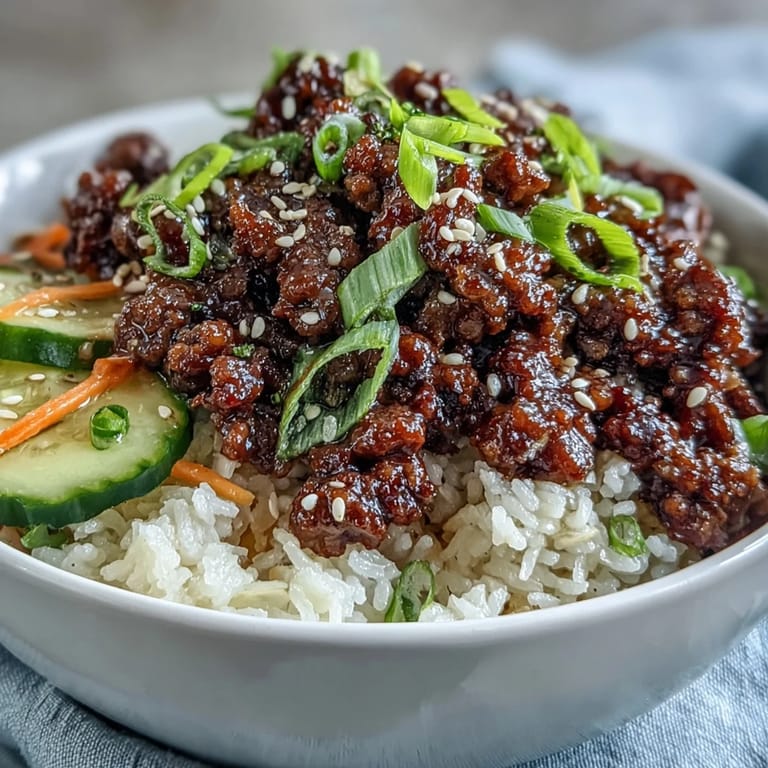
 My coworker brought this Korean beef bowl to lunch one Tuesday, and the whole office smelled like toasted sesame oil for the rest of the day. I watched her eat it straight from a container at her desk—rice, glistening beef, those bright pickled vegetables—and I knew I had to figure out how to make it. Turns out, it's simpler than it looks, and way more forgiving than I expected. Now it's become my go-to when I want something that feels special but doesn't demand hours in the kitchen.
I made this for my sister during a meal prep Sunday, and she asked for the recipe before she'd even finished her first bowl. She's usually skeptical of anything I describe as "easy," but watching her load it into containers for the week ahead felt like a small victory. The best part was that reheated version the next day tasted even better—the flavors had melded overnight.
Ingredients
- Lean ground beef (500 g): The 5-7 minute cook time works best with quality beef that's not too fatty; don't skip the browning step because that's where the real flavor lives.
- Soy sauce (2 tablespoons): Use tamari if you're avoiding gluten—the flavor stays just as deep and salty.
- Toasted sesame oil (1 tablespoon): This is non-negotiable; it's what makes everything smell incredible and taste intentional.
- Brown sugar (1 tablespoon): Just enough to balance the salty and spicy notes without making it sweet.
- Freshly grated ginger (2 teaspoons): Grate it yourself right before cooking—the difference between that and pre-minced is worth the 30 seconds.
- Garlic cloves (3, minced): Fresh garlic only; it mellows slightly as it cooks with the beef and becomes almost mellow.
- Gochujang or sriracha (1 teaspoon, optional): Start with half a teaspoon if you're unsure about heat—you can always add more.
- Green onions (2, thinly sliced): Use both white and green parts; the white parts cook into the beef sauce while the greens stay fresh on top.
- Sesame seeds (1 tablespoon): Toast them lightly in a dry pan first if you have time—it wakes up their nutty flavor.
- Jasmine or cauliflower rice (4 cups cooked): Jasmine rice is traditional and fluffy; cauliflower rice cuts the carbs and works beautifully if that matters to you.
- Rice vinegar (1/2 cup): The pickled vegetables won't taste right without it; regular vinegar feels too harsh by comparison.
- Sugar (1 tablespoon for pickle): Just balances the vinegar so it's not aggressively sour.
- Salt (1/2 teaspoon for pickle): This small amount draws moisture from the vegetables and keeps them crisp.
- Carrot (1 cup, julienned): Cut them thin so they pickle quickly; thicker cuts stay tough even after sitting.
- Cucumber (1 cup, thinly sliced): English cucumbers work better than watery regular ones because they hold their texture.
- Radish (1/2 cup, thinly sliced): They add a peppery bite that makes everything feel fresher and more alive.
Tired of Takeout? 🥡
Get 10 meals you can make faster than delivery arrives. Seriously.
One email. No spam. Unsubscribe anytime.
Instructions
- Start the pickled vegetables:
- Whisk rice vinegar, sugar, and salt together in a bowl until the sugar dissolves completely. Add the carrot, cucumber, and radish, toss gently to coat, and let it sit while you work on everything else—the longer it sits, the better it tastes.
- Prepare your rice:
- Cook jasmine or cauliflower rice according to package directions and keep it warm in the pot with the lid on. This timing means it'll be ready exactly when the beef is done.
- Brown the ground beef:
- Heat the skillet over medium-high heat until it's really hot, then add the beef and break it into small pieces with a spoon as it cooks. Listen for that steady sizzle—about 5-7 minutes until no pink remains and the meat has started to caramelize slightly at the edges.
- Build the sauce:
- Lower the heat slightly, then add soy sauce, sesame oil, brown sugar, ginger, garlic, and gochujang if you're using it. Stir constantly for 2-3 minutes—the kitchen will smell absolutely incredible as these ingredients bloom together and coat the meat.
- Finish the beef:
- Take the skillet off heat and stir in the green onions and sesame seeds. The residual heat will soften the green onions just enough while keeping them slightly crisp.
- Assemble the bowls:
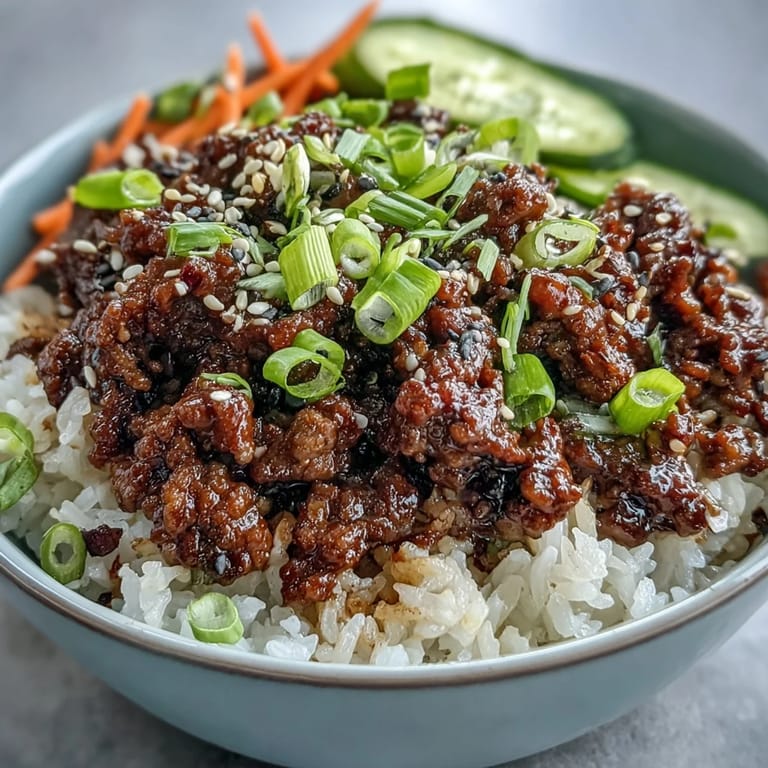
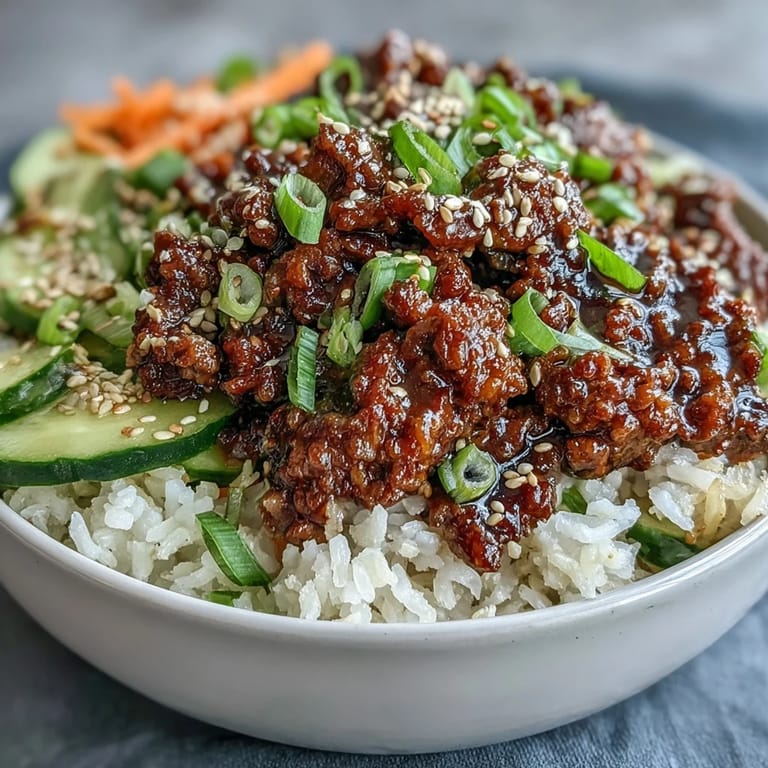
- Divide warm rice among four bowls, top each with a generous portion of seasoned beef and its sauce, then add a handful of pickled vegetables. The heat from the rice will slightly soften the vegetables while they stay crisp enough to give you texture.
- Garnish and serve:
- Sprinkle extra green onions and sesame seeds over the top, then eat it while everything's still warm. The contrast between the hot beef and cool pickled vegetables is where the magic actually happens.
 Pin it
 My nephew, who's usually suspicious of anything that isn't chicken nuggets, actually asked for seconds when I made this for family dinner. Watching him load extra pickled vegetables onto his bowl made me realize how much this dish works because it lets everyone build their own version. It's become one of those meals I feel confident making for almost anyone.
The Pickled Vegetable Secret
These aren't traditional fermented pickles that take weeks—they're quick pickles that come together in the time it takes to cook everything else. The magic is that the vegetables stay crisp because they're only sitting for 15-30 minutes, but they absorb enough flavor to taste intentional and not like an afterthought. I've learned to slice them thin enough that they pickle evenly, and to stir them occasionally so the vinegar reaches every piece.
Why This Works as Leftovers
The flavors actually deepen overnight—that soy sauce and sesame oil continue melding together, making the beef taste richer the next day. Store the beef and rice together in one container and the pickled vegetables in another so they don't make the rice soggy. I've reheated it in the microwave, in a skillet, and even eaten it cold the next afternoon, and it's genuinely good every way.
Building Your Perfect Bowl
This is where the dish becomes personal—you control the ratio of rice to beef to vegetables based on what you're craving that day. Some mornings I want more rice, other times I load up on pickled vegetables because that tangy snap is what I need. The beauty is that nothing fights with anything else; it all lives together in one bowl without any ingredient overpowering the rest.
- If you want more protein and richness, top it with a fried egg—the runny yolk becomes an extra sauce.
- For low-carb versions, use cauliflower rice and the whole bowl stays balanced and satisfying.
- Vegetarians can swap crumbled tofu or tempeh for beef and the sauce still works beautifully.
 Pin it
 This recipe became one of my reliable weeknight meals because it's simple enough to not feel like work, but intentional enough to feel special. Once you make it once, you'll understand why my coworker has been eating it for lunch every week.
Recipe FAQ
- → Can I make this bowl ahead of time?
The seasoned beef and pickled vegetables can be prepared up to 3 days in advance and stored separately in the refrigerator. Reheat the beef gently and assemble bowls fresh with warm rice for best results.
- → What protein alternatives work well?
Ground turkey, chicken, or crumbled tofu make excellent substitutes for beef. Adjust cooking time slightly for leaner meats and consider adding extra sesame oil to maintain richness.
- → Is gochujang necessary?
Gochujang adds authentic Korean flavor with mild heat. Sriracha or Korean red pepper flakes work as substitutes. Omit entirely for a milder dish the whole family will enjoy.
- → How long do pickled vegetables keep?
Quick-pickled vegetables stay crisp and tangy for up to one week when stored in an airtight container in the refrigerator. They actually develop more flavor after sitting for a day or two.
- → Can I use different vegetables?
Feel free to customize with quick-pickled radishes, bell peppers, or even thinly sliced cabbage. The key is maintaining a mix of colors and textures to complement the savory beef.
- → What's the best rice option?
Jasmine rice pairs beautifully with Korean flavors, but short-grain white or brown rice work equally well. For a low-carb version, cauliflower rice absorbs the seasonings just as effectively.